Altigreen neEV Bhai vs Altigreen neEV Bhai Low Deck/Electric vs Atul Energie vs Thukral Electric EC-2 Open Cargo vs OSM Rage Plus vs Dandera Otua: Price & Specs Comparison
By TruckOnWheels Editorial Team · Last updated 15 May 2026
OSM Rage Plus is the more affordable option here by about ₹2,000. Dandera Otua leads on power at 17 HP.
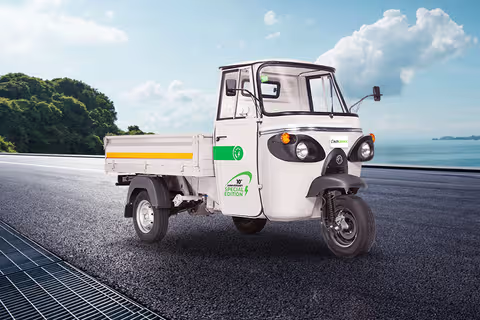 Altigreen neEV Bhai ₹3.77 Lakh - ₹3.81 Lakh | Altigreen neEV Bhai Low Deck/Electric ₹3.77 Lakh - ₹3.81 Lakh | 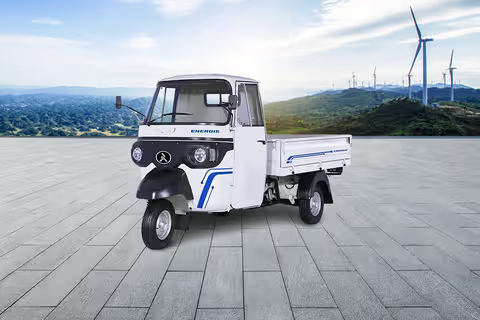 Atul Energie ₹3.72 Lakh |  Thukral Electric EC-2 Open Cargo ₹3.75 Lakh | 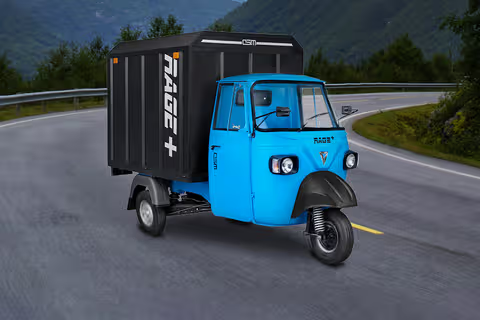 OSM Rage Plus ₹3.40 Lakh - ₹3.70 Lakh | 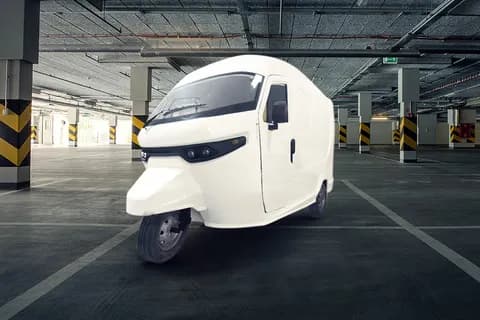 Dandera Otua ₹3.80 Lakh | |
|---|---|---|---|---|---|---|
| Price | ₹3.77 Lakh - ₹3.81 Lakh | ₹3.77 Lakh - ₹3.81 Lakh | ₹3.72 Lakh | ₹3.75 Lakh | ₹3.40 Lakh - ₹3.70 Lakh | ₹3.80 Lakh |
| Body Type | 3 Wheeler | 3 Wheeler | 3 Wheeler | 3 Wheeler | 3 Wheeler | 3 Wheeler |
| Engine | NA | NA | NA | NA | NA | NA |
| Power | 8.25 kW | 11 hp | 9.92 kW | 7 kWh | 9.55 kW | 17 hp |
| Max Torque | 810 Nm Nm | 810 Nm Nm | NA Nm | 56 Nm Nm | 625 Nm Nm | NA Nm |
| Mileage | 135 km/Per Charge | 135 km/Per Charge | 195 km/Per Charge | 150 KM/Charge | NA | 165 km/charge |
| Gross Vehicle Weight | 950 kg | 950 kg | 995 kg | 1218 kg | 960 kg | 900 kg |
| Payload | 550 Kgs | 550 Kgs | 500 kgs | 700 Kgs | 565 Kgs | 900 kg |
| No. of Tyres | 3 | 3 | 3 | 3 | 3 | 3 |
| Fuel Type | Electric | Electric | Electric | Electric | Electric | Electric |
| Gear Box | 1 Forward + 1 Reverse | 1 Forward + 1 Reverse | 1 Forward + 1 Reverse | 1 Forward + 1 Reverse | 1 Forward + 1 Reverse | 1 Forward + 1 Reverse |
| Chassis Type | Chassis with Cabin | Chassis with Cabin | Chassis with Cabin | Chassis with Cabin | Chassis with Cabin | Monocoque Chassis |
You can compare up to 6 trucks at a time.
Review
Pros & Cons
Altigreen neEV Bhai
Pros
- The Altigreen prefix immediately suggests an eco friendly electric vehicle
- It aligns with the growing demand for sustainable transportation solutions in India
- The word Neev signifies a strong foundation reliability and durability
Cons
- The name might be considered too informal due to the inclusion of Bhai for some commercial buyers
- Some might perceive Bhai as overly casual potentially detracting from the truck's professional image
- The length of Altigreen Neev Bhai could make it difficult to quickly recall or brand
Altigreen neEV Bhai Low Deck/Electric
Pros
- Environmentally friendly operation with zero tailpipe emissions
- Lower running costs due to cheaper electricity compared to diesel
- Quieter operation ideal for urban and residential area deliveries
Cons
- Limited driving range compared to conventional diesel trucks
- Longer refueling times due to battery charging requirements
- Dependency on the availability and reliability of charging infrastructure
Atul Energie
Pros
- Strong Indian identity through Atul, suggesting reliability and local connection.
- Energie implies modern power, efficiency, or potential for alternative fuel technologies.
- Sounds sophisticated and forward-thinking, appealing to a progressive market segment.
Cons
- The French spelling of Energie might lead to mispronunciations or confusion for some regional audiences.
- It could set an expectation for electric or advanced fuel technologies that may not be a standard offering across all models.
- The name Atul, being common, might lack distinctiveness compared to more unique or abstract brand names.
Thukral Electric EC-2 Open Cargo
Pros
- The Thukral Electric Ec 2 Open Cargo offers exceptionally low running costs, significantly reducing daily operational expenses compared to traditional diesel or petrol cargo vehicles, making it highly economical for last-mile delivery and intra-city logistics.
- As an electric vehicle, the Thukral Electric Ec 2 Open Cargo produces zero tailpipe emissions and operates almost silently, contributing to a cleaner environment and reducing noise pollution in urban areas, which can also be less fatiguing for drivers.
- Its compact design and agile electric powertrain provide superior maneuverability in congested city traffic and narrow lanes, allowing the Thukral Electric Ec 2 Open Cargo to access areas where larger vehicles cannot, enhancing delivery efficiency.
Cons
- The Thukral Electric Ec 2 Open Cargo typically offers a limited range of around 80-100 km on a full charge, which, combined with the still-developing public charging infrastructure in many parts of India, can cause range anxiety and restrict longer-distance operations.
- Recharging the battery, especially for models equipped with lead-acid batteries, can take 6-8 hours, necessitating careful route planning and overnight charging, which might not suit businesses requiring continuous, round-the-clock operation.
- Compared to its ICE counterparts, the Thukral Electric Ec 2 Open Cargo has a relatively lower top speed and power output, which may impact performance on inclines or during rapid acceleration, potentially affecting delivery times in certain demanding conditions.
OSM Rage Plus
Pros
- The 'Osm' part instantly evokes a feeling of 'awesome' which is positive and aspirational
- 'Rage' suggests power, strength, and an ability to handle tough challenges, desirable for a truck
- 'Plus' implies enhanced features, better performance, or a premium variant, adding perceived value
Cons
- The word 'Rage' primarily conveys intense anger, which is a negative emotion not typically desired for a vehicle
- 'Osm' as slang might be perceived as unprofessional or less serious for a commercial vehicle brand
- The combination 'Osm Rage' could sound contradictory or even comical to some audiences
Dandera Otua
Pros
- The Dandera Otua offers significantly lower running costs due to its electric powertrain, translating into substantial per-km savings on fuel expenses and zero tailpipe emissions, making it an eco-friendly choice for Indian operators.
- With a best-in-class payload capacity of up to 900 kg, the Dandera Otua allows businesses to transport more goods per trip, directly enhancing efficiency and profitability for last-mile deliveries.
- This electric three-wheeler provides an impressive operational range of up to 165 km on a single charge (with options for higher range variants), which is adequately suited for most urban and semi-urban delivery schedules without frequent recharging.
Cons
- A major practical challenge for the Dandera Otua is the still-developing public charging infrastructure across many parts of India, which can limit operational flexibility and increase planning complexities, especially for businesses operating outside metropolitan areas.
- The Dandera Otua, like most advanced electric commercial vehicles, comes with a higher initial acquisition cost compared to traditional diesel or CNG three-wheelers, which can be a significant upfront financial barrier for budget-conscious buyers despite long-term savings.
- Despite its decent range, the longer recharge times (typically 4-6 hours for a full charge) compared to the instant refuelling of ICE vehicles can lead to operational downtime and potential range anxiety for demanding, multi-shift operations or urgent deliveries.
Which to buy
Which One Fits Your Use Case?
Altigreen neEV Bhai
Best for:
- Last-mile delivery
- Small business logistics
Altigreen neEV Bhai Low Deck/Electric
Best for:
- Intercity transport of goods
Atul Energie
Best for:
- Last-mile delivery
- Intercity transport of goods
Thukral Electric EC-2 Open Cargo
Best for:
- Last-Mile Delivery (E-commerce & Courier)
- Construction & Hardware Supply
- Water Can & LPG Cylinder Delivery
OSM Rage Plus
Best for:
- Logistics
Dandera Otua
Best for:
- Logistics
FAQs