
Altigreen neEV Rahi vs Altigreen neEV Rahi 2130/5-Seater vs Bajaj WEGO P9018 electric vs Thukral Electric EA-3 vs Erisha E Smart vs Euler Motors NEO HiCity: Price & Specs Comparison
By TruckOnWheels Editorial Team · Last updated 4 May 2026
Erisha E Smart is the more affordable option here by about ₹20,000. Bajaj WEGO P9018 electric leads on payload at 750 kg.
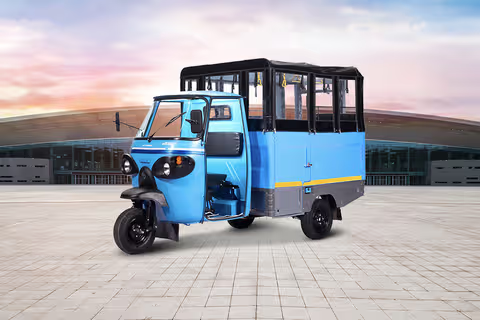 Altigreen neEV Rahi ₹4.50 Lakh | Altigreen neEV Rahi 2130/5-Seater ₹4.50 Lakh | 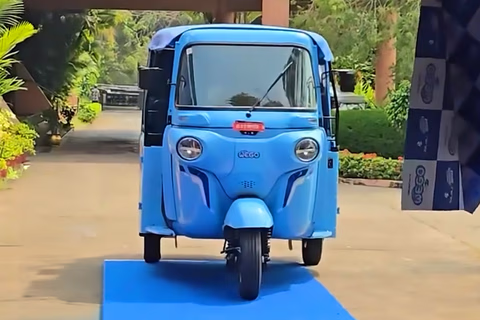 Bajaj WEGO P9018 electric ₹4.41 Lakh |  Thukral Electric EA-3 ₹4.50 Lakh | 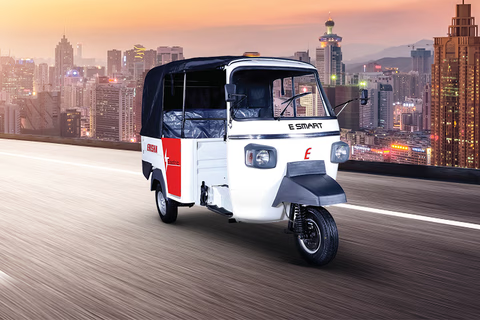 Erisha E Smart ₹4.10 Lakh | 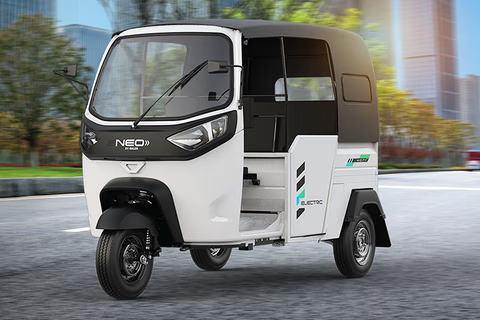 Euler Motors NEO HiCity ₹4.30 Lakh | |
|---|---|---|---|---|---|---|
| Price | ₹4.50 Lakh | ₹4.50 Lakh | ₹4.41 Lakh | ₹4.50 Lakh | ₹4.10 Lakh | ₹4.30 Lakh |
| Body Type | E Rickshaw | E Rickshaw | E Rickshaw | E Rickshaw | E Rickshaw | E Rickshaw |
| Engine | NA | NA | NA | NA | NA | NA |
| Power | 8.25 kW | 8.25 kW | NA | 1 hp | 10 kW | 11 kW |
| Max Torque | 810 Nm Nm | 810 Nm Nm | NA Nm | 56 Nm Nm | 38 Nm Nm | 72 Nm Nm |
| Mileage | 146 km/Per Charge | 146 km/Per Charge | 296 km/full charge | 150 km | 140-160 KM/Full Charge | 237 km/full charge |
| Gross Vehicle Weight | 1050 kg | 1050 kg | 1500 kg | 1231 kg | 1200 kg | 930 kg |
| Payload | NA | NA | 750 Kgs | 500 Kgs | NA | NA |
| No. of Tyres | 3 | 3 | 3 | 2 | 3 | 3 |
| Fuel Type | Electric | Electric | Electric | Electric | Electric | Electric |
| Gear Box | 1 Forward + 1 Reverse | 1 Forward + 1 Reverse | 2-Speed AMT | 1 Forward + 1 Reverse | 1 Forward + 1 Reverse | 1 Forward + 1 Reverse |
| Chassis Type | Chassis with Cabin | Chassis with Cabin | Chassis with Cabin | Chassis with Cabin | Chassis with Cabin | Chassis with Cabin |
You can compare up to 6 trucks at a time.
Review
Pros & Cons
Altigreen neEV Rahi
Pros
- Environmental benefits due to electric powertrain
- Lower operating costs from reduced fuel expenses
- Quiet operation suitable for urban environments
Cons
- Limited charging infrastructure across the country
- Concerns regarding vehicle range on a single charge
- Higher upfront purchase price compared to conventional trucks
Altigreen neEV Rahi 2130/5-Seater
Pros
- Lower running costs due to electric powertrain
- Reduced environmental impact with zero tailpipe emissions
- Versatility for carrying both goods and up to five passengers
Cons
- Limited driving range compared to conventional fuel trucks
- Availability of charging infrastructure may be a challenge in some areas
- Longer refueling times due to battery charging duration
Bajaj WEGO P9018 electric
Pros
- The Bajaj Wego P9018 Electric's traditional variants offer class-leading fuel efficiency, with the CNG model delivering an impressive 35 km/kg and the Diesel variant achieving 32 km/l, significantly reducing operational costs for daily logistics.
- With a robust chassis and a competitive payload capacity typically ranging from 600 kg to 750 kg across its variants, the Bajaj Wego P9018 Electric is incredibly versatile for various light-duty applications from last-mile delivery to small-scale material transport.
- The availability of an Electric variant in the Bajaj Wego P9018 Electric lineup provides a future-proof, emissions-free, and potentially low-maintenance solution, ideal for city operations with access to charging infrastructure and benefiting from government incentives.
Cons
- While adequate for urban and semi-urban routes, the engines across the Diesel, Petrol, and CNG variants of the Bajaj Wego P9018 Electric might feel underpowered on steep inclines or during prolonged highway operations, potentially impacting trip times.
- The electric model of the Bajaj Wego P9018 Electric, while eco-friendly, might face range anxiety for longer routes and its practicality is heavily dependent on the still-developing public charging infrastructure in many parts of India.
- The cabin, though functional for commercial use, offers relatively basic comfort features, potentially leading to driver fatigue on extended shifts due to limited legroom, ergonomic adjustments, and amenities compared to more premium offerings.
Thukral Electric EA-3
Pros
- The Thukral Electric Ea 3 offers significantly lower running costs, with electricity consumption translating to mere rupees per kilometer, making it an economically smart choice for intra-city last-mile delivery operations.
- As a zero-emission electric vehicle, the Thukral Electric Ea 3 contributes positively to urban air quality and helps businesses adhere to growing environmental regulations, appealing to a socially responsible image.
- Its compact three-wheeler design provides exceptional maneuverability, allowing the Thukral Electric Ea 3 to effortlessly navigate through India's congested city traffic and narrow bylanes for quicker deliveries.
Cons
- The Thukral Electric Ea 3 typically comes with a limited operational range of about 80-100 km on a full charge and a restricted top speed of around 25 km/h, which may not suffice for extensive daily routes or urgent long-distance deliveries.
- Recharging the Thukral Electric Ea 3 requires substantial time, often 6-8 hours for a full charge, and relies on accessible charging points, posing logistical challenges for quick turnarounds or operations in areas with inadequate infrastructure.
- With a standard payload capacity generally in the range of 300-400 kg, the Thukral Electric Ea 3 might not be adequate for businesses that frequently transport heavier loads or bulky items, necessitating multiple trips or larger vehicles.
Erisha E Smart
Pros
- Lower operating expenses due to electric powertrain
- Environmentally friendly with zero tailpipe emissions
- Quiet operation making it suitable for urban areas
Cons
- Limited driving range on a single charge
- Dependence on developing charging infrastructure
- Higher initial purchase price compared to conventional alternatives
Euler Motors NEO HiCity
Pros
- The Euler Motors Neo Hicity offers significantly lower running costs compared to traditional ICE vehicles, with electricity being far cheaper per kilometer than diesel, petrol, or CNG, directly translating into higher profit margins for daily operations.
- Being an all-electric vehicle, the Euler Motors Neo Hicity qualifies for various government subsidies and tax benefits under schemes like FAME-II, substantially reducing the initial purchase price and operational taxes for owners.
- Drivers will appreciate the exceptionally smooth and silent operation of the Euler Motors Neo Hicity, which minimizes fatigue during long hauls within city limits and contributes to a more pleasant and less stressful driving experience.
Cons
- The limited practical range of approximately 100-120 km on a single charge for the Euler Motors Neo Hicity can lead to significant range anxiety, especially given India's still-developing public charging infrastructure, which might hinder longer intra-city routes or unplanned trips.
- Despite government subsidies, the initial purchase price of the Euler Motors Neo Hicity is generally higher than similarly sized diesel or CNG mini-trucks, which can be a significant upfront deterrent for budget-sensitive Indian commercial vehicle buyers.
- Unlike the quick refueling of ICE vehicles, the Euler Motors Neo Hicity requires several hours for a full charge (typically 3-4 hours with a fast charger), potentially leading to operational downtime during the day if not strategically managed with overnight charging.
Which to buy
Which One Fits Your Use Case?
Altigreen neEV Rahi
Best for:
- Transport
Altigreen neEV Rahi 2130/5-Seater
Best for:
- Intercity transport of goods
Bajaj WEGO P9018 electric
Best for:
- Transport
Thukral Electric EA-3
Best for:
- Transport
Erisha E Smart
Best for:
- Small business logistics
- Last-mile delivery
- Agriculture
Euler Motors NEO HiCity
Best for:
- Transport
FAQs