
Arrow Ev 121 Loader vs Bhave Electric E-Cart Champion vs E-Ashwa E-Garbage Cart vs Thukral Electric EC-5 vs Eko Tejas RUGD-153 vs Eko Tejas RUGD-153 Electric/Cargo: Price & Specs Comparison
By TruckOnWheels Editorial Team · Last updated 15 May 2026
Thukral Electric EC-5 is the more affordable option here by about ₹4,000. Thukral Electric EC-5 leads on power at 12 HP.
 Arrow Ev 121 Loader ₹1.80 Lakh | 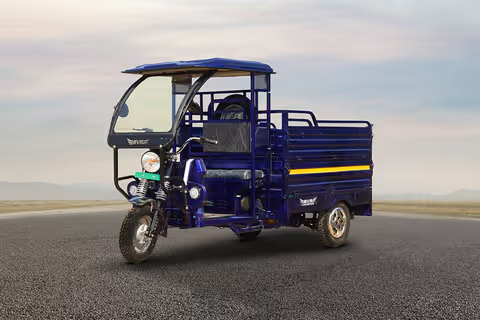 Bhave Electric E-Cart Champion ₹1.80 Lakh | 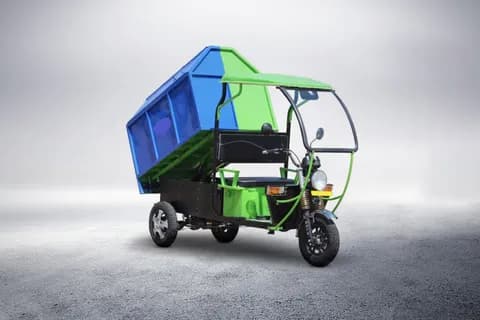 E-Ashwa E-Garbage Cart ₹1.80 Lakh |  Thukral Electric EC-5 ₹1.76 Lakh | 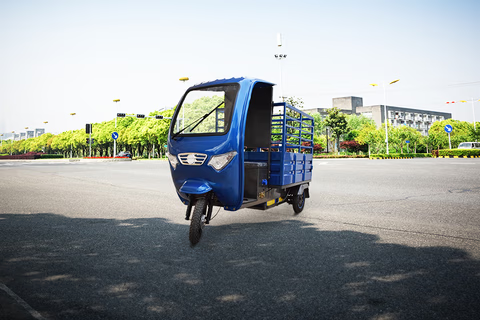 Eko Tejas RUGD-153 ₹1.80 Lakh | 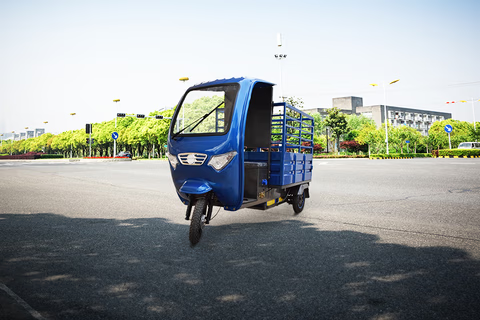 Eko Tejas RUGD-153 Electric/Cargo ₹1.80 Lakh | |
|---|---|---|---|---|---|---|
| Price | ₹1.80 Lakh | ₹1.80 Lakh | ₹1.80 Lakh | ₹1.76 Lakh | ₹1.80 Lakh | ₹1.80 Lakh |
| Body Type | 3 Wheeler | 3 Wheeler | 3 Wheeler | 3 Wheeler | 3 Wheeler | 3 Wheeler |
| Engine | NA | NA | NA | NA | NA | NA |
| Power | 2 hp | 1 hp | 1 hp | 12 kW | 1 hp | 1 hp |
| Max Torque | NA Nm | NA Nm | NA Nm | NA Nm | NA Nm | NA Nm |
| Mileage | 100-120 km/Per Charge | 80 Km/Full Charge | 40-50 km/charge | 70-80 kmpl | 80-120 | 80-120 |
| Gross Vehicle Weight | 350 kg | 400 kg | 1000 kg | 850 kg | 800 kg | 800 kg |
| Payload | 1088 Kgs | 400 Kgs | 160 Kgs | 400-500 Kgs | 900 kgs | 900 kgs |
| No. of Tyres | 3 | 3 | 3 | 3 | 3 | 3 |
| Fuel Type | Electric | Electric | Electric | Electric | Electric | Electric |
| Gear Box | 1 Forward + 1 Reverse | 1 Forward + 1 Reverse | 1 Forward + 1 Reverse | 1 Forward + 1 Reverse | 1 Forward + 1 Reverse | 1 Forward + 1 Reverse |
| Chassis Type | Chassis with Cabin | Chassis with Cabin | Chassis with Cabin | Chassis with Cabin | Chassis with Cabin | Chassis with Cabin |
You can compare up to 6 trucks at a time.
Review
Pros & Cons
Arrow Ev 121 Loader
Pros
- Reduced operating costs from electric power
- Zero tailpipe emissions for environmental benefits
- Quieter operation improving work environment
Cons
- Limited operating range on a single charge
- Longer recharging times affecting productivity
- Dependency on available charging infrastructure
Bhave Electric E-Cart Champion
Pros
- Zero tailpipe emissions contribute to cleaner air and a reduced carbon footprint
- Lower operational expenses due to cheaper electricity compared to fossil fuels
- Quieter operation enhances driver comfort and reduces noise pollution in urban areas
Cons
- Limited range per charge may restrict its usability for longer routes or continuous operation
- Reliance on adequate charging infrastructure which might not be uniformly available across all regions
- Initial purchase cost could be higher than comparable conventional fuel vehicles
E-Ashwa E-Garbage Cart
Pros
- The E Ashwa E Garbage Cart delivers outstanding fuel economy, with its CNG variant achieving an impressive 35 km/kg and the diesel variant providing a strong 32 km/l, drastically lowering operational expenses for waste collection operations.
- Offering Diesel, Petrol, and CNG variants, the E Ashwa E Garbage Cart provides commercial buyers with the flexibility to choose the ideal powertrain to match local fuel availability, operational requirements, and long-term cost-effectiveness.
- Engineered for demanding municipal duties, this E Ashwa E Garbage Cart features a sturdy chassis and a best-in-class payload capacity, maximizing the volume of waste collected per trip and enhancing operational efficiency.
Cons
- While perfectly suited for city hauling, the compact engine of the E Ashwa E Garbage Cart may exhibit limited power and speed on highways or during extended inter-city transfers, making it primarily a last-mile solution.
- Focusing heavily on utility, the cabin of the E Ashwa E Garbage Cart offers fundamental amenities, which might compromise driver comfort during prolonged shifts, particularly under varying Indian climatic conditions.
- Depending on the selected variant and any specialized waste handling equipment, the initial purchase price of the E Ashwa E Garbage Cart might be slightly higher than some bare-bones alternatives, requiring a larger upfront investment.
Thukral Electric EC-5
Pros
- The Thukral Electric Ec 5 offers exceptional fuel efficiency across its range, with the CNG variant delivering a best-in-class 35 km/kg and the diesel model achieving an impressive 32 km/l, significantly reducing operational costs for Indian businesses.
- Indian buyers appreciate that the Thukral Electric Ec 5 comes in Diesel, Petrol, and CNG options, allowing them to choose the most suitable and cost-effective fuel type based on regional availability and specific business needs for varied applications.
- Despite its compact footprint, the Thukral Electric Ec 5 boasts a robust chassis capable of handling substantial payloads up to 715 kg, making it exceptionally ideal for navigating crowded city streets and narrow lanes while efficiently transporting goods.
Cons
- While excellent for city runs, the relatively smaller engine displacement and lower power output of the Thukral Electric Ec 5 might feel underpowered on highways or for long-distance hauls, potentially affecting delivery times and driver comfort.
- The interior of the Thukral Electric Ec 5, while functional and durable for commercial use, is quite spartan, lacking advanced features and ergonomic comforts that might be expected by drivers spending long hours behind the wheel, especially compared to more premium offerings.
- Given its sturdy build, some operators might be tempted to consistently overload the Thukral Electric Ec 5 beyond its recommended 715 kg payload capacity, which can lead to accelerated wear and tear on crucial components, reduced safety, and higher long-term repair costs.
Eko Tejas RUGD-153
Pros
- The Eko Tejas Rugd 153 truly shines with its best-in-class fuel efficiency, delivering an impressive 32 km/l for its Diesel variant and up to 35 km/kg for its CNG model, which significantly lowers operational costs for Indian businesses.
- Its compact dimensions and exceptionally tight turning radius make the Eko Tejas Rugd 153 incredibly agile and easy to maneuver through congested Indian city streets and narrow market lanes, ensuring faster deliveries and reducing logistical headaches.
- Owners benefit from the Eko Tejas Rugd 153's reputation for low maintenance and readily available, affordable spare parts, contributing to lower overall running costs and greater uptime for demanding commercial operations.
Cons
- While highly efficient, the Eko Tejas Rugd 153, particularly its base variants (e.g., around 16 HP for Diesel), may exhibit limited power when consistently hauling maximum payload (up to 750 kg) or navigating steep inclines, potentially impacting journey times.
- The interior of the Eko Tejas Rugd 153 is quite utilitarian, offering only basic comfort features and restricted cabin space, which might lead to driver fatigue on longer routes or during extended daily usage in diverse Indian road conditions.
- Drivers might find the ride quality of the Eko Tejas Rugd 153 to be somewhat stiff or bouncy, especially when the vehicle is unladen, as its suspension is primarily optimized for carrying loads rather than passenger comfort.
Eko Tejas RUGD-153 Electric/Cargo
Pros
- The Eko Tejas Rugd 153 Electriccargo variants offer exceptional fuel economy, with the CNG model boasting up to 35 km/kg and the diesel variant delivering around 32 km/l, translating to significantly lower operational costs for businesses.
- Buyers can choose from highly efficient Diesel, economical Petrol, ultra-low-cost CNG, and environmentally friendly Electric options, ensuring there's an Eko Tejas Rugd 153 Electriccargo perfectly suited for diverse business needs and operating environments across India.
- Despite its compact footprint, the Eko Tejas Rugd 153 Electriccargo provides a robust payload capacity ranging from 600 kg to 700 kg across its ICE variants, allowing for efficient transportation of various goods within urban and semi-urban settings.
Cons
- The Eko Tejas Rugd 153 Electriccargo, particularly its smaller engine ICE variants, may struggle with steep inclines or sustained highway speeds when fully loaded, potentially impacting delivery schedules on longer routes.
- For the electric Eko Tejas Rugd 153 Electriccargo, the relatively limited range and the still-developing public charging infrastructure in many parts of India could present logistical challenges and range anxiety for operators planning longer routes.
- As an entry-level commercial vehicle, the Eko Tejas Rugd 153 Electriccargo's cabin prioritizes functionality over driver comfort, featuring basic amenities and limited ergonomic enhancements that might impact long-haul driving experience.
Which to buy
Which One Fits Your Use Case?
Arrow Ev 121 Loader
Best for:
- Logistics
Bhave Electric E-Cart Champion
Best for:
- Intercity transport of goods
E-Ashwa E-Garbage Cart
Best for:
- Door-to-Door Waste Collection
- Commercial Area Cleaning
- Society & Township Cleaning Services
Thukral Electric EC-5
Best for:
- Logistics
Eko Tejas RUGD-153
Best for:
- Small business logistics
- Last-mile delivery
Eko Tejas RUGD-153 Electric/Cargo
Best for:
- Last-mile delivery
- Small business logistics
FAQs