Avon E-Auto Greenway vs Diamond Shakti vs Godawari Eblu Cety E Rickshaw L3 vs Jitendra JET 650 Passenger vs Mahindra Treo Yaari vs Mahindra Treo Yaari 4-Seater/SFT: Price & Specs Comparison
By TruckOnWheels Editorial Team · Last updated 30 Dec 2025
Avon E-Auto Greenway and Diamond Shakti and Godawari Eblu Cety E Rickshaw L3 and Jitendra JET 650 Passenger and Mahindra Treo Yaari and Mahindra Treo Yaari 4-Seater/SFT are compared here on price, engine, mileage, and specifications to help you pick the right truck for your business.
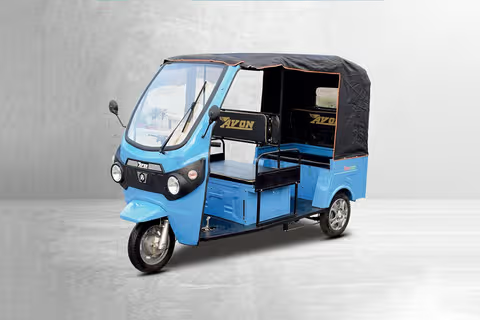 Avon E-Auto Greenway ₹1.95 Lakh | 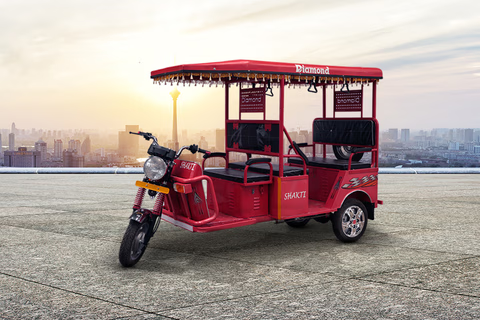 Diamond Shakti ₹1.95 Lakh |  Godawari Eblu Cety E Rickshaw L3 ₹2.05 Lakh | 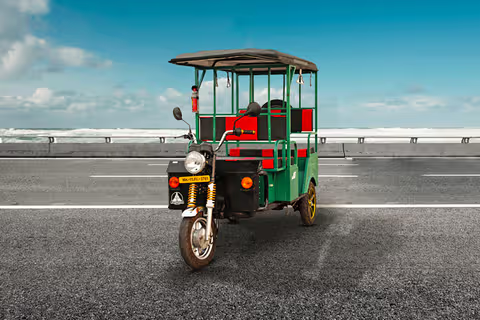 Jitendra JET 650 Passenger ₹2.00 Lakh | 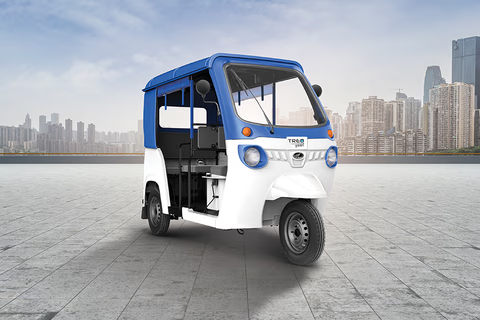 Mahindra Treo Yaari ₹1.96 Lakh - ₹2.04 Lakh | 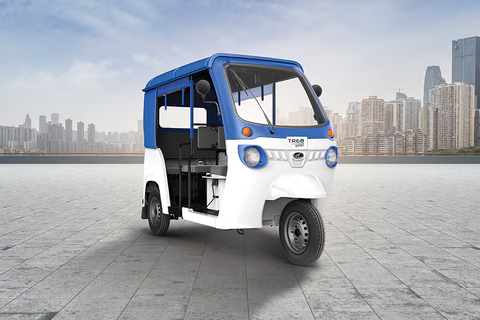 Mahindra Treo Yaari 4-Seater/SFT ₹1.96 Lakh - ₹2.04 Lakh | |
|---|---|---|---|---|---|---|
| Price | ₹1.95 Lakh | ₹1.95 Lakh | ₹2.05 Lakh | ₹2.00 Lakh | ₹1.96 Lakh - ₹2.04 Lakh | ₹1.96 Lakh - ₹2.04 Lakh |
| Body Type | E Rickshaw | E Rickshaw | E Rickshaw | E Rickshaw | E Rickshaw | E Rickshaw |
| Engine | NA | NA | NA | NA | NA | NA |
| Power | 1 hp | 1 hp | 1.45kW | 1 hp | 1.95 kW | 1.95 |
| Max Torque | NA Nm | NA Nm | 25 Nm Nm | 14.7 Nm Nm | 22 Nm Nm | 22 Nm Nm |
| Mileage | 100 km | 90-120KM | 95 KM/Full Charge | 90 KM/Full Charge | 125 | 125 |
| Gross Vehicle Weight | — | 530 kg | 693 kg | 710 kg | 740 kg | 740 kg |
| Payload | NA | NA | NA | NA | NA | NA |
| No. of Tyres | 3 | 3 | 3 | 3 | 3 | 3 |
| Fuel Type | Electric | Electric | Electric | Electric | Electric | Electric |
| Gear Box | 1 Forward + 1 Reverse | 1 Forward + 1 Reverse | 1 Forward + 1 Reverse | 1 Forward + 1 Reverse | 1 Forward + 1 Reverse | 1 Forward + 1 Reverse |
| Chassis Type | Chassis with Cabin | Chassis with Cabin | Chassis with Cabin | Chassis with Cabin | Chassis with Cabin | Chassis with Cabin |
You can compare up to 6 trucks at a time.
Review
Pros & Cons
Avon E-Auto Greenway
Pros
- Clearly communicates its electric vehicle nature with E Auto
- Strongly emphasizes environmental friendliness and sustainability through Greenway
- The name components align well to create a cohesive message of clean transportation
Cons
- Avon may carry a subtle association with a cosmetic brand, potentially clashing with a truck's rugged image
- The E Auto component is functional but might lack a truly unique brand identity beyond its propulsion type
- Greenway while positive, could be perceived as slightly generic or overtly descriptive rather than evocative
Diamond Shakti
Pros
- The name evokes a strong sense of power and robust strength.
- It suggests premium quality and high durability for the vehicle.
- Shakti resonates deeply with the Indian market, symbolizing energy and capability.
Cons
- The name might suggest a higher price point, potentially deterring budget conscious buyers.
- Diamond could be perceived as too luxurious or delicate for a utilitarian working truck.
- Shakti might not be easily understood or pronounced by non-Indian international audiences.
Godawari Eblu Cety E Rickshaw L3
Pros
- Zero tailpipe emissions contribute to cleaner air
- Lower operating costs due to cheaper electricity compared to fossil fuels
- Quiet operation reduces noise pollution in urban areas
Cons
- Limited driving range on a single charge
- Longer charging times compared to refueling a petrol vehicle
- Dependency on available charging infrastructure
Jitendra JET 650 Passenger
Pros
- Affordable initial purchase price
- Economical fuel consumption for operators
- Lower maintenance and service costs
Cons
- Basic passenger comfort levels for longer journeys
- Limited advanced safety features
- Modest engine performance, especially with a full load or on inclines
Mahindra Treo Yaari
Pros
- The Mahindra Treo Yaari truly stands out with its class-leading mileage figures, delivering an impressive 32 km/l for its Diesel variant and an exceptional 35 km/kg for its CNG model, directly translating to significant savings for daily operations.
- Designed for diverse commercial needs, the Mahindra Treo Yaari offers a robust payload capacity typically ranging from 600 kg to 700 kg, making it a reliable workhorse for last-mile delivery across various goods.
- Backed by Mahindra's extensive and trusted service network across India, owners of the Mahindra Treo Yaari benefit from readily available parts, expert maintenance, and peace of mind, ensuring minimal downtime for their business.
Cons
- While adequate for urban flat terrains, the engine of the Mahindra Treo Yaari, typically in the 16-23 HP range, might feel underpowered when tackling very steep inclines or carrying maximum payload over extended hilly routes.
- Prioritizing utility and affordability, the cabin of the Treo Yaari offers fundamental amenities, which might lead to some discomfort during long working hours for drivers accustomed to more refined commercial vehicles.
- The compact design and engine tuning of the Treo Yaari are optimized for city driving, meaning its top speed and sustained highway cruising ability might be limited, making it less ideal for inter-city long-haul operations.
Mahindra Treo Yaari 4-Seater/SFT
Pros
- The Mahindra Treo Yaari 4 Seatersft offers exceptionally low running costs, typically ranging from ₹0.50-₹0.70 per kilometer, which translates to significant daily savings and higher profitability for operators compared to fuel-based alternatives.
- Being an electric vehicle, the Mahindra Treo Yaari 4 Seatersft boasts zero tailpipe emissions and incredibly silent, vibration-free operation, enhancing passenger comfort and contributing positively to urban air quality.
- With fewer moving parts than traditional internal combustion engine autos, the Mahindra Treo Yaari 4 Seatersft promises substantially reduced maintenance requirements and associated costs, improving overall vehicle uptime and long-term economic viability.
Cons
- Despite a claimed range of 125-140 km, real-world range can be influenced by load, driving style, and terrain, potentially leading to 'range anxiety' for operators planning longer routes with the Mahindra Treo Yaari 4 Seatersft.
- Reliance on adequate charging infrastructure, which might still be developing in certain regions, coupled with a typical 4-5 hour charging time for a full battery, can limit operational flexibility and impact daily earning potential.
- The maximum speed of approximately 45-50 km/h, while suitable for urban commutes, might be perceived as a limitation on longer stretches or in situations demanding quicker transit, potentially affecting route efficiency compared to faster conventional autos.
Which to buy
Which One Fits Your Use Case?
FAQs