Avon E-CARGO vs Avon E-CARGO Electric/Cargo vs JSA E Cart vs E-Ranger Loader vs JSA E-CART XL vs Gayam Motor Works LOADER E-AUTO (TUK-TUK): Price & Specs Comparison
By TruckOnWheels Editorial Team · Last updated 18 May 2026
Gayam Motor Works LOADER E-AUTO (TUK-TUK) leads on power at 10 HP.
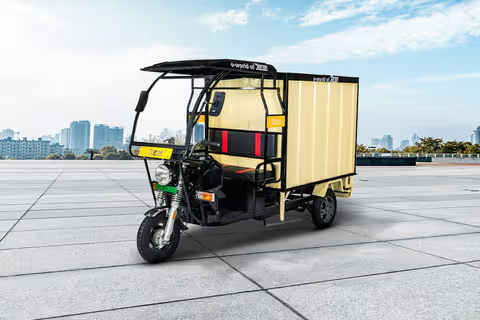 Avon E-CARGO ₹1.41 Lakh | Avon E-CARGO Electric/Cargo ₹1.41 Lakh | 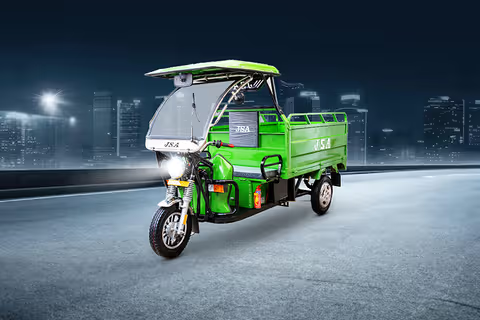 JSA E Cart ₹1.40 Lakh | 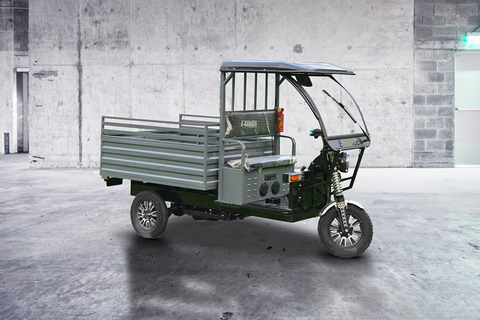 E-Ranger Loader ₹1.42 Lakh | 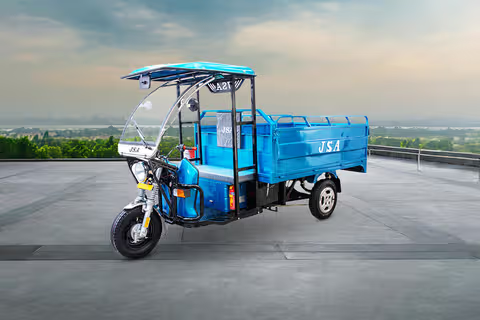 JSA E-CART XL ₹1.40 Lakh | 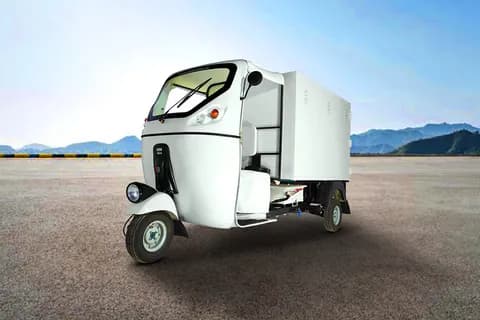 Gayam Motor Works LOADER E-AUTO (TUK-TUK) ₹1.40 Lakh | |
|---|---|---|---|---|---|---|
| Price | ₹1.41 Lakh | ₹1.41 Lakh | ₹1.40 Lakh | ₹1.42 Lakh | ₹1.40 Lakh | ₹1.40 Lakh |
| Body Type | 3 Wheeler | 3 Wheeler | 3 Wheeler | 3 Wheeler | 3 Wheeler | 3 Wheeler |
| Engine | NA | NA | NA | NA | NA | NA |
| Power | 1 hp | 1 hp | 1 hp | 1 hp | 1 hp | 10 hp |
| Max Torque | NA Nm | NA Nm | NA Nm | NA Nm | NA Nm | NA Nm |
| Mileage | 100-150 km | 150 km/Per Charge | 80-100 km/Per Charge | 100 KM | 100 KM/Full Charge | 60-110 Km/range |
| Gross Vehicle Weight | 550 kg | 550 kg | 322 kg | 729 kg | 500 kg | 600 kg |
| Payload | NA | 380 Kgs | 322 Kgs | 310 Kgs | 500 Kgs | 400 Kgs |
| No. of Tyres | 3 | 3 | 3 | 3 | 3 | 3 |
| Fuel Type | Electric | Electric | Electric | Electric | Electric | Electric |
| Gear Box | 1 Forward + 1 Reverse | 1 Forward + 1 Reverse | Constant Mesh | 1 Forward + 1 Reverse | 1 Forward + 1 Reverse | NA |
| Chassis Type | Heavy Duty Chassis | Heavy Duty Chassis | Chassis with Cabin | Chassis with Cabin | Chassis with Cabin | Chassis with Cabin |
You can compare up to 6 trucks at a time.
Review
Pros & Cons
Avon E-CARGO
Pros
- Lower operational expenses from electricity consumption
- Zero tailpipe emissions contributing to cleaner air
- Reduced noise pollution ideal for urban environments
Cons
- Shorter driving range compared to traditional fuel vehicles
- Availability and density of charging infrastructure can be limited
- Longer time required for battery recharging impacting operational schedules
Avon E-CARGO Electric/Cargo
Pros
- Zero tailpipe emissions
- Reduced fuel expenses due to electricity use
- Quieter urban and night time deliveries
Cons
- Limited driving range compared to traditional fuel vehicles
- Dependence on developing charging infrastructure
- Higher initial purchase price
JSA E Cart
Pros
- Zero tailpipe emissions contributing to cleaner air
- Lower running costs due to cheaper electricity compared to fuel
- Reduced noise pollution ideal for urban and residential zones
Cons
- Limited driving range compared to traditional fuel vehicles
- Availability and reliability of charging infrastructure can be a challenge
- Longer charging times compared to refueling a petrol or diesel truck
E-Ranger Loader
Pros
- Clearly indicates an electric powertrain, appealing to environmental concerns and lower operating expenses.
- Suggests robust build and capability to operate in diverse Indian terrains.
- Its primary function as a loading vehicle is immediately understood by potential buyers.
Cons
- Charging infrastructure may be inadequate in many operational areas across India, limiting usability.
- Higher upfront purchase cost compared to traditional diesel alternatives could deter some buyers.
- Range limitations and battery degradation over time could impact operational efficiency and resale value.
JSA E-CART XL
Pros
- Zero tailpipe emissions
- Lower operational cost due to electricity consumption
- Reduced engine noise for quieter operation in urban areas
Cons
- Limited driving range per charge compared to conventional trucks
- Requires access to dedicated charging infrastructure which may not be widespread
- Longer refueling time as compared to petrol or diesel vehicles
Gayam Motor Works LOADER E-AUTO (TUK-TUK)
Pros
- The Gayam Motor Works Loader E Auto Tuk Tuk, across its Diesel, Petrol, and CNG variants, offers outstanding fuel economy, with its CNG model delivering around 35 km/kg and Diesel variants achieving up to 32 km/l, significantly reducing daily operational costs for budget-conscious Indian businesses.
- Designed for congested Indian streets, the Gayam Motor Works Loader E Auto Tuk Tuk boasts a compact footprint and tight turning radius, making it incredibly agile for navigating narrow lanes and bustling markets where larger mini-trucks struggle.
- With an ex-showroom price typically ranging from ₹2.5 Lakhs to ₹4.5 Lakhs depending on the variant and features, this vehicle represents an affordable entry point for entrepreneurs, promising a quicker return on investment through its low running costs and high utility.
Cons
- While efficient for city runs, the Gayam Motor Works Loader E Auto Tuk Tuk, particularly its petrol and CNG variants, will feel underpowered on steep inclines or extended highway journeys, struggling to maintain higher speeds with a full load compared to more powerful LCVs.
- As an auto-rickshaw based commercial vehicle, it offers fundamental driver amenities and safety provisions, lacking the ergonomic comforts, cabin space, or advanced safety features typically found in dedicated mini-trucks, which can be a concern for long operational hours.
- Despite its utility, the vehicle's inherent design limits its maximum payload to the stated 350-500 kg range, rendering it unsuitable for businesses requiring transport of heavier materials or bulkier goods that necessitate a higher capacity mini-truck.
Which to buy
Which One Fits Your Use Case?
Avon E-CARGO
Best for:
- Bulk cargo movement
Avon E-CARGO Electric/Cargo
Best for:
- Intercity transport of goods
JSA E Cart
Best for:
- logistics
E-Ranger Loader
Best for:
- Intercity transport of goods
JSA E-CART XL
Best for:
- logistics
Gayam Motor Works LOADER E-AUTO (TUK-TUK)
Best for:
- Last-Mile Delivery (E-commerce & Courier)
- Small Business Transport
FAQs
Frequently Asked Questions
Which has better power, Avon E-CARGO vs Avon E-CARGO Electric/Cargo vs JSA E Cart vs E-Ranger Loader vs JSA E-CART XL vs Gayam Motor Works LOADER E-AUTO (TUK-TUK)?
+−
Gayam Motor Works LOADER E-AUTO (TUK-TUK) has the better power at 10 HP.
Which has better mileage, Avon E-CARGO vs Avon E-CARGO Electric/Cargo vs JSA E Cart vs E-Ranger Loader vs JSA E-CART XL vs Gayam Motor Works LOADER E-AUTO (TUK-TUK)?
+−
Avon E-CARGO Electric/Cargo has the better mileage at 150 km/l.
Which has better payload, Avon E-CARGO vs Avon E-CARGO Electric/Cargo vs JSA E Cart vs E-Ranger Loader vs JSA E-CART XL vs Gayam Motor Works LOADER E-AUTO (TUK-TUK)?
+−
JSA E-CART XL has the better payload at 500 kg.
What is the truck price in India for the Avon E Cargo?
+−
The truck price in India for the Avon E Cargo is highly competitive, offering exceptional value for an electric commercial vehicle. We encourage you to contact our sales team or visit our dealerships for the most current pricing and any ongoing offers. It's an investment that offers significant long-term savings.
What is the approximate on-road price of the Avon E Cargo in India?
+−
The on-road price typically ranges from INR 1.5 lakhs to 2.5 lakhs, varying by state subsidies, taxes, and specific dealer offers for this segment of electric cargo vehicles.
What is the estimated truck price in India for the Jsa E Cart?
+−
The truck price in India for the Jsa E Cart is highly competitive, offering excellent value for an electric small commercial vehicle. Please contact your nearest TruckOnWheels dealership or visit our website for the most current pricing details and available variants.
What is the estimated ex-showroom price of the E Ranger Loader in India?
+−
The ex-showroom price for the E Ranger Loader typically starts from around INR 3.5 Lakhs, varying slightly by city and state subsidies.
What is the *truck price in India* for the Jsa E Cart XL?
+−
The *truck price in India* for the Jsa E Cart XL can vary based on location, specific variant, and any ongoing offers. We recommend contacting our nearest dealer for the most accurate and up-to-date pricing information for this electric *small commercial vehicle*.
What is the ex-showroom price of the Gayam Motor Works Loader E Auto Tuk Tuk in India?
+−
The ex-showroom price for the Gayam Motor Works Loader E Auto Tuk Tuk typically ranges from ₹3.20 Lakh to ₹3.60 Lakh in India, varying slightly based on specific configurations and regional subsidies.