Bajaj Riki C40 05 E Cart vs Bajaj Riki C40 05 E Cart Electric/Loader vs EBUZZ Cargo vs Eko Tejas Fruit Cart vs Hitech Garbage E-Loader vs Ak Auto Electrical Tik Tiek Loader: Price & Specs Comparison
By TruckOnWheels Editorial Team · Last updated 7 May 2026
Eko Tejas Fruit Cart is the more affordable option here by about ₹4,000. Hitech Garbage E-Loader leads on payload at 500 kg.
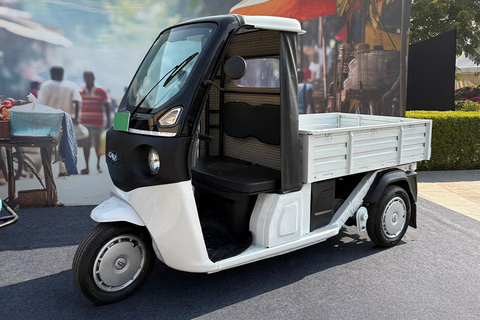 Bajaj Riki C40 05 E Cart ₹2.01 Lakh | 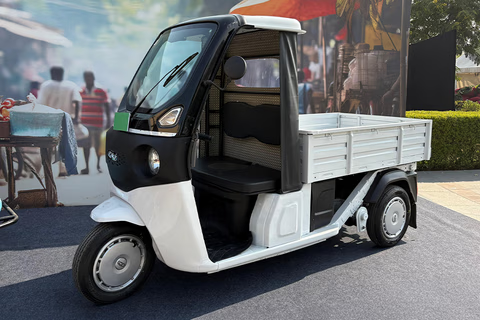 Bajaj Riki C40 05 E Cart Electric/Loader ₹2.01 Lakh | 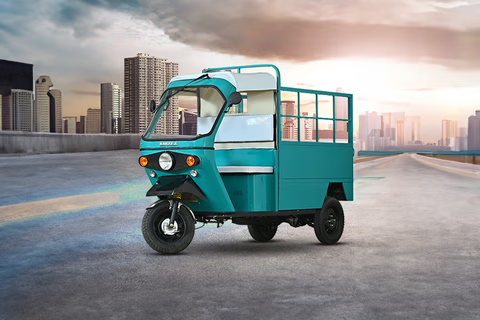 EBUZZ Cargo ₹2.10 Lakh | 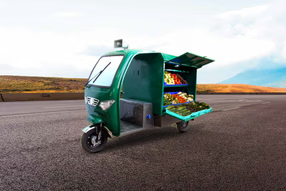 Eko Tejas Fruit Cart ₹1.95 Lakh | 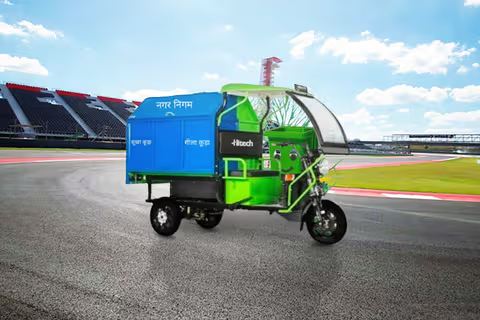 Hitech Garbage E-Loader ₹1.99 Lakh | 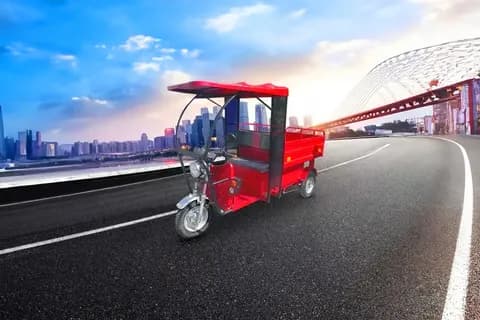 Ak Auto Electrical Tik Tiek Loader ₹2.00 Lakh | |
|---|---|---|---|---|---|---|
| Price | ₹2.01 Lakh | ₹2.01 Lakh | ₹2.10 Lakh | ₹1.95 Lakh | ₹1.99 Lakh | ₹2.00 Lakh |
| Body Type | 3 Wheeler | 3 Wheeler | 3 Wheeler | 3 Wheeler | 3 Wheeler | 3 Wheeler |
| Engine | NA | NA | NA | NA | NA | NA |
| Power | 1.99 kW | 1.99 kW | 1.25 kW | 1 hp | 1 hp | 1 hp |
| Max Torque | 25 Nm Nm | 25 Nm Nm | 30 Nm Nm | NA Nm | NA Nm | NA Nm |
| Mileage | 164 | 164 | 100 KM | 80-120 KM/Full Charge | 120 KM/Full Charge | 100 km/charge |
| Gross Vehicle Weight | 793 kg | 793 kg | 3000 kg | 831 kg | 1500 kg | 310 kg |
| Payload | 310-322 kg | 310-322 kg | 400 Kgs | 452 Kgs | 500 Kgs | 415 Kgs |
| No. of Tyres | 3 | 3 | 3 | 3 | 3 | 3 |
| Fuel Type | Electric | Electric | Electric | Electric | Electric | Electric |
| Gear Box | 1 Forward + 1 Reverse | 1 Forward + 1 Reverse | 1 Forward + 1 Reverse | 1 Forward + 1 Reverse | 1 Forward + 1 Reverse | 1 Forward + 1 Reverse |
| Chassis Type | Monocoque Chasis | Monocoque Chasis | Chassis with Cabin | Chassis with Cabin | Chassis with Cabin | Square Tubular Pipe |
You can compare up to 6 trucks at a time.
Review
Pros & Cons
Bajaj Riki C40 05 E Cart
Pros
- The Bajaj Riki C40 05 E Cart, aiming for segment leadership, could potentially offer impressive fuel efficiency, comparable to the Mahindra Jeeto's best-in-class figures of up to 32 km/l for its diesel variant and a remarkable 35 km/kg for CNG, significantly reducing operational costs for Indian truck buyers.
- Designed for varied logistics needs, the Bajaj Riki C40 05 E Cart is expected to feature a robust chassis supporting a competitive payload capacity, potentially up to 700-715 kg, making it highly versatile for small to medium-scale commercial deliveries across diverse terrains.
- To cater to diverse market demands and fuel preferences, the Bajaj Riki C40 05 E Cart product family is likely to offer multiple fuel options including Diesel, Petrol, and CNG, providing businesses with flexibility in choosing the most cost-effective and suitable powertrain for their routes.
Cons
- While efficient, the Bajaj Riki C40 05 E Cart's engine, if aligned with competitors like the Jeeto, might offer a peak power output of around 16-23 HP and torque of 42-48 Nm, which could feel underpowered for steep inclines or heavy loads on highways compared to larger commercial vehicles.
- The focus on utilitarian design and cost-effectiveness in the Bajaj Riki C40 05 E Cart might result in a basic cabin with limited comfort features, potentially lacking amenities such as air conditioning or advanced infotainment systems that are increasingly desired for long-haul drivers.
- While Bajaj excels in 3-wheelers, the Bajaj Riki C40 05 E Cart might face an uphill battle in establishing strong brand perception and trust in the highly competitive 4-wheel small commercial vehicle segment against established players like Mahindra and Tata.
Bajaj Riki C40 05 E Cart Electric/Loader
Pros
- The Bajaj Riki C40 05 E Cart Electricloader boasts significantly lower per-kilometer running costs compared to its diesel or CNG counterparts, offering substantial savings on fuel expenses and a compelling economic advantage for daily urban logistics.
- This electric loader ensures zero tailpipe emissions and nearly silent operation, making it ideal for navigating bustling cityscapes and eco-sensitive zones while contributing to reduced air and noise pollution.
- Buyers of the Bajaj Riki C40 05 E Cart Electricloader can often avail themselves of attractive government subsidies under schemes like FAME II, which considerably brings down the initial purchase price and enhances its affordability.
Cons
- While adequate for urban routes, the Bajaj Riki C40 05 E Cart Electricloader has a finite range per charge (typically 80-100 km), and its charging time (around 4-5 hours) might pose challenges for operators needing continuous, multi-shift operations without dedicated fast-charging infrastructure.
- Despite subsidies, the upfront cost of the Bajaj Riki C40 05 E Cart Electricloader can still be higher than its traditional ICE cargo counterparts, such as a comparable Bajaj Maxima C Diesel (which might offer a mileage of around 32 km/l) or CNG variant (boasting up to 35 km/kg), potentially requiring a longer payback period.
- The electric motor on the Bajaj Riki C40 05 E Cart Electricloader might offer slightly less sustained torque under heavy loads or on steep inclines compared to a robust diesel engine, which could impact performance in challenging terrains or with maximum payload.
EBUZZ Cargo
Pros
- The name suggests modern technology and efficiency with the 'E' prefix.
- 'Cargo' clearly communicates the vehicle's primary function for carrying goods.
- It is relatively memorable and distinct, potentially aiding brand recognition.
Cons
- The 'buzz' element could inadvertently suggest noise, which is generally undesirable for a vehicle.
- It might not immediately convey ruggedness, power, or heavy-duty capability, traits often associated with trucks.
- Some potential customers might prefer names that sound more traditional or established for reliability.
Eko Tejas Fruit Cart
Pros
- The name clearly communicates the primary product sold.
- Eko suggests potential environmental friendliness or economical pricing.
- Tejas provides a strong indigenous Indian identity and local flavor.
Cons
- The exact meaning or intent behind Eko may be ambiguous to some consumers.
- Tejas could be interpreted as a personal name a region or a different brand leading to confusion.
- The term Fruit Cart might limit brand expansion into other product categories in the future.
Hitech Garbage E-Loader
Pros
- Clearly communicates its primary function as an electric garbage loader
- Projects an image of modern and advanced technology through 'Hitech'
- Highlights its environmental friendliness by explicitly stating 'E Loader'
Cons
- Lacks a distinct brand identity or emotional appeal beyond its functional description
- The inclusion of 'Garbage' might be perceived as less aspirational or elegant for a brand name
- Quite long and can be cumbersome to remember or use in casual conversation and marketing slogans
Ak Auto Electrical Tik Tiek Loader
Pros
- The Tik Tiek Loader Electric product family, especially its Diesel and CNG variants, stands out with class-leading mileage figures like 32 km/l for Diesel and an impressive 35 km/kg for CNG, significantly lowering operational costs for daily business.
- Offering a comprehensive range including Diesel, Petrol, CNG, and a truly zero-emission Electric variant, the Tik Tiek Loader Electric provides unmatched flexibility for Indian buyers to choose a powertrain best suited for their specific routes, cargo, and fuel availability.
- Designed for urban and semi-urban Indian roads, this loader boasts a compact footprint and excellent turning radius, making the Tik Tiek Loader Electric highly maneuverable through congested markets and narrow lanes where larger vehicles struggle.
Cons
- While efficient, the 625cc Diesel/Petrol/CNG engines of the Tik Tiek Loader Electric can feel underpowered when climbing steep inclines with a full load, potentially impacting trip times and engine strain.
- The cabin of the Tik Tiek Loader Electric, while functional, offers very basic features and limited comfort amenities, which might be a concern for drivers spending long hours on the road in varied Indian weather conditions.
- The Electric variant of the Tik Tiek Loader Electric, while eco-friendly, has a practical range of around 80-90 km, which might lead to range anxiety for longer routes, compounded by the still-developing public charging infrastructure in many parts of India.
Which to buy
Which One Fits Your Use Case?
Bajaj Riki C40 05 E Cart
Best for:
- Small business logistics
Bajaj Riki C40 05 E Cart Electric/Loader
Best for:
- Small business logistics
EBUZZ Cargo
Best for:
- Intercity transport of goods
Eko Tejas Fruit Cart
Best for:
- Small business logistics
- Agriculture
- Small CVs)- Last-mile delivery
Hitech Garbage E-Loader
Best for:
- Municipal solid waste
Ak Auto Electrical Tik Tiek Loader
Best for:
- Logistics
FAQs