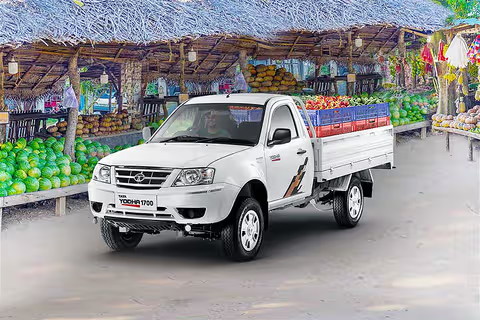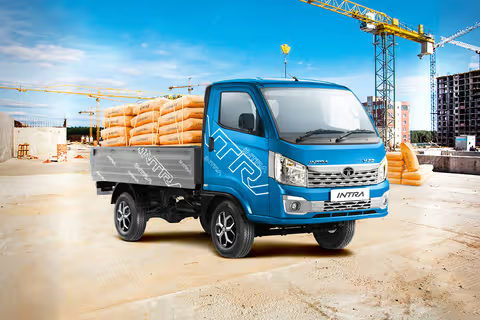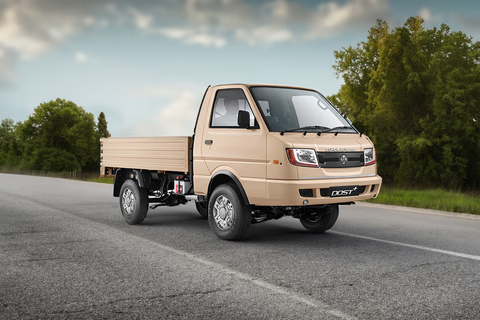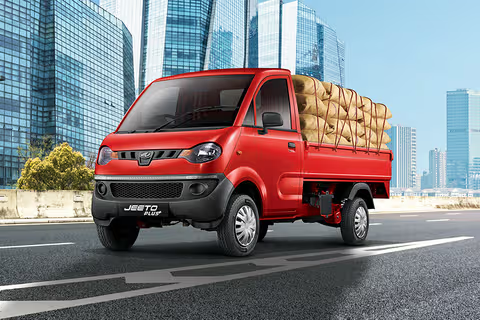
Ashok Leyland Bada Dost CNG vs Ashok Leyland Bada Dost CNG 2510/CNG vs Ashok Leyland Bada Dost i5 vs EKA K1.5 vs Tata Ace EV vs Tata Ace EV 1000: Price & Specs Comparison
By TruckOnWheels Editorial Team · Last updated 29 Apr 2026
Ashok Leyland Bada Dost i5 is the more affordable option here by about ₹60,000. Ashok Leyland Bada Dost i5 leads on payload at 1817 kg.
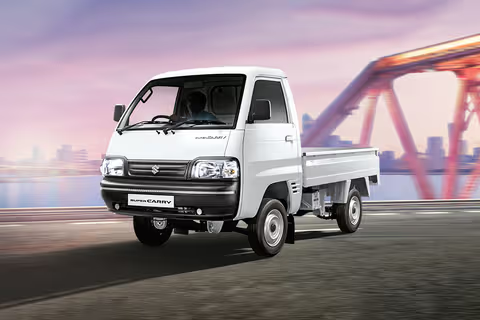
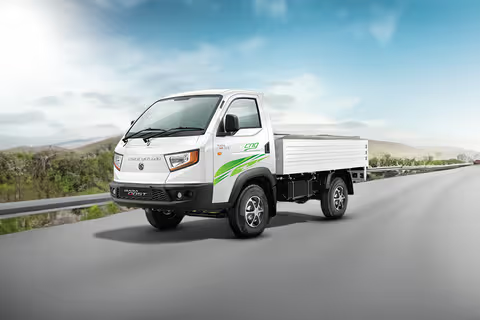 Ashok Leyland Bada Dost CNG ₹10.73 Lakh | Ashok Leyland Bada Dost CNG 2510/CNG ₹10.73 Lakh | 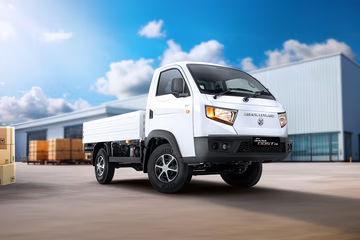 Ashok Leyland Bada Dost i5 ₹9.63 Lakh - ₹9.91 Lakh | 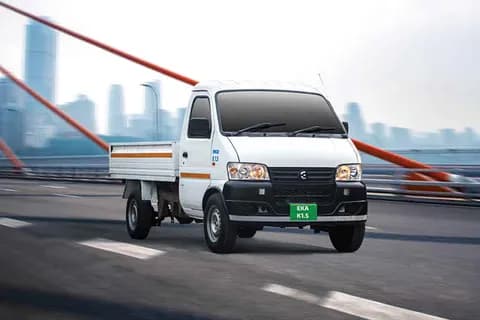 EKA K1.5 ₹11.00 Lakh | 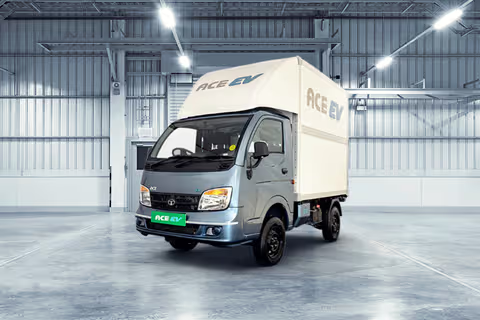 Tata Ace EV ₹10.51 Lakh | 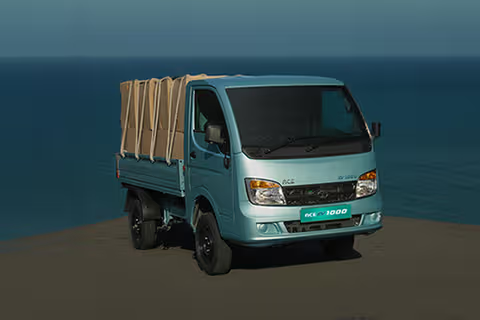 Tata Ace EV 1000 ₹11.30 Lakh - ₹11.50 Lakh | |
|---|---|---|---|---|---|---|
| Price | ₹10.73 Lakh | ₹10.73 Lakh | ₹9.63 Lakh - ₹9.91 Lakh | ₹11.00 Lakh | ₹10.51 Lakh | ₹11.30 Lakh - ₹11.50 Lakh |
| Body Type | Mini Trucks | Mini Trucks | Mini Trucks | Mini Trucks | Mini Trucks | Mini Trucks |
| Engine | 1478 cc | 1478 cc | 1478 cc | NA | 21.3 cc | NA |
| Power | 58 Hp | 58 Hp | 80 hp | 80 hp | 27 kw | 27 kW |
| Max Torque | 160 Nm Nm | 160 Nm Nm | 190 Nm Nm | 220 Nm Nm | 130 Nm Nm | 130 Nm Nm |
| Mileage | 13 - 15 kmpl | 13 - 15 kmpl | 13-15 kmpl | 180 Km/full charge | 154\km/Per Charge | 161 km/Charge |
| Gross Vehicle Weight | 2880 kg | 2880 kg | 3490 kg | 2510 kg | 1840 kg | 2120 kg |
| Payload | 1246 Kgs | 1246 Kgs | 1817 Kgs | 1300 Kgs | 600 Kgs | 1000 Kgs |
| No. of Tyres | 4 | 4 | 4 | 4 | 4 | 4 |
| Fuel Type | CNG | CNG | Diesel | Electric | Electric | Electric |
| Gear Box | Fully synchronized 5 speed manual gearbox and reverse with constant mesh | Fully synchronized 5 speed manual gearbox and reverse with constant mesh | 5 Forward +1 Reverse | 1 Forward + 1 Reverse | Single Speed | Single Speed |
| Chassis Type | Chassis with Cabin | Chassis with Cabin | Chassis with Cabin | Ladder Frame | Chassis with Cabin | Chassis with Face Cowl |
You can compare up to 6 trucks at a time.
Review
Pros & Cons
Ashok Leyland Bada Dost CNG
Pros
- Lower operating costs due to cheaper CNG fuel
- Reduced environmental pollution with cleaner emissions
- Quieter engine operation compared to diesel trucks
Cons
- Limited availability of CNG refueling stations in many areas
- Shorter driving range between refills compared to diesel
- Slightly lower engine power and torque output
Ashok Leyland Bada Dost CNG 2510/CNG
Pros
- Significantly lower running costs due to cheaper compressed natural gas fuel
- Eco friendly operation with reduced emissions ideal for urban environments
- Quieter engine operation compared to diesel alternatives enhances driver comfort
Cons
- Limited driving range requiring more frequent refueling stops
- Refueling infrastructure for CNG may not be as widespread as diesel especially in rural areas
- Slightly lower power and torque output compared to diesel models potentially affecting heavy loads
Ashok Leyland Bada Dost i5
Pros
- The Ashok Leyland Bada Dost I5 truly stands out with its segment-leading payload capacity of up to 1425 kg and a remarkably long loading deck of 9.4 feet, allowing for efficient transportation of bulky and heavy goods across various routes.
- Offering a car-like driving experience, the spacious and ergonomically designed cabin of the Ashok Leyland Bada Dost I5 provides superior driver comfort, significantly reducing fatigue on long hauls, further enhanced by features like optional AC.
- With robust Diesel, Petrol, and CNG engine options, each delivering competitive power (e.g., 80 HP for Diesel, 88 HP for Petrol) and torque figures, the Bada Dost I5 caters to diverse operational requirements and fuel preferences, offering great versatility.
Cons
- Compared to some direct competitors in the light commercial vehicle segment, the Ashok Leyland Bada Dost I5 has a slightly higher ex-showroom price point, which might be a significant factor impacting the initial investment for smaller operators and startups.
- Despite its versatility, the longer wheelbase and overall dimensions of the Bada Dost I5 can make navigating extremely congested city lanes and executing tight turns a bit challenging, especially for new drivers or in highly restricted urban environments.
- While improved, the overall cabin refinement and Noise, Vibration, and Harshness (NVH) levels, particularly emanating from the engine and suspension, might still be a notch below modern passenger vehicles, potentially affecting driver comfort on very long journeys.
EKA K1.5
Pros
- The Eka K15 truly stands out with its class-leading fuel efficiency, offering an impressive 35 km/kg for the CNG variant and 32 km/l for the Diesel, significantly reducing operational costs for Indian businesses.
- Catering to diverse needs, the Eka K15 is available in robust Diesel, efficient Petrol, and ultra-economical CNG variants, ensuring there's a perfect match for every route and load profile.
- With a commendable payload capacity of up to 750 kg, the Eka K15 allows for efficient transportation of goods, maximizing earning potential for owners across various industries.
Cons
- As a relatively newer player in the ICE small commercial vehicle segment, the Eka K15 might face challenges with a less extensive service and spares network compared to established giants, potentially impacting vehicle uptime.
- While functional, the Eka K15's cabin comfort and features are quite basic, which might be a concern for drivers on longer hauls or those accustomed to more creature comforts found in some rivals.
- Although adequate for most city runs, the engine power and torque across the Eka K15's variants, particularly the Diesel (around 16 HP) and CNG (around 23 HP), might feel slightly underpowered on steep inclines or when carrying maximum load over long distances.
Tata Ace EV
Pros
- Strong brand recognition due to Tata's established presence
- Leverages the familiar and trusted Ace sub-brand for mini-trucks
- Clearly communicates its electric powertrain with the EV suffix
Cons
- The Ace name might sound less modern or innovative for an electric vehicle
- The full name Tata Ace EV is relatively long with three distinct components
- Ace is a common term and may not stand out uniquely in the competitive EV market
Tata Ace EV 1000
Pros
- Zero tailpipe emissions contribute to cleaner urban air
- Lower running costs due to cheaper electricity compared to fossil fuels
- Reduced noise pollution ideal for quiet city deliveries and residential areas
Cons
- Higher initial purchase price compared to its conventional fuel counterparts
- Limited driving range may restrict operations requiring longer distances
- Longer charging times compared to the rapid refueling of petrol or diesel vehicles
Which to buy
Which One Fits Your Use Case?
Ashok Leyland Bada Dost CNG
Best for:
- Last-mile delivery
- Small business logistics
- Agriculture
Ashok Leyland Bada Dost CNG 2510/CNG
Best for:
- Last-mile delivery
- Small business logistics
- Agriculture
Ashok Leyland Bada Dost i5
Best for:
- Small business logistics
- Agriculture
EKA K1.5
Best for:
- Last-mile delivery
- Small business logistics
Tata Ace EV
Best for:
- Small business logistics
- Last-mile delivery
- Last-mile delivery
Tata Ace EV 1000
Best for:
- Last-mile delivery
- Small business logistics
- Agriculture
FAQs