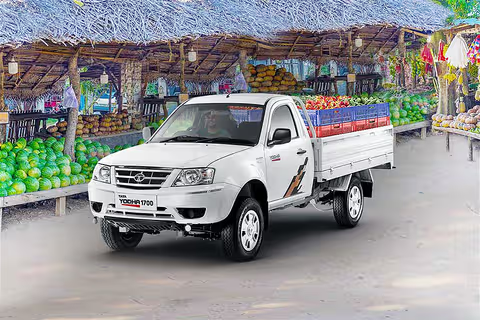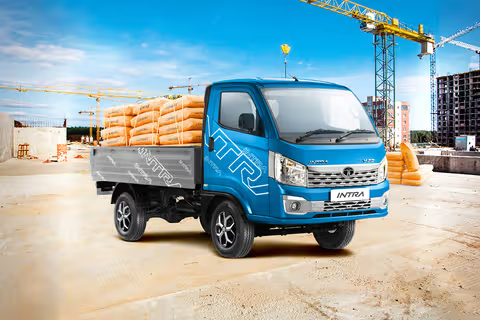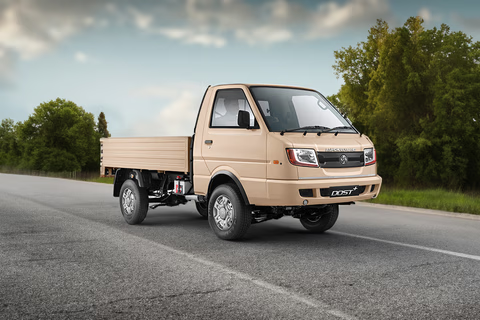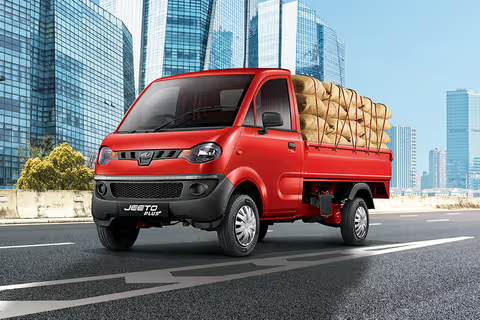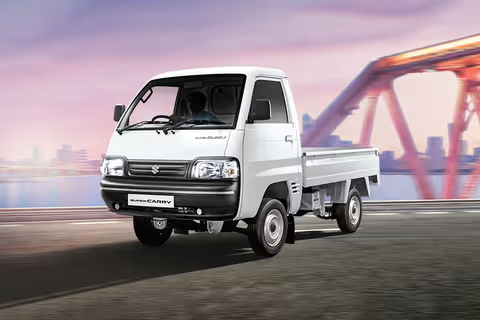
Ashok Leyland Dost CNG vs Ashok Leyland Dost Strong vs Ashok Leyland Dost Twin Fuel vs E-Trio eLCV vs Mahindra Zeo vs Tata Intra V30 Gold: Price & Specs Comparison
By TruckOnWheels Editorial Team · Last updated 7 Jul 2026
Ashok Leyland Dost Twin Fuel is the more affordable option here by about ₹5,000. Mahindra Zeo leads on mileage at 145 km/l.
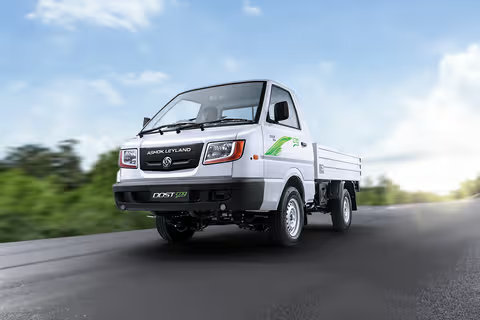 Ashok Leyland Dost CNG ₹8.15 Lakh - ₹8.35 Lakh | 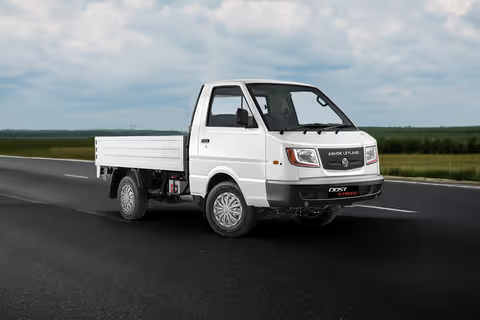 Ashok Leyland Dost Strong ₹7.95 Lakh - ₹8.40 Lakh | 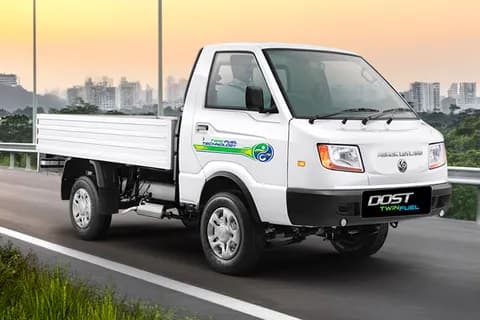 Ashok Leyland Dost Twin Fuel ₹8.20 Lakh | 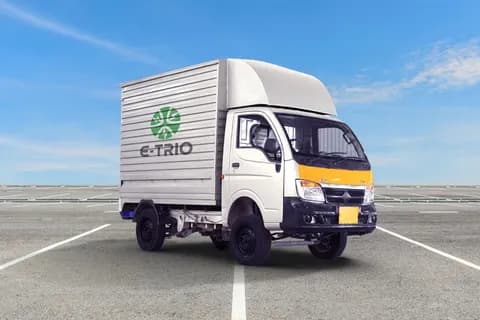 E-Trio eLCV ₹8.25 Lakh | 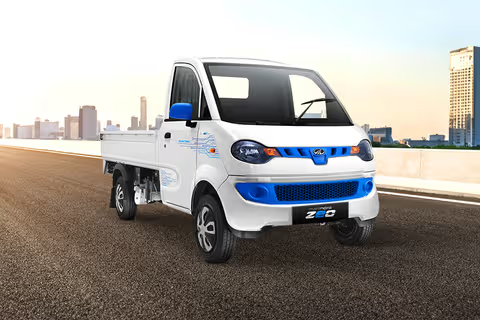 Mahindra Zeo ₹7.88 Lakh - ₹8.37 Lakh | 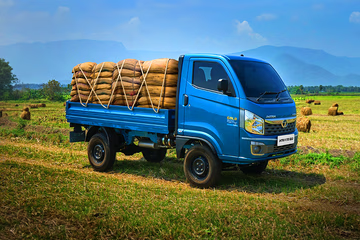 Tata Intra V30 Gold ₹8.23 Lakh - ₹8.53 Lakh | |
|---|---|---|---|---|---|---|
| Price | ₹8.15 Lakh - ₹8.35 Lakh | ₹7.95 Lakh - ₹8.40 Lakh | ₹8.20 Lakh | ₹8.25 Lakh | ₹7.88 Lakh - ₹8.37 Lakh | ₹8.23 Lakh - ₹8.53 Lakh |
| Body Type | Mini Trucks | Mini Trucks | Mini Trucks | Mini Trucks | Mini Trucks | Mini Trucks |
| Engine | 1.5L 3-Cylinder CNG (BS-VI) | 1478 cc | 1.5L, 3 Cylinder, CNG | NA | NA | 1497 cc |
| Power | 45 hp | 44.1 kW | 45 hp | NA | 30 kW | 52 kW |
| Max Torque | 105 Nm Nm | 158 hp Nm | 105 Nm Nm | NA Nm | 114 Nm Nm | 160 Nm Nm |
| Mileage | 14-18 kmpl | 19.6 kmpl | 20-22 km/kg | 115 KM | 145/full charge | 17 kmpl |
| Gross Vehicle Weight | 2545 kg | 2590 kg | 2555 kg | 950 kg | 1675 kg | 2760 kg |
| Payload | 1208 Kgs | 1375 Kgs | 1218 Kgs | 550 Kgs | 765 Kgs | 1500 Kgs |
| No. of Tyres | 4 | 4 | 4 | 4 | 4 | 4 |
| Fuel Type | CNG | Diesel | CNG+Petrol | Electric | Electric | Diesel |
| Gear Box | Fully synchromesh 5 speed Manual Gearbox and reverse with constant mesh | Gear BoxFully Synchromesh, 5-Speed Gearbox Manual, Integrated Bell Housing, 5 Forward + 1 Reverse | 5 Forward 1 Reverse | 1 Forward + 1 Reverse | NA | GBS 65 Synchromesh 5F + 1R |
| Chassis Type | Chassis with Cabin | Chassis with Cabin | Chassis with Cabin | Chassis with Cabin | Chassis with Cabin | Chassis with Cabin |
You can compare up to 6 trucks at a time.
Review
Pros & Cons
Ashok Leyland Dost CNG
Pros
- Significantly lower running costs due to cheaper CNG fuel
- Reduced environmental pollution with cleaner emissions
- Quieter engine operation and smoother driving experience
Cons
- Limited CNG refueling infrastructure in many regions
- Shorter driving range per fill compared to conventional fuels
- Reduced power and torque output affecting performance with heavy loads
Ashok Leyland Dost Strong
Pros
- 19.6 kmpl mileage — strong for a 1.3-tonne diesel LCV
- 1375 kg payload on a compact, city-friendly frame
- Wide service network, cheap spares, 5-year / 2 lakh km warranty
Cons
- 59 hp feels modest on steep, fully loaded runs
- No ABS or airbags
- Manual steering and no AC on base variants — comforts sit on the top LX
Ashok Leyland Dost Twin Fuel
Pros
- The Ashok Leyland Dost Twin Fuel, particularly its CNG variant, delivers impressive fuel efficiency, significantly reducing operational costs with competitive mileage figures reaching upwards of 25 km/kg on CNG, offering substantial savings for Indian truck buyers.
- With variants like the Dost+ offering a robust 1500 kg payload and the Dost CNG providing a practical 1215 kg, the Ashok Leyland Dost Twin Fuel range ensures high earning potential by accommodating diverse cargo needs efficiently and reliably.
- Built with Ashok Leyland's proven engineering prowess, the Dost family vehicles are renowned for their robust build quality and durability, promising minimal downtime and a longer service life on challenging Indian roads.
Cons
- The initial purchase cost for the Ashok Leyland Dost Twin Fuel CNG variant is generally higher compared to its diesel counterparts, which might be a significant consideration for buyers with tighter upfront budgets, despite the long-term fuel savings.
- While offering great mileage, the CNG variant's reliance on a developing refueling infrastructure and its relatively smaller CNG tank capacity can sometimes lead to range anxiety and more frequent stops in areas with limited CNG outlets.
- The power and torque delivery of the Dost Twin Fuel CNG engine, though adequate for urban commutes and moderate loads, can feel slightly less punchy compared to the higher-performing diesel variants, especially when navigating steep inclines with a full cargo.
E-Trio eLCV
Pros
- Lower running costs due to electricity being cheaper than conventional fuels
- Zero tailpipe emissions contributing to cleaner air in urban environments
- Quieter operation reduces noise pollution, beneficial for residential areas
Cons
- Higher initial purchase price compared to equivalent gasoline or diesel models
- Limited range on a single charge may restrict longer distance deliveries or multi stop routes
- Charging infrastructure availability can be a significant challenge in some regions
Mahindra Zeo
Pros
- Easy to drive and maneuver in crowded city conditions
- Good fuel economy helps reduce running expenses
- Strong support from Mahindra's widespread service network
Cons
- Limited engine power for very steep gradients or heavy loads
- Basic interior lacks modern comfort and convenience features
- Ride quality can be stiff especially when the vehicle is empty
Tata Intra V30 Gold
Pros
- Established brand reputation and trust in the Indian market
- Good fuel efficiency contributing to lower operating costs
- Extensive service network ensuring easy maintenance and support
Cons
- Cabin comfort might be basic for very long hauls
- Engine power could feel modest on steep inclines with maximum load
- Interior features are functional rather than luxurious
Which to buy
Which One Fits Your Use Case?
Ashok Leyland Dost CNG
Best for:
- Last-mile delivery
- Small business logistics
- Agriculture
Ashok Leyland Dost Strong
Best for:
- Last-mile delivery
- Small business logistics
- Agriculture
Ashok Leyland Dost Twin Fuel
Best for:
- Small Business Transport
- Last-Mile Delivery (E-commerce & Courier)
- Construction & Hardware Supply
- Water Can & LPG Cylinder Delivery
E-Trio eLCV
Best for:
- Intercity transport of goods
Mahindra Zeo
Best for:
- E-commerce
- Urban logistics
- grocery and vegetable transport
- Dairy product distribution
Tata Intra V30 Gold
Best for:
- Last-mile delivery
- Small business logistics
- Agriculture
FAQs