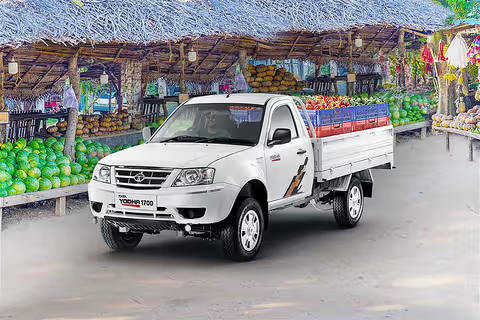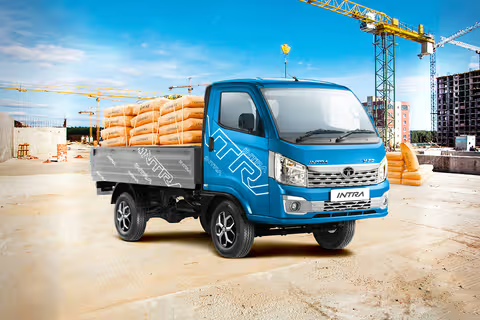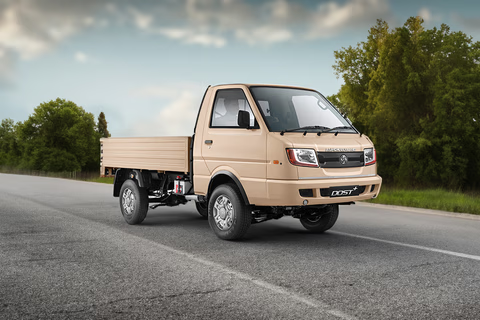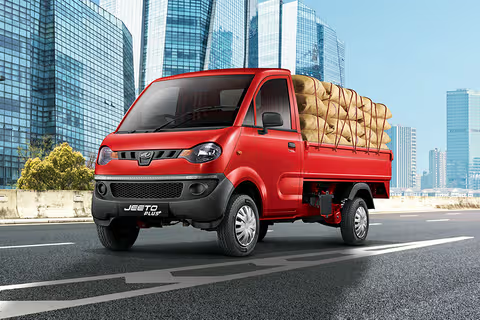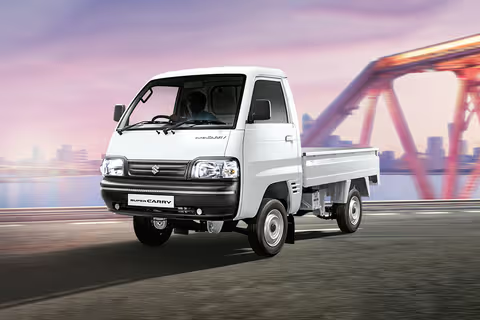
Ashok Leyland Dost CNG vs Ashok Leyland Dost CNG LE vs Ashok Leyland Dost Strong vs Ashok Leyland Dost Twin Fuel vs E-Trio eLCV vs Mahindra Zeo: Price & Specs Comparison
By TruckOnWheels Editorial Team · Last updated 7 Jul 2026
Ashok Leyland Dost Twin Fuel is the more affordable option here by about ₹5,000. Mahindra Zeo leads on mileage at 145 km/l.
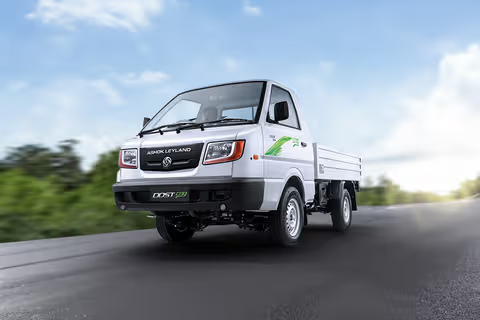 Ashok Leyland Dost CNG ₹8.15 Lakh - ₹8.35 Lakh | Ashok Leyland Dost CNG LE ₹8.15 Lakh - ₹8.35 Lakh | 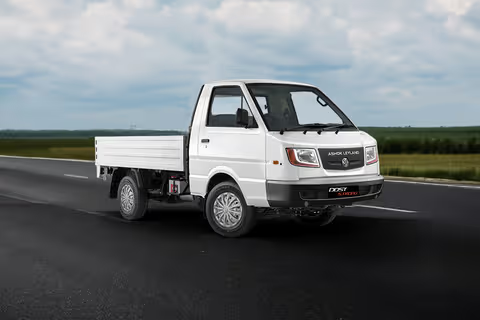 Ashok Leyland Dost Strong ₹7.95 Lakh - ₹8.40 Lakh | 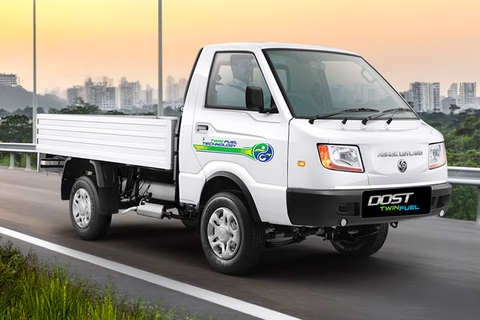 Ashok Leyland Dost Twin Fuel ₹8.20 Lakh | 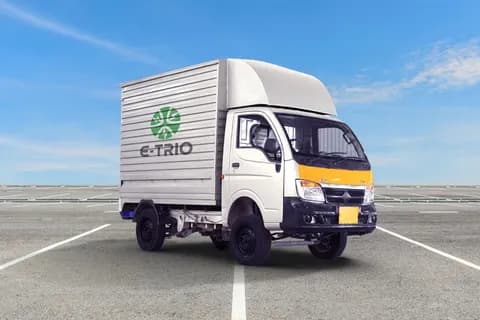 E-Trio eLCV ₹8.25 Lakh | 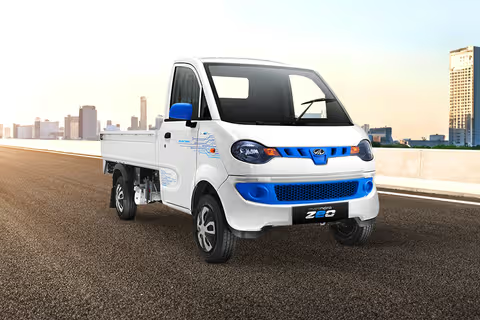 Mahindra Zeo ₹7.88 Lakh - ₹8.37 Lakh | |
|---|---|---|---|---|---|---|
| Price | ₹8.15 Lakh - ₹8.35 Lakh | ₹8.15 Lakh - ₹8.35 Lakh | ₹7.95 Lakh - ₹8.40 Lakh | ₹8.20 Lakh | ₹8.25 Lakh | ₹7.88 Lakh - ₹8.37 Lakh |
| Body Type | Mini Trucks | Mini Trucks | Mini Trucks | Mini Trucks | Mini Trucks | Mini Trucks |
| Engine | 1.5L 3-Cylinder CNG (BS-VI) | 1478 cc | 1478 cc | 1.5L, 3 Cylinder, CNG | NA | NA |
| Power | 45 hp | 45 hp | 44.1 kW | 45 hp | NA | 30 kW |
| Max Torque | 105 Nm Nm | 105 Nm Nm | 158 hp Nm | 105 Nm Nm | NA Nm | 114 Nm Nm |
| Mileage | 14-18 kmpl | 14-18 kmpl | 19.6 kmpl | 14 km/kg | 115 KM | 145/full charge |
| Gross Vehicle Weight | 2545 kg | 2545 kg | 2590 kg | 2555 kg | 950 kg | 1675 kg |
| Payload | 1208 Kgs | 1208 Kgs | 1375 Kgs | 1218 Kgs | 550 Kgs | 765 Kgs |
| No. of Tyres | 4 | 4 | 4 | 4 | 4 | 4 |
| Fuel Type | CNG | CNG | Diesel | CNG+Petrol | Electric | Electric |
| Gear Box | Fully synchromesh 5 speed Manual Gearbox and reverse with constant mesh | Fully synchromesh 5 speed Manual Gearbox and reverse with constant mesh | Gear BoxFully Synchromesh, 5-Speed Gearbox Manual, Integrated Bell Housing, 5 Forward + 1 Reverse | 5 Forward 1 Reverse | 1 Forward + 1 Reverse | NA |
| Chassis Type | Chassis with Cabin | Chassis with Cabin | Chassis with Cabin | Chassis with Cabin | Chassis with Cabin | Chassis with Cabin |
You can compare up to 6 trucks at a time.
Review
Pros & Cons
Ashok Leyland Dost CNG
Pros
- Significantly lower running costs due to cheaper CNG fuel
- Reduced environmental pollution with cleaner emissions
- Quieter engine operation and smoother driving experience
Cons
- Limited CNG refueling infrastructure in many regions
- Shorter driving range per fill compared to conventional fuels
- Reduced power and torque output affecting performance with heavy loads
Ashok Leyland Dost CNG LE
Pros
- Significantly lower running costs due to compressed natural gas fuel
- Reduced environmental impact with cleaner emissions
- Maneuverable in urban settings thanks to its compact design
Cons
- Limited driving range on a single full tank of CNG
- Fewer CNG refueling stations available compared to diesel or petrol
- Lower power and torque output compared to the diesel variant
Ashok Leyland Dost Strong
Pros
- 19.6 kmpl mileage — strong for a 1.3-tonne diesel LCV
- 1375 kg payload on a compact, city-friendly frame
- Wide service network, cheap spares, 5-year / 2 lakh km warranty
Cons
- 59 hp feels modest on steep, fully loaded runs
- No ABS or airbags
- Manual steering and no AC on base variants — comforts sit on the top LX
Ashok Leyland Dost Twin Fuel
Pros
- The Dost Twin Fuel offers segment-leading fuel efficiency, with its CNG variant delivering an impressive 35 km/kg and the diesel variant providing an excellent 32 km/l, drastically reducing operational costs for Indian businesses.
- Opting for the Dost Twin Fuel provides exceptional fuel flexibility, allowing operators to choose between the ultra-economical CNG and robust diesel, effectively hedging against fluctuating fuel prices and ensuring lower running expenses.
- Its compact dimensions and agile steering make the Dost Twin Fuel incredibly easy to navigate through congested city traffic and narrow lanes, ensuring quick deliveries and reduced turnaround times in urban environments.
Cons
- While highly fuel-efficient, the Dost Twin Fuel's maximum payload capacity, typically around 600-700 kg for its high-mileage variants, might be restrictive for businesses requiring to transport heavier or bulkier goods in a single trip compared to larger LCVs.
- The engine performance of the Dost Twin Fuel, specifically its relatively lower horsepower and torque figures compared to some competitors in the mini-truck segment, might lead to slower acceleration and reduced pulling power, especially on inclines or when fully loaded.
- Designed primarily for city operations, the Dost Twin Fuel may offer a less comfortable ride and limited stability at higher speeds on highways, potentially making longer inter-city hauls less efficient and more strenuous for drivers.
E-Trio eLCV
Pros
- Lower running costs due to electricity being cheaper than conventional fuels
- Zero tailpipe emissions contributing to cleaner air in urban environments
- Quieter operation reduces noise pollution, beneficial for residential areas
Cons
- Higher initial purchase price compared to equivalent gasoline or diesel models
- Limited range on a single charge may restrict longer distance deliveries or multi stop routes
- Charging infrastructure availability can be a significant challenge in some regions
Mahindra Zeo
Pros
- Easy to drive and maneuver in crowded city conditions
- Good fuel economy helps reduce running expenses
- Strong support from Mahindra's widespread service network
Cons
- Limited engine power for very steep gradients or heavy loads
- Basic interior lacks modern comfort and convenience features
- Ride quality can be stiff especially when the vehicle is empty
Which to buy
Which One Fits Your Use Case?
Ashok Leyland Dost CNG
Best for:
- Last-mile delivery
- Small business logistics
- Agriculture
Ashok Leyland Dost CNG LE
Best for:
- Small business logistics
Ashok Leyland Dost Strong
Best for:
- Last-mile delivery
- Small business logistics
- Agriculture
Ashok Leyland Dost Twin Fuel
Best for:
- Last-mile delivery
- Small business logistics
E-Trio eLCV
Best for:
- Intercity transport of goods
Mahindra Zeo
Best for:
- E-commerce
- Urban logistics
- grocery and vegetable transport
- Dairy product distribution
FAQs