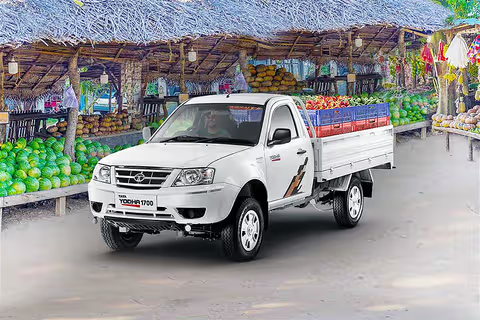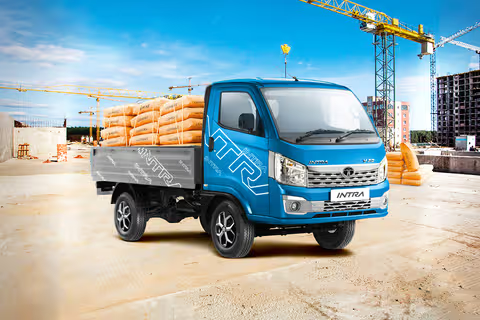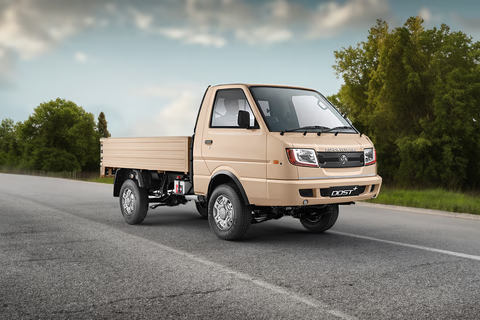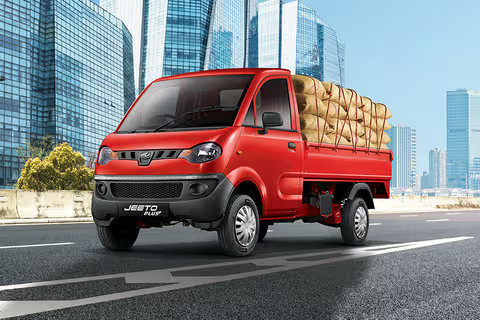
Ashok Leyland Saathi vs OSM M1KA 1.0 vs Tata ACE CNG 2.0(Bi-Fuel) vs Tata Ace Gold vs Tata Ace gold 2100/Petrol CX vs Tata Ace Pro Ev: Price & Specs Comparison
By TruckOnWheels Editorial Team · Last updated 6 Jul 2026
OSM M1KA 1.0 leads on power at 60 HP.
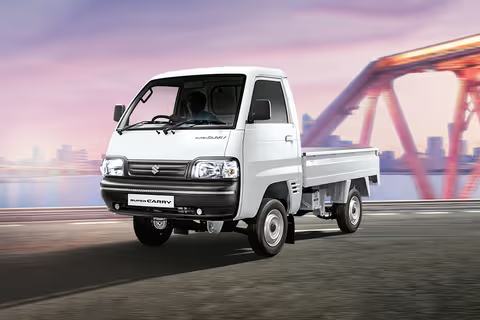
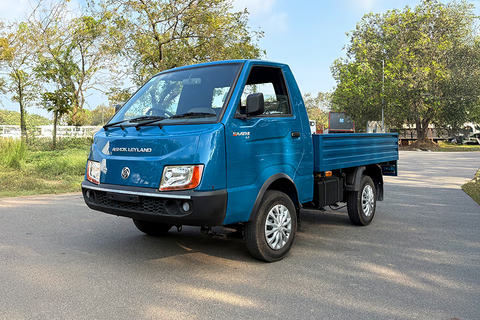 Ashok Leyland Saathi ₹6.54 Lakh | 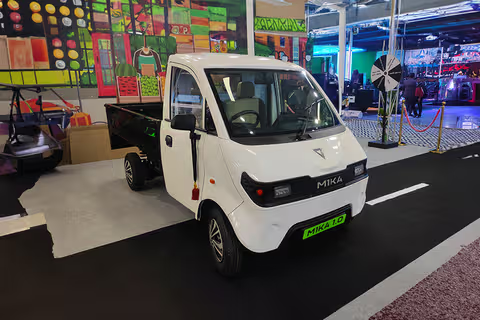 OSM M1KA 1.0 ₹6.99 Lakh | 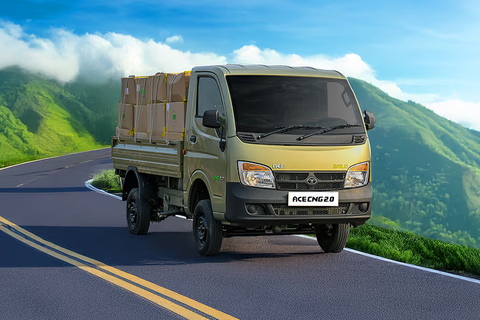 Tata ACE CNG 2.0(Bi-Fuel) ₹6.50 Lakh |  Tata Ace Gold ₹4.50 Lakh - ₹6.69 Lakh | Tata Ace gold 2100/Petrol CX ₹4.50 Lakh - ₹6.69 Lakh | 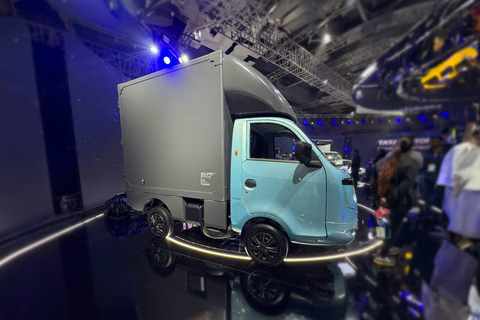 Tata Ace Pro Ev ₹6.50 Lakh | |
|---|---|---|---|---|---|---|
| Price | ₹6.54 Lakh | ₹6.99 Lakh | ₹6.50 Lakh | ₹4.50 Lakh - ₹6.69 Lakh | ₹4.50 Lakh - ₹6.69 Lakh | ₹6.50 Lakh |
| Body Type | Mini Trucks | Mini Trucks | Mini Trucks | Mini Trucks | Mini Trucks | Mini Trucks |
| Engine | 1478 | NA | 694 | 694 cc | 694 cc | NA |
| Power | 45 hp | 60 hp | 18.3 kW | 24 hp | 22.21 kW | 29 kW |
| Max Torque | 110 Nm Nm | 80 Nm Nm | 50 Nm Nm | 55 Nm Nm | 55 Nm Nm | 104 Nm Nm |
| Mileage | 20 kmpl | 150 | 21-24 kmpl | 15 kmpl | 15 kmpl | 155 Km |
| Gross Vehicle Weight | 2288 kg | 2620 kg | 1790 kg | 1510 kg | 1835 kg | 1610 kg |
| Payload | 1120 Kgs | 1000 Kgs | 800 Kgs | 710 Kgs | 900 Kgs | 750 Kgs |
| No. of Tyres | 4 | 4 | 4 | 4 | 4 | 4 |
| Fuel Type | Diesel | Electric | CNG | Petrol | Petrol | Electric |
| Gear Box | 5F + 1R Manual Gearbox | 1 Forward + 1 Reverse | GBS 65- 5/6.31 | GBS65 4/6.31 | GBS 65- 5/6.31 | E-Transaxle with drive shafts |
| Chassis Type | Chassis with Cabin | Chassis with Cabin | Chassis with Cabin | Chassis with Cabin | Chassis with Cabin | Chassis with Cabin |
You can compare up to 6 trucks at a time.
Review
Pros & Cons
Ashok Leyland Saathi
Pros
- The Ashok Leyland Saathi promises impressive fuel efficiency across its variants, with the CNG model offering around 28-30 km/kg and the diesel variant delivering approximately 22-24 km/l, ensuring lower operational costs for daily trips.
- Designed for the demanding Indian market, the Ashok Leyland Saathi provides a robust payload capacity of around 700-750 kg, making it suitable for a wide range of intra-city transportation needs from groceries to construction materials.
- Backed by Ashok Leyland's legacy of building tough commercial vehicles, the Saathi is expected to offer strong mechanical reliability and durability, ensuring minimal downtime and a long service life even under strenuous conditions.
Cons
- While adequate for most city tasks, the Ashok Leyland Saathi's engine, particularly in its base variants, might feel slightly underpowered when tackling steep inclines with a full load or for extended highway driving, potentially impacting trip times.
- The interior of the Ashok Leyland Saathi is highly functional but relatively spartan, often lacking modern creature comforts like factory-fitted air conditioning, advanced infotainment, or premium upholstery, which could impact driver comfort on longer routes.
- The suspension system on the Ashok Leyland Saathi, while robust for heavy load-carrying, might offer a somewhat stiff and bouncy ride when the vehicle is unladen, which could compromise driver comfort and stability on uneven or poorly maintained roads.
OSM M1KA 1.0
Pros
- Modern and appealing design aesthetics
- Potentially optimized for Indian road conditions and diverse terrains
- Competitive pricing making it accessible to a wider market
Cons
- New brand name might face initial skepticism regarding reliability
- Resale value could be uncertain in the early years
- Unproven long-term durability compared to established competitors
Tata ACE CNG 2.0(Bi-Fuel)
Pros
- The Tata Ace Cng 20bi Fuel variant offers commendable fuel efficiency, with its robust 694cc engine delivering an ARAI-certified 21.2 km/kg, significantly lowering daily running costs for small businesses operating in cost-sensitive environments.
- Across its diverse variants, the Tata Ace Cng 20bi Fuel family provides versatile cargo solutions with practical payloads typically ranging from 640 kg (for CNG) to a robust 750 kg (for Diesel/Petrol), making it suitable for a wide array of intra-city goods transport needs.
- Known for its 'Chhota Hathi' legacy, the Tata Ace Cng 20bi Fuel and its siblings boast strong build quality, proven reliability, and access to Tata Motors' extensive service network, translating into reduced maintenance worries and excellent uptime for commercial operations.
Cons
- While adequate for city runs, the relatively lower power output (e.g., 26 HP for CNG, 20 HP for Diesel) of the Tata Ace Cng 20bi Fuel and its variants can feel underpowered on highways or steep inclines, particularly when carrying its maximum payload.
- Depending on the region, finding readily available and consistent CNG filling stations for the Tata Ace Cng 20bi Fuel can still be a challenge, potentially leading to range anxiety and longer refueling times compared to the widespread availability of petrol or diesel.
- The cabin of the Tata Ace Cng 20bi Fuel series is primarily utilitarian, offering basic amenities and limited comfort features, which might lead to driver fatigue on longer routes or during extended work shifts.
Tata Ace Gold
Pros
- Likely excellent fuel efficiency crucial for commercial operations
- Known for low maintenance costs and readily available spare parts
- Compact dimensions provide superior maneuverability in congested urban and rural roads
Cons
- Basic cabin comfort and limited space for long duration driving leading to driver fatigue
- Safety features might remain rudimentary especially in lower variants
- Noise and vibration levels inside the cabin could be higher compared to more refined vehicles
Tata Ace gold 2100/Petrol CX
Pros
- Affordable initial purchase cost
- Excellent fuel efficiency for urban and short-haul trips
- Low maintenance and running expenses
Cons
- Limited engine power on steep inclines or when carrying maximum load
- Basic cabin comfort not suitable for very long duration drives
- Engine noise and vibrations can be noticeable inside the cabin
Tata Ace Pro Ev
Pros
- The Tata Ace Pro Ev stands out with its zero-emission electric powertrain, offering a commendable claimed range of 154 km on a single charge and ultra-low running costs, making it an ideal, eco-friendly solution for urban deliveries and businesses prioritizing sustainable transport.
- Offering an unmatched variant versatility, the Tata Ace Pro Ev family includes efficient Diesel (approx. 22 km/l), affordable Petrol (approx. 18-20 km/l), economical CNG (approx. 21.4 km/kg), and the advanced electric variant, providing tailored solutions for diverse operational needs and fuel preferences.
- Across its comprehensive range, the Tata Ace Pro Ev and its ICV siblings consistently deliver a robust payload capacity (e.g., 600-750 kg for ICVs, 600 kg for EV), backed by Tata's proven reliability and an extensive service network, which is crucial for maximizing uptime and operational efficiency.
Cons
- While offering long-term savings, the Tata Ace Pro Ev commands a significantly higher initial ex-showroom price (e.g., ₹9.22 - 9.40 Lakh) compared to its ICE counterparts and many direct competitors, which might pose a substantial barrier for small and medium-sized businesses with limited capital.
- Despite decent overall fuel efficiency, the Diesel (approx. 22 km/l) and CNG (approx. 21.4 km/kg) variants of the Tata Ace Pro Ev family do not consistently offer the absolute best-in-class mileage figures when benchmarked against some rivals in specific segments, potentially impacting long-term operational cost competitiveness.
- The 154 km claimed range of the Tata Ace Pro Ev, while suitable for many urban last-mile operations, could still induce range anxiety for extended inter-city trips, further compounded by the still-developing public charging infrastructure across all Indian regions.
Which to buy
Which One Fits Your Use Case?
Ashok Leyland Saathi
Best for:
- Last-mile delivery
- Small business logistics
OSM M1KA 1.0
Best for:
- Small business logistics
- Last-mile delivery
Tata ACE CNG 2.0(Bi-Fuel)
Best for:
- Small business logistics
- Last-mile delivery
Tata Ace gold 2100/Petrol CX
Best for:
- Small business logistics
Tata Ace Pro Ev
Best for:
- Last-mile delivery
- Small business logistics
FAQs
Frequently Asked Questions
Which has better power, Ashok Leyland Saathi vs OSM M1KA 1.0 vs Tata ACE CNG 2.0(Bi-Fuel) vs Tata Ace Gold vs Tata Ace gold 2100/Petrol CX vs Tata Ace Pro Ev?
+−
OSM M1KA 1.0 has the better power at 60 HP.
Which has better mileage, Ashok Leyland Saathi vs OSM M1KA 1.0 vs Tata ACE CNG 2.0(Bi-Fuel) vs Tata Ace Gold vs Tata Ace gold 2100/Petrol CX vs Tata Ace Pro Ev?
+−
Tata Ace Pro Ev has the better mileage at 155 km/l.
Which has better payload, Ashok Leyland Saathi vs OSM M1KA 1.0 vs Tata ACE CNG 2.0(Bi-Fuel) vs Tata Ace Gold vs Tata Ace gold 2100/Petrol CX vs Tata Ace Pro Ev?
+−
Ashok Leyland Saathi has the better payload at 1120 kg.
What is the ex-showroom Ashok Leyland Saathi price in India?
+−
The ex-showroom Ashok Leyland Saathi price in India typically starts from around ₹7.50 Lakhs. This price point positions it as a highly competitive and accessible option in the light commercial vehicle segment.
What is the approximate truck price in India for the Osm M1ka 1.0?
+−
The ex-showroom truck price in India for the Osm M1ka 1.0 typically starts around ₹4.5 Lakhs. Please note that prices may vary slightly based on your city, specific variant, and ongoing offers.
What is the price of the Tata Ace CNG 20bi Fuel in India?
+−
The price of the Tata Ace CNG 20bi Fuel in India typically ranges from approximately ₹5.50 Lakh to ₹6.00 Lakh (ex-showroom). The final on-road price will vary based on state taxes, RTO charges, and insurance.
What is the approximate on-road price of Tata Ace Gold in India?
+−
The on-road price typically ranges from 4.5 lakhs to 6 lakhs, varying by city, variant, and applicable taxes and registration charges.
What is the on-road price of the Tata Ace Gold 2100 Petrol Cx in India?
+−
The on-road price typically ranges from INR 4.60 - 5.10 Lakhs, varying by state, applicable taxes, RTO charges, and insurance costs across India.
What is the approximate price of the Tata Ace Pro Ev in India?
+−
The approximate ex-showroom price for the Tata Ace Pro Ev in India typically ranges from ₹8.00 Lakh to ₹8.50 Lakh, but this can vary based on state subsidies and specific configurations.