
Piaggio and SBI Signed an MoU to Offer Intrest Free Auto Loans in UP
Piaggio and SBI will finance three-wheelers in UP at 0% interest under CM Yuva Yojana. Here's the real math, who qualifies, and how to apply first.
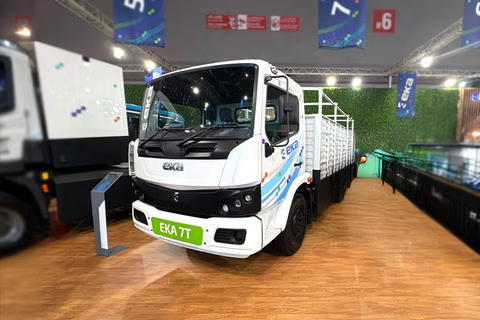
Truck mileage planning
Estimate EKA 7T fuel cost and monthly running expense using your route distance and local fuel price.
Claimed Mileage
200 Km/Full Charge
Fuel Type
Electric
Ex-Showroom Price
Price Coming Soon
Interactive calculator
Change charging price, battery capacity, range and monthly distance to estimate EV running cost.
Range
200
Fuel
Electric
Enter your charging rate per kWh. Home/depot and public charging rates can be different.
Required for EV cost per charge and cost per km.
Use loaded real-world range for better estimates.
Monthly Cost
—
Estimated charging spend for selected monthly distance.
| Variant | Fuel | Mileage | Monthly Cost |
|---|---|---|---|
| EKA 7TTHIS TRUCK | Electric | 200 Km/Full Charge | — |
| EKA 7T 3320/Box Body | Electric | 200 Km/Full Charge | — |
This page keeps the calculation simple: enter the fuel price in your city and the approximate kilometres your truck runs in a month. The tool then estimates cost per kilometre, daily fuel spend, monthly fuel budget and yearly running cost.
The claimed figure is useful for comparison, but daily mileage depends on route discipline and how the truck is maintained.
Payload & load balance
Overloading, uneven load placement and frequent stop-start operation reduce mileage and increase tyre and clutch wear.
Route & traffic
Flat highway routes usually return better mileage than city routes with congestion, slopes and repeated braking.
Maintenance condition
Clean filters, correct tyre pressure, proper wheel alignment and timely engine service help protect fuel efficiency.
Simple operating habits can make a visible difference in EKA 7T running cost, especially for high monthly kilometres.
Avoid long idling and harsh acceleration when the truck is loaded.
Check tyre pressure before long routes and keep wheel alignment in range.
Service air filter, fuel filter and engine oil at recommended intervals.
Plan routes to reduce empty return trips, traffic waiting and unnecessary detours.
Track fuel filled, kilometres driven and load weight to identify mileage drops early.
Compare variant mileage with payload needs before choosing the final configuration.
News
EKA 7T has a claimed mileage of 200 Km/Full Charge. Real-world mileage typically runs 10-15% lower depending on load, route, and driving conditions.
The typical mileage for the 7t truck ranges from 8 to 11 kmpl, depending on driving conditions, load, and terrain, making it quite fuel-efficient for its segment. This consistent mileage helps optimize operational costs for fleet owners.
To improve your 7t truck's fuel efficiency, maintain consistent speeds, avoid sudden braking or acceleration, and ensure regular servicing and tire pressure checks. Proper driver training also significantly contributes to better fuel economy and overall mileage.
Yes, overloading significantly impacts the 7t truck's mileage, as the engine works harder, increasing diesel consumption and putting more strain on components. Adhering to the permissible GVW is crucial for optimal mileage and vehicle longevity.
The actual mileage of a 7t truck is influenced by cargo weight, road conditions (highway vs. city), driving style, maintenance schedule, and the quality of fuel used. These factors collectively determine your real-world fuel efficiency.
Yes, the 7t truck is engineered with a focus on delivering competitive mileage on long hauls, thanks to its optimized engine and gearbox ratios that ensure efficient cruising. This makes it a cost-effective choice for inter-city transport and maintaining a high fuel average.
The 7t truck incorporates features like an efficient diesel engine, an optimized driveline, and aerodynamic design elements that collectively contribute to its commendable fuel average, helping fleet owners save on operational costs and enhance overall mileage.
Hilly or mountainous terrain significantly affects the 7t truck's mileage due to the increased power demands for climbing, whereas flat highway roads generally yield the best fuel efficiency. Understanding terrain impact helps manage your mileage expectations.
Load weight, terrain (hilly vs flat), traffic conditions, driving style, tyre pressure, and how regularly the engine is serviced all affect real-world mileage. Claimed mileage figures are measured under controlled conditions, so actual mileage is usually 10-15% lower depending on how the truck is used.
Running cost per km is calculated by dividing the fuel price by the truck's mileage (km per litre, kg, or unit depending on fuel type). Monthly and yearly costs are then estimated by multiplying this per-km cost by your typical distance driven.
Yes — aggressive acceleration and hard braking can lower mileage by 10% or more on a loaded commercial truck. Maintaining a steady speed, avoiding unnecessary idling, and keeping tyres correctly inflated are the easiest ways to protect fuel efficiency on long hauls.