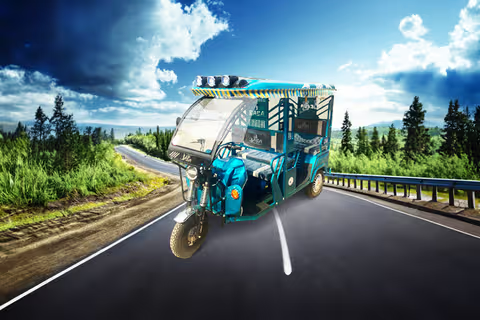

BABA Steel E-Rickshaw thumbnail

Truck mileage planning

BABA Steel E-Rickshaw Mileage Calculator

Estimate BABA Steel E-Rickshaw fuel cost and monthly running expense using your route distance and local fuel price.

Claimed Mileage

70-100 km

Fuel Type

Electric

Ex-Showroom Price

₹2.65L

About BABA Steel E-Rickshaw

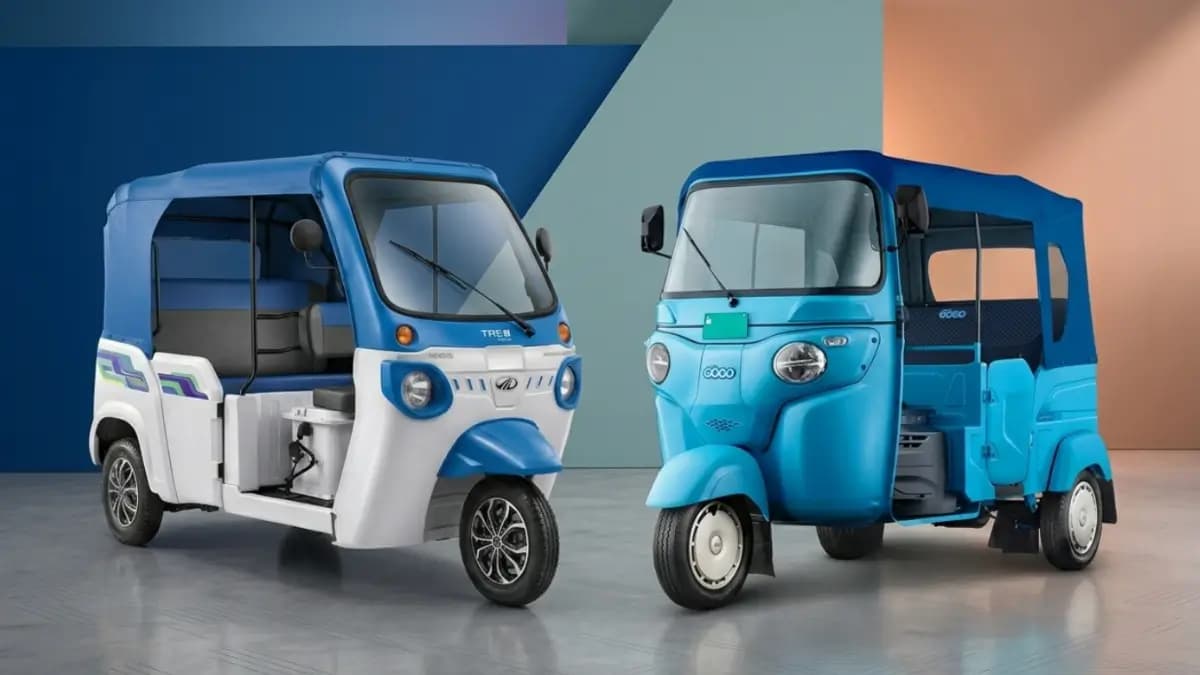
Looking for a smart, sustainable, and cost-effective solution for your urban logistics or passenger transport needs? The Baba Steel E Rickshaw stands out as a formidable player in India's booming electric vehicle market. Designed for efficiency and durability, this E-rickshaw offers a perfect blend of performance and economy, making it an ideal choice for businesses and entrepreneurs nationwide. Discover why it’s quickly becoming a preferred option for last-mile connectivity. When it comes to affordability, the Baba Steel E Rickshaw price in India is highly competitive. Typically, you can expect the ex-showroom price to range from approximately ₹1.5 Lakhs to ₹2.5 Lakhs, depending on the specific variant and features. This attractive pricing makes it an accessible investment for small businesses and individual operators looking to maximize their returns without a hefty initial outlay. Performance is key, and the Baba Steel E Rickshaw delivers impressive mileage – or rather, range per charge. Equipped with an advanced electric motor, it offers a commendable range of around 80-100 km on a single full charge, depending on load and driving conditions. Powering this impressive range is a robust 1000W-1500W motor paired with a high-capacity battery, ensuring smooth acceleration and reliable power for daily operations. Its efficient design means lower running costs compared to traditional fuel-based vehicles. Let’s talk about practicality. The Baba Steel E Rickshaw dimensions are optimized for navigating crowded Indian streets with ease. While specific dimensions can vary slightly by model, a typical Baba Steel E Rickshaw measures approximately 2700-2800 mm in length, 950-1000 mm in width, and 1700-1750 mm in height. It boasts a Gross Vehicle Weight (GVW) of around 600-700 kg, including its own weight and payload. The payload capacity is quite generous, often ranging from 300-400 kg, making it suitable for transporting goods or multiple passengers comfortably. Its compact cargo space is smartly designed to handle everyday delivery needs efficiently. This versatile E-rickshaw is perfect for a variety of use cases. It shines brightly in last-mile delivery services, courier operations, vegetable and fruit vending, and other local distribution roles within cities and towns. It's also a fantastic option for passenger transport in smaller localities, railway stations, and market areas, offering an eco-friendly commute. Its robust build makes it suitable even for semi-rural applications. Buyers consistently laud the Baba Steel E Rickshaw for its reliability and low maintenance. Reviews highlight its sturdy construction, comfortable ride, and excellent after-sales service support, building significant trust among users. Owners appreciate the minimal running costs and the brand’s commitment to service, making it a truly trustworthy investment for long-term operations. Regarding variants and competitors, the Baba Steel E Rickshaw is often available in both passenger and cargo variants to suit diverse needs. While it holds its own, it competes with other popular electric three-wheelers in India such as Mahindra Treo, Piaggio Ape E-City, and some local brands. However, its specific combination of price, range, and build quality often gives it an edge in its segment. In conclusion, if you're searching for an eco-friendly, economical, and dependable commercial vehicle, the Baba Steel E Rickshaw is an outstanding choice. Its competitive Baba Steel E Rickshaw price in India, impressive Baba Steel E Rickshaw mileage (range), and practical Baba Steel E Rickshaw dimensions make it an ideal asset for urban transportation and logistics. It’s certainly a strong contender for the title of the best truck in India for last-mile electric mobility, promising profitability and peace of mind for Indian buyers.
Read More

Interactive calculator

BABA Steel E-Rickshaw Running Cost

Change charging price, battery capacity, range and monthly distance to estimate EV running cost.

Range

70

Fuel

Electric

₹/kWh

Enter your charging rate per kWh. Home/depot and public charging rates can be different.

kWh

Required for EV cost per charge and cost per km.

km

Use loaded real-world range for better estimates.

km
500 km15,000 km

Monthly Cost

—

Estimated charging spend for selected monthly distance.

Cost / charge—
Cost / km—
Daily Cost—
Yearly Cost—

Variant Mileage & Running Cost

VariantFuelMileageMonthly Cost
BABA Steel E-RickshawTHIS TRUCKElectric70-100 km—
BABA Steel E-Rickshaw 2095/ElectricElectric70-100 km/Full Charge—
  • Mileage figures are manufacturer-claimed; real-world mileage varies with load, terrain, and driving style.
  • EV range and charging cost vary with battery health, payload, charger type, route, and depot/public charging rate.

How to Use This BABA Steel E-Rickshaw Mileage Calculator

This page keeps the calculation simple: enter the fuel price in your city and the approximate kilometres your truck runs in a month. The tool then estimates cost per kilometre, daily fuel spend, monthly fuel budget and yearly running cost.

  1. Use local fuel priceFuel rates vary by city and state. Replacing the default value with your actual diesel, CNG, petrol or charging cost gives a more useful result.
  2. Enter real monthly usageA city delivery truck, market-load vehicle and highway vehicle can have very different monthly kilometres. Use your business route, not a generic estimate.
  3. Read the mileage unitFor Electric, mileage is generally read as km/charge. Compare this with load, route and service condition before finalising a vehicle.

What Affects Real-World Mileage?

The claimed figure is useful for comparison, but daily mileage depends on route discipline and how the truck is maintained.

Payload & load balance

Overloading, uneven load placement and frequent stop-start operation reduce mileage and increase tyre and clutch wear.

Route & traffic

Flat highway routes usually return better mileage than city routes with congestion, slopes and repeated braking.

Maintenance condition

Clean filters, correct tyre pressure, proper wheel alignment and timely engine service help protect fuel efficiency.

Mileage Improvement Tips

Simple operating habits can make a visible difference in BABA Steel E-Rickshaw running cost, especially for high monthly kilometres.

  • Avoid long idling and harsh acceleration when the truck is loaded.

  • Check tyre pressure before long routes and keep wheel alignment in range.

  • Service air filter, fuel filter and engine oil at recommended intervals.

  • Plan routes to reduce empty return trips, traffic waiting and unnecessary detours.

  • Track fuel filled, kilometres driven and load weight to identify mileage drops early.

  • Compare variant mileage with payload needs before choosing the final configuration.

News

Truck News

BABA Steel E-Rickshaw Mileage FAQs

What is the real-world mileage of BABA Steel E-Rickshaw?

+

BABA Steel E-Rickshaw has a claimed mileage of 70-100 km. Real-world mileage typically runs 10-15% lower depending on load, route, and driving conditions.

What factors affect a truck's real-world mileage?

+

Load weight, terrain (hilly vs flat), traffic conditions, driving style, tyre pressure, and how regularly the engine is serviced all affect real-world mileage. Claimed mileage figures are measured under controlled conditions, so actual mileage is usually 10-15% lower depending on how the truck is used.

How is the running cost calculated?

+

Running cost per km is calculated by dividing the fuel price by the truck's mileage (km per litre, kg, or unit depending on fuel type). Monthly and yearly costs are then estimated by multiplying this per-km cost by your typical distance driven.

Does driving style really change mileage on a loaded truck?

+

Yes — aggressive acceleration and hard braking can lower mileage by 10% or more on a loaded commercial truck. Maintaining a steady speed, avoiding unnecessary idling, and keeping tyres correctly inflated are the easiest ways to protect fuel efficiency on long hauls.