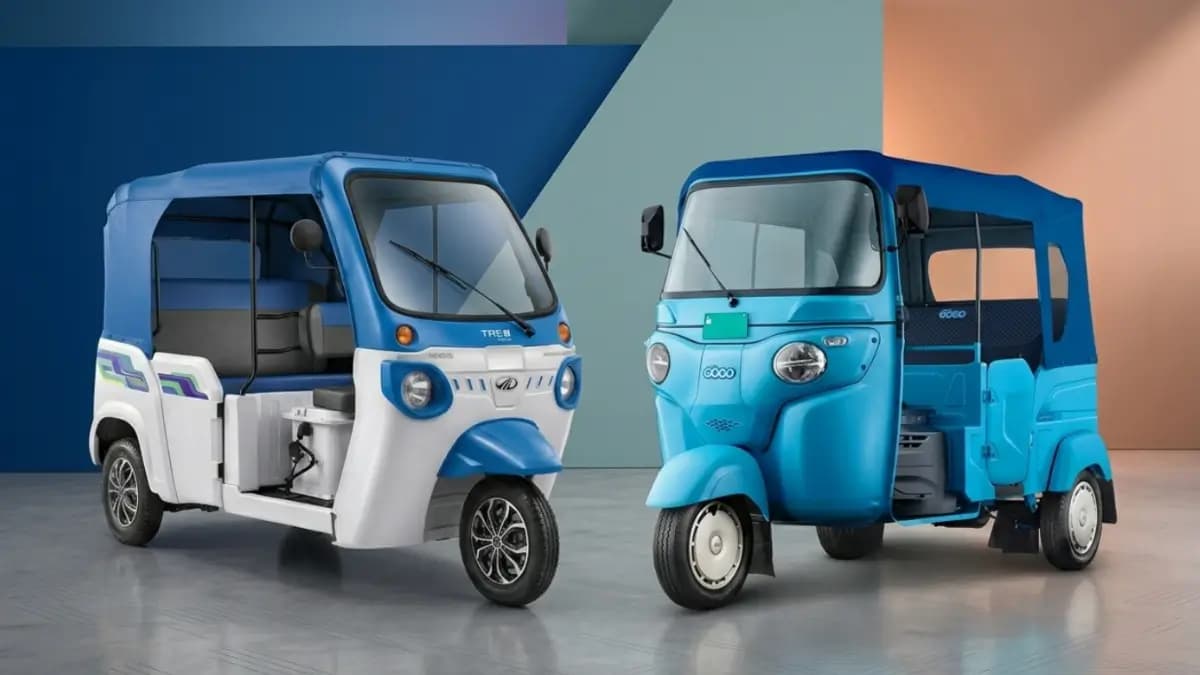

Piaggio and SBI Signed an MoU to Offer Intrest Free Auto Loans in UP
Piaggio and SBI will finance three-wheelers in UP at 0% interest under CM Yuva Yojana. Here's the real math, who qualifies, and how to apply first.
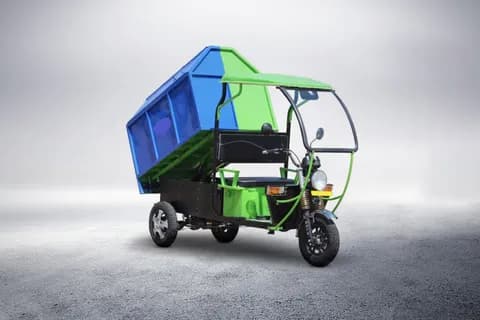
Ex-Showroom Price
₹1.80L
Key Specifications
Mileage
40-50 km/charge
Power
1 hp
Claimed Mileage
40-50 km/charge/kWh
Fuel Type
Electric
Default is an approximate national average — edit to match your local price.
Cost / km
₹0.20
Daily Cost
₹40
Monthly Cost
₹1,200
Yearly Cost
₹14,400
| Variant | Fuel | Mileage | Monthly Cost |
|---|---|---|---|
| E-Ashwa E-Garbage CartTHIS TRUCK | Electric | 40-50 km/charge | ₹1,200 |
| E-Ashwa E-Garbage Cart Hydraulic Manual | Electric | 40-50 km/charge | ₹1,200 |
| E-Ashwa E-Garbage Cart Hydraulic Automatic | Electric | 40-50 km/charge | ₹1,200 |
News
E-Ashwa E-Garbage Cart has a claimed mileage of 40-50 km/charge. Real-world mileage typically runs 10-15% lower depending on load, route, and driving conditions.
The E Ashwa E Garbage Cart offers an impressive mileage of approximately 80-100 km on a single full charge, ideal for daily municipal waste collection routes. This excellent mileage ensures efficient operation throughout your work shifts.
The E Ashwa E Garbage Cart's mileage, being electric, offers significantly lower running costs per kilometer compared to diesel alternatives, eliminating fuel expenses and contributing to cleaner air. You save substantially on operational mileage costs daily.
The actual driving range or mileage of the E Ashwa E Garbage Cart can be influenced by load weight, terrain (uphill driving), driving style, and ambient temperature. However, under typical urban waste collection conditions, the stated mileage holds true.
The E Ashwa E Garbage Cart comes with a high-capacity LiFePO4 battery designed for long battery life, typically lasting 5-7 years or 1500-2000 charge cycles, directly supporting its consistent daily mileage performance. Proper charging habits further extend its effective battery life.
The E Ashwa E Garbage Cart supports standard AC charging which takes approximately 6-8 hours for a full charge, maximizing its daily mileage availability for the next shift. Fast charging options might be available for specific custom configurations to reduce charging time and boost operational mileage.
To maximize the E Ashwa E Garbage Cart's mileage, ensure optimal tire pressure, avoid sudden acceleration and braking, and adhere to the recommended load capacity. These practices significantly contribute to achieving the best possible mileage from your cart.
Yes, the regenerative braking system on the E Ashwa E Garbage Cart significantly contributes to its overall mileage by recovering kinetic energy during deceleration and converting it back into electrical energy for the battery. This feature helps extend the effective mileage, especially in stop-and-go city traffic.
Factoring in the excellent mileage and electricity costs, the running costs per kilometer for the E Ashwa E Garbage Cart are considerably lower than traditional fuel-powered vehicles, typically ranging from ₹1.50 to ₹2.00 per km depending on local electricity tariffs. This makes its operational mileage highly economical.
Load weight, terrain (hilly vs flat), traffic conditions, driving style, tyre pressure, and how regularly the engine is serviced all affect real-world mileage. Claimed mileage figures are measured under controlled conditions, so actual mileage is usually 10-15% lower depending on how the truck is used.
Running cost per km is calculated by dividing the fuel price by the truck's mileage (km per litre, kg, or unit depending on fuel type). Monthly and yearly costs are then estimated by multiplying this per-km cost by your typical distance driven.
Yes — aggressive acceleration and hard braking can lower mileage by 10% or more on a loaded commercial truck. Maintaining a steady speed, avoiding unnecessary idling, and keeping tyres correctly inflated are the easiest ways to protect fuel efficiency on long hauls.
Brochure
Download for detailed specs, features & prices.
Finance
Your estimated monthly EMI