 Electric Vehicle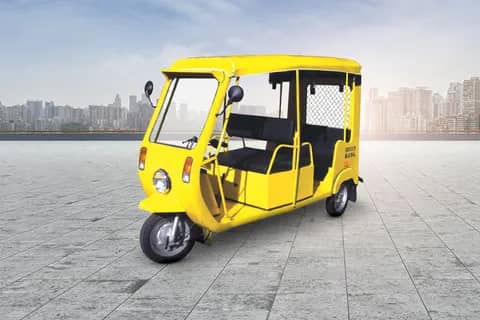
Devam Ev King
Ex-Showroom Price
₹1.61L
About
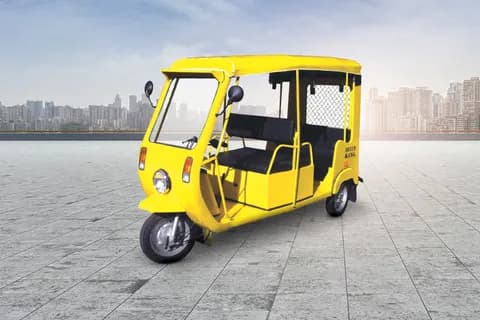
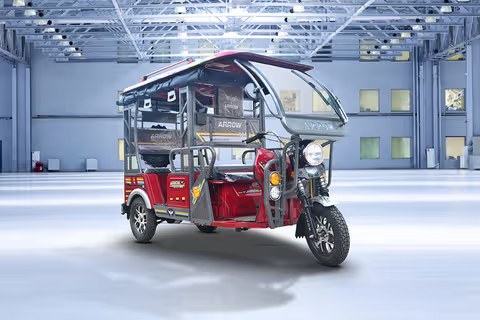
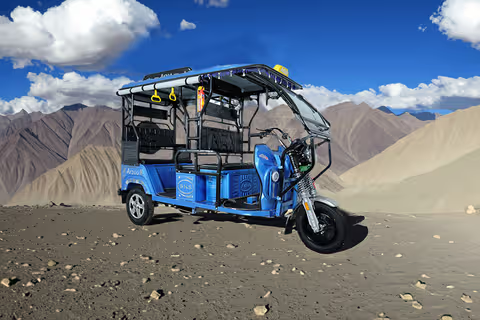
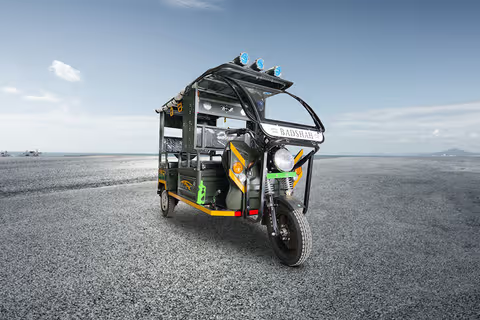
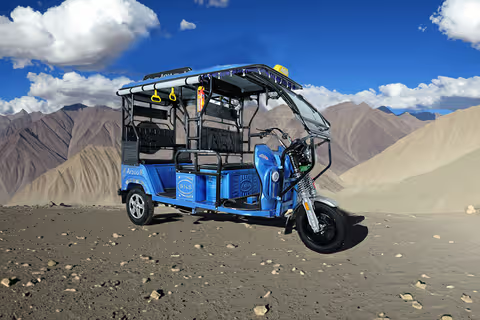
The Devam EV King is a modern electric passenger e-rickshaw designed to provide economical, eco-friendly, and reliable transportation for urban and semi-urban mobility. Built with a durable chassis and comfortable passenger cabin, the vehicle is specially developed for commercial passenger operations while offering low running costs and smooth electric performance. Its stylish design, compact dimensions, and efficient battery-powered drivetrain make it an ideal choice for drivers seeking profitable and sustainable transportation solutions.
Powered by a reliable BLDC electric motor, the Devam EV King delivers smooth acceleration and stable performance during daily passenger operations. The vehicle offers a driving range of approximately 90–100 km on a single charge and supports a top speed of around 25 km/h, making it suitable for city commuting and local passenger transportation. It comes equipped with a 60V battery system and can be fully charged in approximately 6–8 hours, allowing convenient overnight charging and uninterrupted daytime operations.
The Devam EV King features a comfortable D+4 seating configuration, providing adequate passenger space along with improved ride comfort. Built on a strong chassis with cabin structure, the vehicle ensures better durability and stability on Indian roads. It has a GVW of approximately 682 kg and includes practical features such as automatic transmission, handlebar steering, drum brakes, driver information display, and leaf spring suspension for smoother handling and driving comfort.
With zero tailpipe emissions, significantly lower operating costs, and reduced maintenance requirements compared to fuel-powered auto rickshaws, the Devam EV King is a smart and future-ready electric passenger vehicle ideal for daily commercial transportation and sustainable urban mobility.
Specifications
Devam Ev King Key Specifications
Number of Tyres3
GVW682 kg
Power
- 1 hp
Charging Time6-8 hrs
Type of MotorBLDC Motor
Fuel TypeElectric
Max Speed25 km/h
Gear Box1 Forward + 1 Reverse
Chassis TypeChassis with Cabin
All Variants
Devam Ev King Variants
| Variant Name | Price | Mileage | Fuel Type | Action |
|---|---|---|---|---|
| 4 Seater/Electric | ₹1.61LEx-showroom Price | 100 km/charge | Electric | Details |
Applications
Devam Ev King Key Use Cases
Use Case 1
Transport
Compare
Compare Devam Ev King With Similar Trucks
Pros & Cons
Devam Ev King Pros & Cons
What We Like
5- The Devam Ev King, especially its CNG variant, delivers an impressive best-in-class mileage of up to 35 km/kg, while the diesel version boasts up to 32 km/l, significantly reducing operational costs for Indian truck buyers.
- Its compact dimensions and small turning radius make the Devam Ev King exceptionally easy to navigate through congested Indian city streets and narrow lanes, ensuring quick last-mile deliveries.
- Thanks to its simple and robust engine design across all variants (Diesel, Petrol, CNG), owners can expect low maintenance requirements and overall economical running costs, contributing to higher profitability.
- Offering a competitive ex-showroom price range typically from ₹4.29 Lakhs to ₹5.20 Lakhs, this mini-truck provides an accessible entry into commercial transport with fuel options catering to diverse operational needs.
- With a decent payload capacity generally ranging from 600 kg to 700 kg, the Devam Ev King effectively handles typical small to medium-sized loads, making it suitable for various intra-city goods movement.
What We Don't Like
4- While adequate for city driving, the Devam Ev King's single-cylinder engine, producing around 16 HP (Diesel) to 23 HP (CNG/Petrol), feels underpowered for highway runs or carrying maximum payload on steep inclines.
- The cabin of this mini-truck is quite utilitarian and lacks modern comfort features like air conditioning, advanced infotainment, or ergonomic seating, which can lead to driver fatigue on longer routes.
- The single-cylinder engine design across its variants can result in noticeable noise and vibrations, especially at higher RPMs, potentially affecting driver comfort during extended periods of use.
- Although good for its segment, the overall payload capacity and chassis design mean this vehicle is primarily suited for light to medium-duty applications and might not be robust enough for consistently heavier or bulkier cargo needs.
Details
Devam Ev King Features & Specifications
Performance
10 items
Performance
10 items
Max Power 1 hp
Fuel Type Electric
Emission Norms Zero Tailpipe
Mileage 90-100 kmpl
Max Speed (km/h) 25
Range 100
Battery Capacity 110 Ah
Type of Motor BLDC Motor
Product Type L3M (Low Speed Passenger Carrier)
Carrier Type Passenger Carrier
Charging
1 item
Charging
1 item
Charging Time 6-8 hrs
Dimension
6 items
Dimension
6 items
Overall Length (mm) 2780
Overall Width (mm) 970
Overall Height (mm) 1780
Ground Clearance (mm) 120
Wheelbase (mm) 2090
Axle Configuration 3x3
Transmission & Loading Capacity
4 items
Transmission & Loading Capacity
4 items
Transmission Automatic
GVW / GCW (Kgs) 682 kg
Gear Box 1 Forward + 1 Reverse
Power SteeringNo
Features
14 items
Features
14 items
Steering Handle bar type
A/CNo
Cruise ControlNo
Navigation SystemNo
TelematicsNo
Tiltable SteeringNo
Arm-restNo
Seat Type Standard
Driver Information DisplayYes
Adjustable Driver SeatNo
Seating Capacity D+4 Passenger
Tubeless TyresNo
Seat BeltsNo
Hill HoldNo
Brakes & Suspension
5 items
Brakes & Suspension
5 items
Brakes Drum Brakes
Front Suspension Leaf spring suspension
Rear Suspension Leaf Spring Suspension
ABSNo
Parking BrakesYes
Body Option & Cabin Type
4 items
Body Option & Cabin Type
4 items
Chassis Type Chassis with Cabin
Body Option Fully Built
Cabin Type Day Cabin
Tiltable CabinNo
Tyres
3 items
Tyres
3 items
Number of Tyre 3
Rear Tyre 3.00-12 4PR
Front Tyre 3.00-12 4PR
Others
3 items
Others
3 items
ChassisYes
Battery(Volts) 60 V
Fog LightsNo
Alternatives
Devam Ev King Alternatives

Truck Options
Explore More Truck Options
News
Truck News

Expert Review
Devam Ev King Expert Review
Devam EV King: A Reliable and Eco-Friendly Electric Rickshaw for Urban Mobility
The Devam EV King is a modern electric passenger e-rickshaw designed to provide affordable, comfortable, and sustainable transportation for urban and semi-urban areas. Developed with efficient electric mobility technology and a durable body structure, the Devam EV King offers an ideal combination of low operating cost, reliable performance, and passenger comfort, making it a practical choice for commercial passenger transportation.
As the demand for eco-friendly transportation continues to grow in India, the Devam EV King provides drivers and fleet operators with a smart alternative to conventional fuel-powered auto rickshaws. Its efficient electric drivetrain and economical maintenance requirements help maximize profitability while supporting cleaner mobility solutions.
Devam EV King Price in India
The Devam EV King price in India generally ranges between ₹1.20 lakh to ₹1.50 lakh (ex-showroom) depending on battery configuration, seating options, and additional features.
Its affordable pricing and low running cost make it an attractive option for commercial passenger transport businesses.
Devam EV King Mileage & Performance
The Devam EV King is designed for efficient daily passenger operations.
- Driving Range: ~90–100 km per charge
- Top Speed: ~25 km/h
- Motor Type: BLDC Electric Motor
- Battery Type: 60V Battery System
- Charging Time: ~6–8 hours
Its electric drivetrain provides:
- Smooth and silent driving experience
- Low energy consumption
- Reduced maintenance costs
- Eco-friendly zero-emission transportation
The vehicle’s efficient battery setup allows operators to complete multiple passenger trips throughout the day without frequent charging interruptions.
Comfortable Seating & Durable Build
The Devam EV King is built to deliver passenger comfort and long-lasting commercial durability.
- Seating Capacity: Driver + 4 passengers
- GVW: ~682 kg
- Body Type: Fully Built Passenger Carrier
- Chassis Type: Chassis with Cabin
Its spacious cabin and ergonomic seating arrangement ensure comfortable travel for passengers, while the strong chassis and durable suspension system improve stability and ride quality on Indian roads.
The compact design also allows easy maneuverability through busy city streets and narrow market roads.
Features & Driver Convenience
The Devam EV King comes equipped with several practical utility features:
- Automatic transmission
- Handlebar steering
- Drum brakes
- Driver information display
- Leaf spring suspension
- Comfortable passenger seating
- Durable roof and body structure
These features improve operational convenience and provide a smooth driving experience for commercial use.
Ideal Use Cases
The Devam EV King is suitable for:
- Urban passenger transportation
- Shared mobility services
- Local commuting operations
- School and market transportation
- Daily commercial passenger rides
Its low running cost and eco-friendly electric operation make it ideal for sustainable urban transportation.
Reviews & Reliability
Drivers appreciate the Devam EV King for its:
- Reliable electric performance
- Low maintenance requirements
- Comfortable passenger seating
- Economical operating cost
The electric powertrain helps eliminate fuel expenses and significantly improves daily profitability for operators.
FAQ
Frequently Asked Questions About Devam Ev King
Dimensions
Devam Ev King Dimensions
What are the overall dimensions of the Devam Ev King electric truck?
+−
The overall dimensions of the Devam Ev King are approximately 5200 mm (Length) x 1900 mm (Width) x 2350 mm (Height). These compact yet functional dimensions make it agile for urban delivery.
What is the load body dimension of the Devam Ev King?
+−
The spacious load body dimension of the Devam Ev King is approximately 3200 mm (Length) x 1800 mm (Width) x 450 mm (Height of fixed side wall, customizable for higher bodies). This generous area allows for efficient cargo handling.
What is the wheelbase of the Devam Ev King, and how does it affect maneuverability?
+−
The Devam Ev King features a wheelbase of 2800 mm, which contributes significantly to its excellent maneuverability and tight turning radius. This optimal wheelbase dimension helps in navigating crowded city streets and tight delivery spots.
How do the Devam Ev King's dimensions compare to other light commercial vehicles in India?
+−
The Devam Ev King's dimensions are optimally designed for its 4.5-tonne GVW category, offering a good balance of cargo capacity and urban agility. It's competitive with other light commercial vehicles while providing the benefits of electric power.
Is the Devam Ev King's dimensions suitable for navigating narrow and congested city roads?
+−
Yes, with its carefully chosen overall and wheelbase dimensions, the Devam Ev King is highly suitable for navigating narrow and congested city roads. Its compact design ensures ease of driving and parking in urban environments.
What is the ground clearance of the Devam Ev King?
+−
The Devam Ev King offers a practical ground clearance of 190 mm. This sufficient ground clearance ensures that the truck can comfortably handle varied Indian road conditions without scraping its undercarriage.
Brochure
Devam Ev King Brochure
Download for detailed specs, features & prices.
Finance