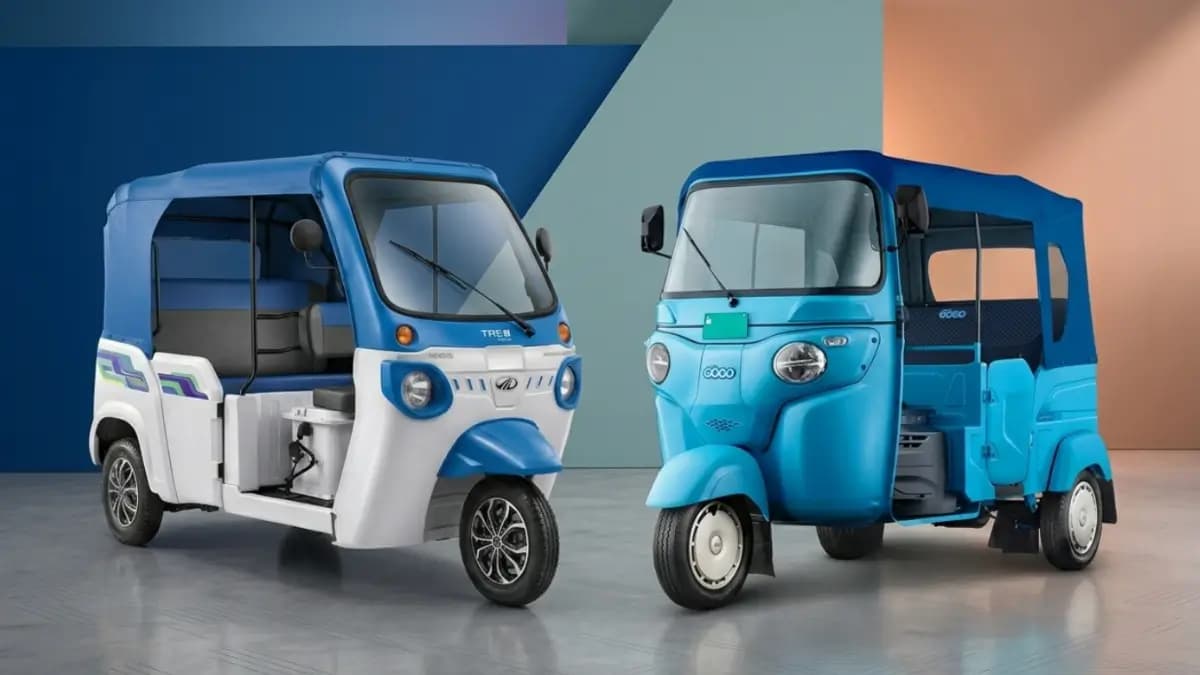



Piaggio and SBI Signed an MoU to Offer Intrest Free Auto Loans in UP
Piaggio and SBI will finance three-wheelers in UP at 0% interest under CM Yuva Yojana. Here's the real math, who qualifies, and how to apply first.
Electric Truck Guide
Electric trucks are revolutionizing the commercial vehicle industry, offering an eco-friendly and cost-effective alternative to traditional diesel-powered vehicles. With zero tailpipe emissions, they play a crucial role in reducing our carbon footprint and contributing to a cleaner, more sustainable future.
Filters
Electric Trucks
Showing 12 of 408
News
Customer Voice
Same Category Compare
Expert Review
Electric trucks in India are becoming a practical choice for businesses that operate on predictable city routes, fixed delivery schedules, and daily return-to-base movement. Their biggest advantage is the lower running cost compared with diesel trucks, especially when the vehicle is used regularly for last-mile logistics, FMCG delivery, municipal work, and e-commerce distribution.
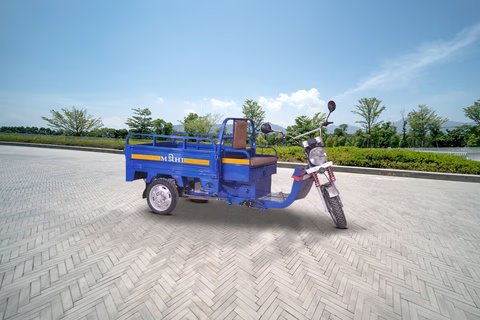
The segment is strongest in light-duty and urban commercial applications right now. Electric 3 wheelers, e-rickshaws, auto rickshaws, and compact cargo vehicles are easier to operate within city limits because their route length is manageable and charging can be planned overnight or during shift gaps.
For buyers, the most important point is not only battery range. Payload, charging time, warranty, service support, battery replacement cost, and real-world loaded range should be checked before choosing a model. A truck that looks good on claimed range may perform differently when used with full load, frequent stops, and AC or auxiliary electrical usage.
Electric trucks also improve driver comfort because they produce less vibration and lower cabin noise. This matters for businesses where drivers spend long hours in stop-and-go traffic. Instant torque helps in city movement, while automatic-style driving reduces fatigue in dense traffic conditions.
The total cost of ownership can be attractive when charging infrastructure is available. Businesses with their own depot, warehouse, shop, or parking space usually benefit more because they can control charging cost and uptime. Public charging dependence can still be a limitation for some commercial users.
Fleet operators should compare electric trucks according to route discipline. If the vehicle returns to the same location every day, covers a known distance, and carries a consistent payload, electric ownership becomes easier to manage. If routes are uncertain or long-distance trips are common, diesel or CNG options may still be more practical.
Service network is another key factor. EVs have fewer moving parts, but battery, motor controller, charger, wiring, and software support must be reliable. Buyers should prefer brands that provide clear warranty terms, roadside assistance, and trained service technicians in their operating city.
Electric trucks are also useful for businesses that want cleaner operations and better access in pollution-sensitive urban zones. As Indian cities tighten emission rules, EV commercial vehicles may become increasingly important for city logistics and short-haul cargo work.
FAQ
In 2026, electric trucks available in India include models from Tata Motors (such as Tata Ace EV and Tata Ultra EV), Ashok Leyland (AVTR EV range), Mahindra Electric, and Eicher. These trucks are primarily designed for city logistics, last-mile delivery, and short-haul transportation.
Yes, electric trucks are well-suited for Indian conditions, especially for urban and semi-urban operations. They perform efficiently in stop-and-go traffic, offer instant torque, and are ideal for applications like e-commerce delivery, FMCG transport, and municipal services.
The range of electric trucks in India typically varies between 120 km and 300 km on a single charge, depending on the model, battery capacity, payload, driving conditions, and usage pattern.
Tata Motors and Ashok Leyland are currently considered the most reliable electric truck brands in India due to their proven EV technology, strong service network, battery warranty, and nationwide support.
Electric trucks generally have a higher upfront cost compared to diesel trucks. However, they offer significantly lower running and maintenance costs, government incentives, zero tailpipe emissions, and long-term savings for fleet operators.