
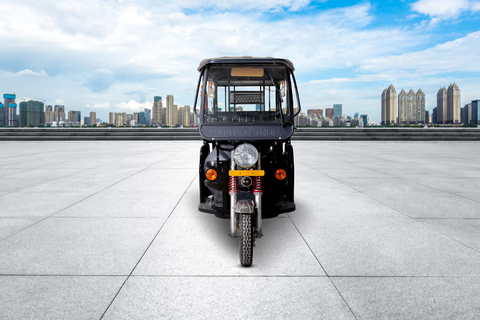
 Electric Vehicle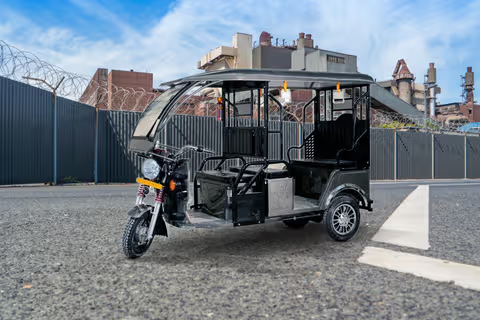
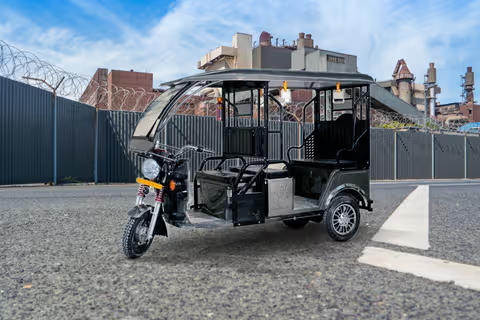
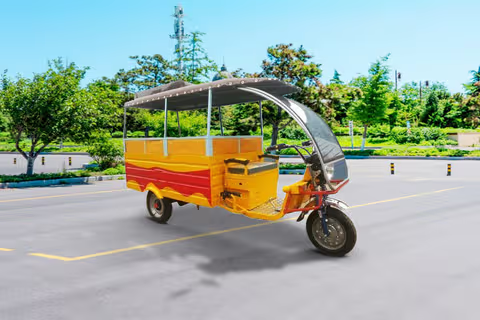
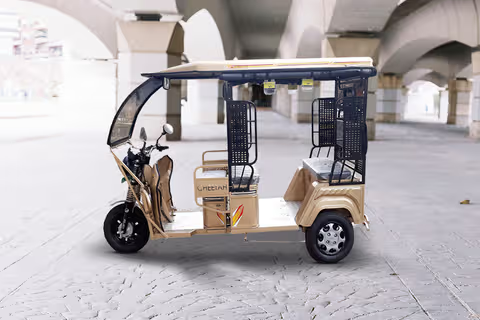
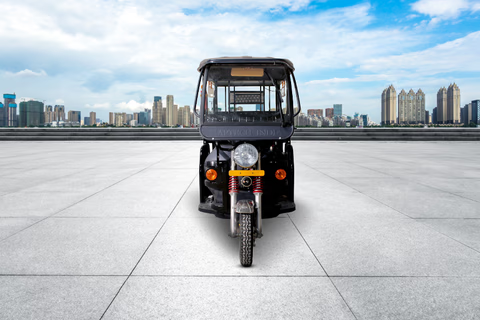
Kaptech Passenger E-Rickshaw
Ex-Showroom Price
₹90.00 K
About
Looking for an efficient, eco-friendly, and cost-effective way to ferry passengers in urban and semi-urban areas? The Kaptech Passenger E Rickshaw stands out as an excellent solution. Designed to meet the unique demands of Indian roads, this electric rickshaw offers a blend of comfort, reliability, and unparalleled operational savings, making it a favorite for many operators and passengers across the country.
When it comes to value, the Kaptech Passenger E Rickshaw price in India is incredibly competitive. Typically, you can expect the Kaptech Passenger E Rickshaw to range from ₹1.2 Lakh to ₹1.8 Lakh, depending on the variant and battery type. This attractive pricing ensures a quick return on investment for operators, making it an accessible choice for aspiring entrepreneurs and fleet owners alike looking to start or expand their transport business.
The Kaptech Passenger E Rickshaw mileage is a significant advantage, offering impressive range per charge. You can expect around 80-100 km on a single charge, ideal for multiple trips throughout the day without constant recharging worries. Powered by a robust electric motor, usually around 1000W to 1500W, it delivers sufficient power for city commuting, ensuring smooth acceleration and comfortable rides even with a full load. Its efficient performance translates directly into incredibly low running costs, a major benefit for daily operations compared to traditional fuel vehicles.
Understanding the Kaptech Passenger E Rickshaw dimensions is key to appreciating its urban agility. This compact passenger vehicle is perfectly sized to navigate busy streets and narrow lanes with ease, a crucial feature for Indian cities. It typically offers comfortable seating for a driver plus 3 to 4 passengers, making it an ideal choice for last-mile connectivity. With a Gross Vehicle Weight (GVW) usually around 600-700 kg, it efficiently handles its passenger load while maintaining stability. While primary space is for passengers, there's often provision for small bags or luggage, catering to daily commuter needs.
The Kaptech Passenger E Rickshaw is a versatile workhorse, perfectly suited for various applications across India. It excels as a last-mile connector, efficiently bridging gaps between public transport hubs and residential areas, schools, or offices. Its eco-friendly nature also makes it ideal for use in tourist zones, housing societies, and college campuses where quiet, pollution-free transport is preferred. From bustling market runs to short-distance neighborhood commutes, this e-rickshaw provides reliable, affordable transit for a wide demographic.
Owners and drivers consistently praise the Kaptech Passenger E Rickshaw for its unwavering reliability and minimal maintenance requirements. Users often highlight its sturdy build quality, comfortable ride, and easy operation, contributing to positive passenger experiences and operator satisfaction. Kaptech's commitment to service support, with readily available spare parts and a growing service network, further instills trust among buyers, solidifying its reputation as a dependable electric passenger vehicle. It's truly built for the long haul in challenging conditions.
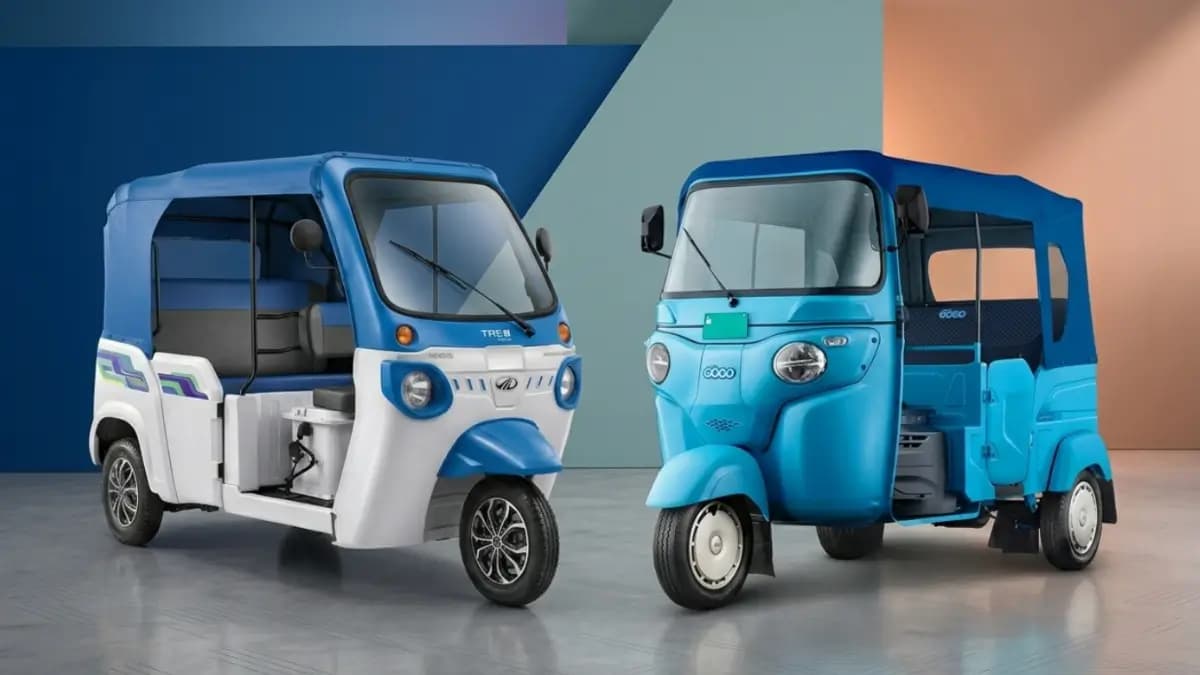
The Kaptech Passenger E Rickshaw often comes with a few variants, primarily differing in battery technology (e.g., lead-acid for affordability, lithium-ion for extended life and faster charging). While these options cater to diverse needs, it faces competition from other popular electric rickshaws in India like the Mahindra Treo, Bajaj RE E-TEC, Atul Elite, and Saera Mayuri. However, the Kaptech model consistently stands out for its blend of affordability, robust performance, and strong after-sales support, offering a compelling alternative in this competitive segment.
In conclusion, the Kaptech Passenger E Rickshaw is an outstanding choice for anyone seeking an economical, environmentally friendly, and reliable passenger transport solution in India. Its attractive Kaptech Passenger E Rickshaw price in India, impressive range, compact Kaptech Passenger E Rickshaw dimensions, and proven durability make it a smart investment. For urban mobility and last-mile connectivity, it truly embodies the future of public transport, proving to be one of the best e-rickshaw options available today. Make the smart choice for your business and the environment with Kaptech.
Specifications
Kaptech Passenger E-Rickshaw Key Specifications
Number of Tyres3
GVW772 kg
Charging Time4-5 Hours
Type of MotorBLDC Motor
Fuel TypeElectric
Max Speed25 km/h
Power
- 1 hp
Gear Box1 Forward + 1 Reverse
Chassis TypeChassis with Cabin
All Variants
Kaptech Passenger E-Rickshaw Variants
| Variant Name | Price | Mileage | Fuel Type | Action |
|---|---|---|---|---|
| 4 Seater/Electric | ₹9.00L - ₹9.50LEx-showroom Price | 70-80 KM/Full Charge | Electric | Details |
Applications
Kaptech Passenger E-Rickshaw Key Use Cases
Use Case 1
Transport
Compare
Compare Kaptech Passenger E-Rickshaw With Similar Trucks
Pros & Cons
Kaptech Passenger E-Rickshaw Pros & Cons
What We Like
10- Zero tailpipe emissions contributing to cleaner urban air
- Lower running costs due to cheaper electricity compared to fossil fuels
- Significantly reduced noise pollution enhancing urban peace
- Simplified driving experience with automatic transmission
- Potential eligibility for government subsidies and tax incentives for electric vehicles
- Provides essential last mile connectivity for passengers
- Fewer moving parts typically leading to lower maintenance expenses
- Supports local manufacturing and job creation in the EV sector
- Agile and well suited for navigating congested city streets
- Embraces modern technology for efficient battery management and performance
What We Don't Like
11- Limited driving range on a single battery charge
- Availability of adequate public charging infrastructure can be a challenge
- Longer charging times required compared to refueling conventional vehicles
- High cost associated with battery replacement after its useful life
- Potentially higher initial purchase price without government support
- Generally lower top speed compared to other modes of transport
- Battery performance can be affected by extreme hot or cold weather
- Restricted passenger carrying capacity compared to larger vehicles
- Concerns about overall durability and long term reliability for heavy usage
- Safety features might be basic depending on the model and regulations
- Heavy reliance on a stable and sufficient electricity grid for mass adoption
Details
Kaptech Passenger E-Rickshaw Features & Specifications
Performance
10 items
Performance
10 items
Max Power 1 hp
Fuel Type Electric
Gradeability (%) 14 %
Max Speed (km/h) 25
Turning Radius (mm) 2088
Range 70-80
Battery Capacity 150 Ah
Type of Motor BLDC Motor
Product Type L3M (Low Speed Passenger Carrier)
Carrier Type Passenger Carrier
Charging
1 item
Charging
1 item
Charging Time 4-5 Hours
Dimension
6 items
Dimension
6 items
Overall Length (mm) 2720
Overall Width (mm) 990
Overall Height (mm) 1730
Ground Clearance (mm) 180
Wheelbase (mm) 2100
Axle Configuration 3x3
Transmission & Loading Capacity
4 items
Transmission & Loading Capacity
4 items
Transmission Automatic
GVW / GCW (Kgs) 772 kg
Gear Box 1 Forward + 1 Reverse
Power SteeringNo
Features
14 items
Features
14 items
Steering Handle bar type
A/CNo
Cruise ControlNo
Navigation SystemNo
TelematicsNo
Tiltable SteeringNo
Arm-restNo
Seat Type Standard
Driver Information DisplayYes
Adjustable Driver SeatNo
Seating Capacity D+4 Passenger
Tubeless TyresNo
Seat BeltsNo
Hill HoldNo
Brakes & Suspension
5 items
Brakes & Suspension
5 items
Brakes Drum Brakes
Front Suspension Telescopic Hydraulic Suspension
Rear Suspension Leaf Spring Suspension
ABSNo
Parking BrakesYes
Body Option & Cabin Type
4 items
Body Option & Cabin Type
4 items
Chassis Type Chassis with Cabin
Body Option Fully Built
Cabin Type Day Cabin
Tiltable CabinNo
Tyres
3 items
Tyres
3 items
Number of Tyre 3
Rear Tyre 6x16
Front Tyre 6x16
Others
3 items
Others
3 items
ChassisYes
Battery(Volts) 48 V
Fog LightsNo
Alternatives
Kaptech Passenger E-Rickshaw Alternatives
Truck Options
Explore More Truck Options
News
Truck News

Expert Review
Kaptech Passenger E-Rickshaw Expert Review
Introduction: The Kaptech Passenger E Rickshaw – Your Ride to Success
\n
Looking for an efficient, eco-friendly, and economical solution for passenger transport in India? The Kaptech Passenger E Rickshaw is a game-changer, designed to navigate bustling city streets with ease. This innovative electric rickshaw is quickly becoming the preferred choice, offering a perfect blend of performance and sustainability.
\n\n
Kaptech Passenger E Rickshaw Price in India
\n
Investing in the Kaptech Passenger E Rickshaw is a smart business decision. The Kaptech Passenger E Rickshaw price in India is highly competitive, generally ranging from ₹1.10 Lakh to ₹1.40 Lakh (ex-showroom). This attractive pricing makes it an accessible option for new ventures, ensuring a quick return on investment.
\n\n
Mileage & Performance: Efficient and Eco-Friendly
\n
When it comes to efficiency, the Kaptech Passenger E Rickshaw truly shines. Expect an impressive Kaptech Passenger E Rickshaw mileage of around 80-100 km on a single charge, depending on conditions. Powered by a robust electric motor, it delivers consistent performance with zero emissions.
\n
Its powerful motor ensures smooth acceleration and reliable operations, even with a full passenger load. Designed for urban commutes, it offers nimble handling and low running costs, making every trip profitable.
\n\n
Dimensions & Capacity: Compact Yet Spacious
\n
The compact yet spacious design of the Kaptech Passenger E Rickshaw is ideal for navigating crowded Indian roads. While specific Kaptech Passenger E Rickshaw dimensions vary, it typically accommodates a driver plus four passengers comfortably. Its optimal body size allows for easy maneuvering in tight lanes and busy markets.
\n
With a practical payload capacity for passengers, this E-Rickshaw is built for daily commutes, prioritizing comfort and safety for a smooth ride.
\n\n
Use Cases: Versatility for Every Need
\n
The Kaptech Passenger E Rickshaw is incredibly versatile, perfect for various applications. It's an excellent choice for last-mile connectivity, providing convenient transport from bus stops or metro stations. It also serves as a reliable option for short-distance inter-city commutes, ferrying passengers within town limits.
\n
Beyond daily commutes, it's popular in tourist destinations and as a feeder service to larger public transport networks. Its eco-friendly nature also makes it suitable for areas promoting green transport solutions.
\n\n
Reviews & Reliability: Trust and Support
\n
Buyers and users consistently praise the Kaptech Passenger E Rickshaw for its reliability and low maintenance costs. Drivers highlight its comfort for passengers and robust build quality. Kaptech’s commitment to customer satisfaction is evident through its widespread service network and dedicated support, ensuring peace of mind.
\n
This focus on trust makes Kaptech a reputable name; you're investing in a dependable business partner.
\n\n
Variants & Competitors: Standing Strong in the Market
\n
The Kaptech Passenger E Rickshaw comes in various configurations, often differing in battery technology (e.g., lead-acid or lithium-ion) and minor upgrades, letting buyers choose what fits their needs. It stands strong against popular rivals like the Mahindra Treo, Bajaj RE E-Tec, and Piaggio Ape E-City.
\n
While competitors offer similar functionalities, Kaptech excels with a compelling combination of affordability, impressive range, and proven reliability. For efficient urban transport, it’s a strong contender among the best truck in India for last-mile passenger connectivity.
\n\n
Conclusion: Your Smart Choice for Indian Roads
\n
In conclusion, the Kaptech Passenger E Rickshaw offers an unbeatable package for Indian passenger transport businesses. With its competitive Kaptech Passenger E Rickshaw price in India, excellent Kaptech Passenger E Rickshaw mileage, and practical Kaptech Passenger E Rickshaw dimensions, it promises profitability and environmental responsibility.
\n
It’s a reliable, comfortable, and low-maintenance vehicle, backed by strong service support. Choose Kaptech for a smart, sustainable, and successful future on India's roads.
FAQ
Frequently Asked Questions About Kaptech Passenger E-Rickshaw
Use Case
Kaptech Passenger E-Rickshaw Use Case
What are the primary uses for the Kaptech Passenger E Rickshaw?
+−
The Kaptech Passenger E Rickshaw is primarily designed for comfortable and eco-friendly urban passenger transport. It's perfect for short-distance commutes, local area transport, and providing essential last-mile connectivity in towns and cities across India.
Is this E Rickshaw suitable for small business owners?
+−
Absolutely! It's an excellent small commercial vehicle for entrepreneurs in India looking for an affordable and reliable income source. Its low running cost and efficient performance make it a great choice for passenger hire services and local transport businesses.
Can the Kaptech Passenger E Rickshaw operate in crowded city areas?
+−
Yes, its compact dimensions and electric motor make it ideal for navigating crowded city streets and narrow lanes with ease. It's specifically designed for efficient urban mobility, helping you get through traffic smoothly.
Is this vehicle good for providing shuttle services?
+−
Definitely! The Kaptech Passenger E Rickshaw is perfect for shuttle services around residential complexes, industrial parks, or within large campuses. Its silent operation and comfortable ride add to passenger satisfaction, making it a preferred choice.
How many passengers can the Kaptech E Rickshaw comfortably carry?
+−
The Kaptech Passenger E Rickshaw is typically designed to comfortably carry a driver plus three to four passengers. This capacity makes it highly efficient for local public transport needs and a popular choice among commercial vehicle operators.
Can this electric rickshaw be used for purposes other than passenger transport?
+−
While primarily for passengers, some owners might adapt it for very light, personal goods transport occasionally, but its design is optimized for people. For dedicated cargo transport, a commercial cargo E-rickshaw would be more suitable to ensure efficiency and safety.
Is the Kaptech Passenger E Rickshaw a good option for first-time commercial vehicle buyers?
+−
Yes, it is! Its low maintenance, ease of driving, and attractive truck price in India make it an excellent entry-level option for anyone starting a commercial transport business. It's a very practical and financially viable choice for new entrepreneurs.
Brochure
Kaptech Passenger E-Rickshaw Brochure
Download for detailed specs, features & prices.
Finance
Kaptech Passenger E-Rickshaw EMI
Your estimated monthly EMI
₹2,033
At 10% interest for 3 years
Calculate Kaptech Passenger E-Rickshaw EMI