News Details
Hyundai and TVS Motor Team Up to Build Electric Three-Wheelers in India
Summary
Fifteen months after the concept turned heads at Auto Expo 2025, a formal JDA is signed. Hyundai does the design and engineering. TVS builds, sells, and knows the customer.
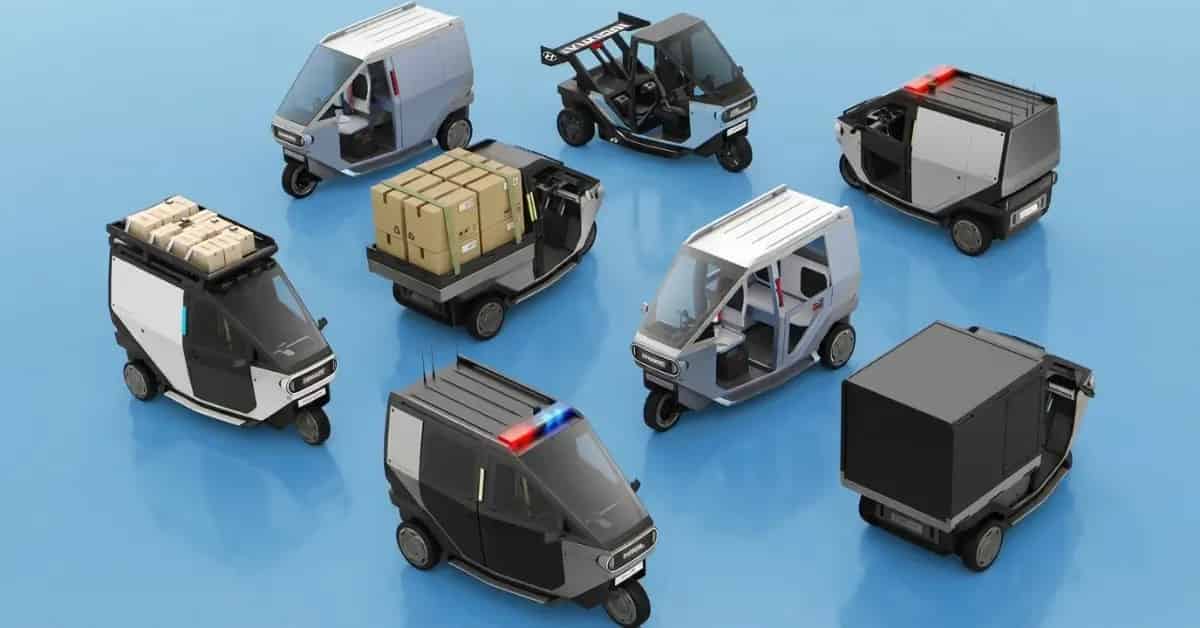


January 2025. Bharat Mobility Global Expo. Hyundai and TVS rolled out a concept three-wheeler on the same stage. No binding deal, no production timeline, plenty of speculation.
On April 20, 2026, that speculation became a signed Joint Development Agreement. The two companies formalized their partnership to co-develop electric three-wheelers for India's last-mile mobility market, and potentially other markets beyond India.
What the Hyundai-TVS Joint Development Agreement Actually Covers
The JDA splits responsibilities cleanly along each company's actual strengths.
Hyundai Motor leads design and co-development. The company brings its R&D depth, advanced mobility technology, and what it calls a human-centric design approach. Given that Hyundai has been engineering passenger vehicles for global markets for decades, applying that design capability to a commercial-use three-wheeler built for Indian conditions is a genuinely different challenge. The company appears to have taken it seriously based on how the concept was received at Bharat Mobility.
TVS Motor handles the other half. Manufacturing in India, local sales, three-wheeler engineering expertise, and market knowledge that Hyundai simply does not have in this segment. TVS has been building two and three-wheelers in India since the 1980s. That institutional knowledge of Indian roads, Indian operators, and Indian service expectations is not something a Korean OEM acquires quickly.
15 Months Between Concept and Contract: What Took So Long
The concept was shown in January 2025. The JDA was signed in April 2026. That is 15 months between a public display and a formal agreement.
This is actually not unusual for joint development deals of this scale. A concept at an auto expo is a signal of intent, not a done deal. Between the show and the signature, both sides would have spent time negotiating IP ownership, revenue split, manufacturing terms, export rights, and technology sharing boundaries. Those conversations take time, especially when one party is a South Korean global OEM and the other is an Indian two and three-wheeler manufacturer with its own EV roadmap.
The 15-month gap tells you this was taken seriously on both sides. A rushed signing would have been the red flag, not a deliberate one.
India-Specific Engineering Features Built Into the E3W Concept
The concept shown at Bharat Mobility was not a generic EV three-wheeler dressed up for show. The engineering choices point to someone who has actually studied Indian operating conditions.
Adaptive ground clearance for monsoon-affected roads. That addresses one of the most common failure points on low-clearance vehicles during the rainy season across Maharashtra, Kerala, and eastern India. Enhanced thermal management for tropical climates. Battery degradation in consistent 40-degree heat is a documented problem with early electric three-wheelers in India. Ergonomic design for extended commutes. Auto drivers in India routinely put in 10 to 12 hour shifts. A seat and cockpit designed for those hours is a different product from one designed for a 30-minute test drive.
Flexible interior configuration and enhanced safety features round out the known concept specifications. The specific production details have not been disclosed yet.
TVS Motor's Manufacturing and Sales Role
TVS will manufacture the E3W in India for the domestic market. It will also lead local sales. Future exports are part of the stated plan, with TVS manufacturing operations positioned to serve those markets.
This structure mirrors how TVS runs its BMW partnership on the two-wheeler side. BMW provides architecture and brand positioning. TVS builds the product in India. Both parties reach markets neither could efficiently access alone.
For the E3W, the logic is similar. Hyundai has no three-wheeler manufacturing line in India and no dealer network in the auto-rickshaw segment. TVS has both, plus a service footprint that matters enormously to commercial operators who cannot afford downtime.
Why Hyundai Wants to Be in the Indian Three-Wheeler Market
Hyundai already sells cars in India through its own network. The three-wheeler space is a different business entirely, and entering it through a JDA rather than a standalone product makes sense for a company without existing presence in the segment.
India's electric three-wheeler market is growing faster than most EV categories. Government policy has been pushing electrification of last-mile transport steadily. The FAME subsidy structure, state-level incentives, and rising diesel and CNG costs are all pushing operators toward electric. Hyundai wants a piece of that transition without building a business from scratch.
Partnering with TVS gives Hyundai access to a ready distribution network, an existing E3W platform to build on, and a brand that auto operators in India already know. That is not a trivial advantage.
What This JDA Means for Fleet Operators and Auto Drivers
No launch date has been announced. No pricing, no production specs beyond what was shown at Bharat Mobility 2025. This is a development agreement, not a product launch. The vehicle still needs to complete engineering, testing, homologation, and commercial finalisation before it reaches dealers.
What is clear is the direction. When the product does arrive, it will carry Hyundai's engineering and TVS's reach. That is a combination no current electric three-wheeler brand in India has. Competitors like Bajaj WEGO, EKA 6S, Mahindra Treo, and Piaggio Ape E-City will all be watching how the final product is positioned and priced.
For operators, the honest advice is to note the partnership and wait for production specifications before making purchase decisions. What matters at the end is real-world range, payload, service availability, and total cost of ownership. A JDA tells you the intent. Only the road will tell you the product.