
News Details
Indian CV Market Forecast to Hit Record 12.4 Lakh Units in FY27
Summary
Twelve point four lakh units is a record. But 5 to 6 percent growth is the slowest since the Covid recovery began. This report is not just a growth story.
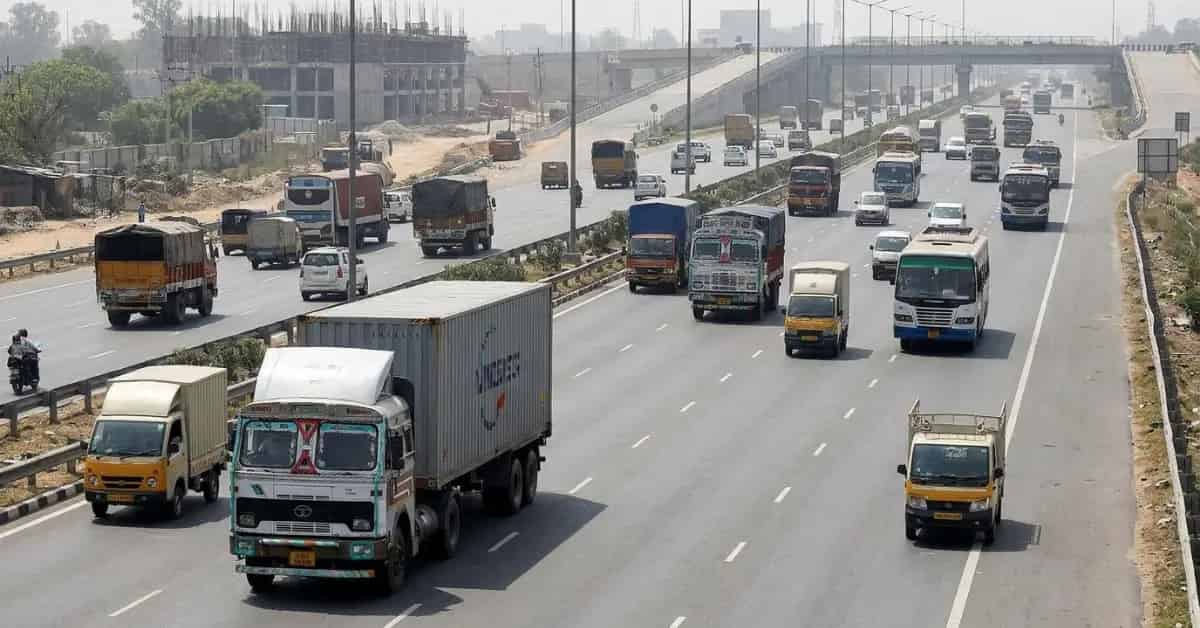


India's commercial vehicle industry has never sold 12.4 lakh units in a single year. According to a Crisil Ratings report published on April 25, 2026, that is exactly what FY27 is expected to deliver, clearing the previous peak set in FY19 before the pandemic disrupted everything.
The headline reads well. The details are more complicated. After a 13 percent rebound in FY26, the industry is now entering a phase of slower growth, rising compliance costs, compressed margins, and a new rail competitor that was not on the map a year ago.
Why FY26's 13 Percent Growth Will Not Repeat in FY27
FY26 had a combination of tailwinds that are unlikely to align again soon. GST on commercial vehicles was cut from 28 percent to 18 percent in September 2025. That single move unlocked a wave of deferred purchases that operators had been holding back on. Interest rates had been coming down. Freight utilisation was improving. Infrastructure execution accelerated after the FY25 election slowdown.
None of those are one-time events that disappear. But their combined first-year effect is not repeatable. FY27 growth moderating to 5 to 6 percent on a higher base is the natural consequence of a very strong FY26, not a sign the market is softening structurally.
The domestic market will remain the engine. It accounts for 92 percent of total CV volumes. Infrastructure spending at Rs 12.2 trillion in FY27, replacement demand from an ageing fleet, and ongoing GST-driven affordability improvements all support continued domestic growth.
Segment-Wise Forecast for SCVs, MHCVs and Buses in FY27
Small commercial vehicles make up roughly 60 percent of total CV volumes. Crisil projects 5 to 6 percent SCV growth in FY27, driven by e-commerce expansion and the steady growth of last-mile delivery networks in Tier-2 and Tier-3 cities. Warehousing investment is pulling SCV demand into markets that were previously served only by smaller vehicles.
MHCV (medium & heavy commercial vehicles) trucks are forecast to grow 4 to 5 percent. Infrastructure spending and freight movement remain supportive, but the shift toward higher-tonnage vehicles is tempering volume growth. Fewer, bigger trucks carry the same freight. That is good for operators but moderates unit sales numbers.
The bus segment is projected to grow 3 to 4 percent. Government e-bus procurement under PM-eBus Sewa and state transport corporation replacement orders are the primary drivers. Electrification is moving faster in buses than in any other CV category, though penetration remains in low single digits overall.
Both Dedicated Freight Corridors Are Now Operational
This is the detail that most coverage of the Crisil report has skipped over. Both Dedicated Freight Corridors were fully commissioned in April 2026. The eastern DFC runs from Ludhiana to Sonnagar. The western DFC runs from Dadri to JNPT.
These corridors are now pulling bulk and containerised long-haul freight onto rail. Road transport has dominated this segment for decades simply because rail infrastructure could not keep up. That is no longer entirely true.
Crisil explicitly flags this as a factor that could impact MHCV replacement demand. The risk is not immediate or severe, but it is real. Operators running bulk freight on long-haul routes between the DFC-connected nodes should account for shifting freight economics when planning fleet renewal decisions in FY27 and beyond.
Non-bulk cargo, which accounts for roughly 30 percent of all freight, remains road-dependent. That segment is not at risk from DFC competition. The exposure is concentrated in dry bulk and containerised goods on the routes the corridors cover.
Export Growth Crashing From 17 Percent to 2 to 4 Percent
CV exports had a strong FY26, growing 17 percent. FY27 will look very different. Crisil projects export growth of just 2 to 4 percent, a sharp deceleration driven almost entirely by the West Asia crisis.
West Asia accounts for nearly a quarter of India's total CV exports. Shipping disruptions in the region are deferring dispatches rather than cancelling orders, so the demand is not lost but is being pushed out. The crisis caused an estimated 3.5 billion dollar drop in India's total exports to West Asia in March 2026 alone.
Exports make up only 8 percent of overall CV volume, so the sector-level impact is contained. For manufacturers with heavy export exposure to the region, the next two quarters will be tighter than FY26's numbers suggested.
Rising Compliance Costs Will Push CV Prices Higher Through FY27 and FY28
ADAS mandates are already active for new CV models from April 2026 and will extend to all production from October 2026. CAFE-III norms come into effect in April 2027. Bharat Stage VII is being proposed for shortly after. Each of these layers adds R&D, tooling, and certification costs.
Crisil estimates this will push vehicle prices higher through FY27 and FY28. That is a double-edged development. Higher prices hurt affordability. But the expectation of price increases tends to bring forward purchases, which is part of why Q3 and Q4 of FY27 may see stronger-than-expected ordering ahead of regulatory implementation dates.
Operating margins are expected to compress 40 to 50 basis points from 12 percent in FY26 to around 11.5 to 11.6 percent in FY27. Rising input costs for steel, aluminium, and fuel driven by geopolitical pressures are the primary cause. Industry capex for the year is pegged at Rs 5,500 crore, roughly in line with FY26, focused on modernisation and compliance.