News Details
MCD Hikes Delhi Entry Charges for Commercial Vehicles by Up to 53%
Summary
The hike from April 19 was never going to be the final word. The Supreme Court has also locked in a 5% annual increase going forward, which means this cost only goes in one direction.
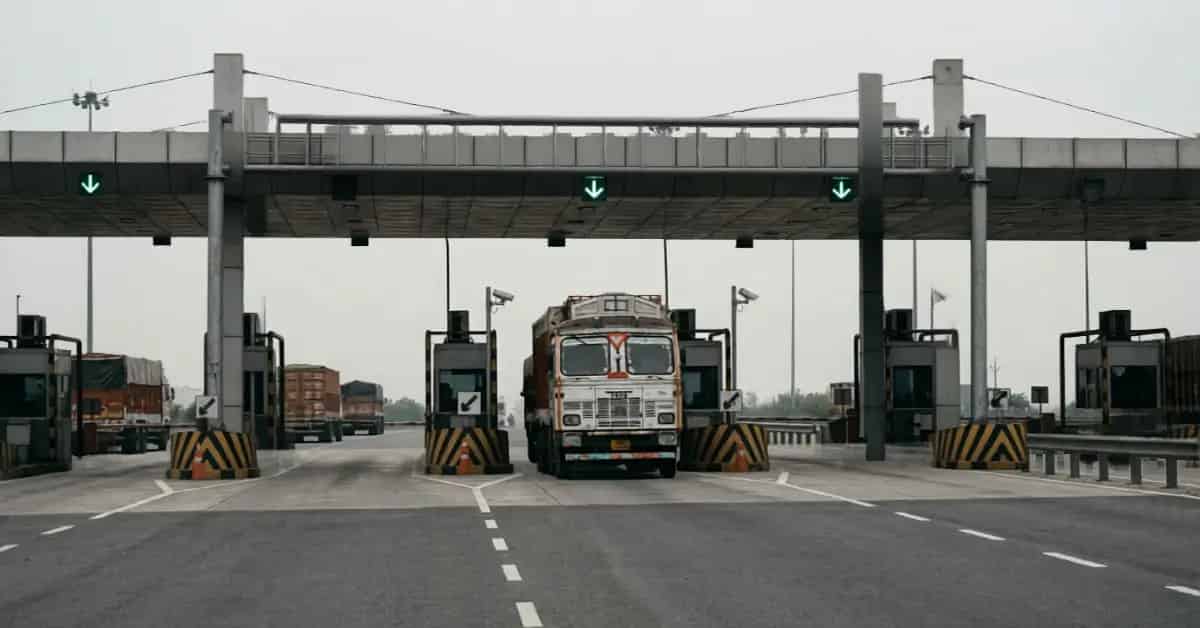


If your truck enters Delhi, you paid more from April 19. The Municipal Corporation of Delhi issued a formal order on April 18 directing immediate enforcement of revised Environment Compensation Charges across all 126 toll collection points at Delhi's borders.
The order cites the Supreme Court's March 12 ruling in the MC Mehta vs Union of India case. That case ran for 41 years. When the court closed it, this hike was one of its final directions.
New ECC Rates for SCVs, Two-Axle and Multi-Axle Trucks
Small commercial vehicles and two-axle trucks now pay Rs 2,000 per entry. The old rate was Rs 1,400. That is a 43 percent increase.
Three-axle trucks and vehicles with four or more axles now pay Rs 4,000. They were paying Rs 2,600 before. That is a 53 percent jump.
Both sets of rates took effect from April 19, 2026. There is no grace period and no phased rollout. The higher charge applies on the first crossing after the order.
The 5% Annual Escalation Clause
The bigger story is not the one-time hike. The Supreme Court has mandated a 5 percent annual increase in ECC going forward.
Run that forward. A vehicle paying Rs 2,000 today will be paying roughly Rs 2,552 in 5 years. A heavy truck paying Rs 4,000 now will cross Rs 5,100 by 2031. For a fleet running 20 Delhi entries a month, the compounded cost over five years is not trivial.
No fleet owner planning purchases or contracts today should treat the April 2026 rates as a fixed cost. Build in the annual 5 percent escalation when pricing any freight arrangement that involves Delhi transit.
How Many Commercial Vehicles Are Affected by the ECC Hike
Around 70,000 commercial vehicles enter Delhi from the NCR every day. Of those, roughly 4,000 to 5,000 are trucks that pay the Environment Compensation Charge.
The remaining volume includes cars, LMVs, and buses. The ECC specifically applies to commercial freight carriers. Daily numbers alone indicate this charge touches a significant share of the NCR logistics ecosystem every 24 hours.
What Is ECC and Why It Exists
The Environment Compensation Charge was first introduced in 2015 by the Supreme Court as a financial deterrent against polluting commercial vehicles entering Delhi. It was never framed as a revenue measure. The stated purpose was to make it expensive enough for operators to consider rerouting through peripheral expressways rather than cutting through the city.
Revenue collected goes into a dedicated account held by the Delhi government and is meant to fund public transport and pedestrian infrastructure. Whether that money has historically reached those stated ends is a separate question the court has also raised over the years.
Peripheral Expressway Route as a Legal Way to Avoid Delhi ECC
The Supreme Court's order explicitly notes that vehicles using the Eastern and Western Peripheral Expressways to bypass Delhi are exempt from ECC.
For trucks moving between, say, Haryana and Uttar Pradesh without a pickup or delivery inside Delhi, the peripheral route is the legitimate cost-saving alternative. CAQM has recommended that MCD and NHAI work together to further incentivise this diversion.
If your freight origin and destination are both outside Delhi and you are currently routing through the city out of habit or GPS default, April 2026 is the right time to recalculate.
Transport Industry Response to the MCD ECC Order
Rajendra Kapoor, President of the All India Motor and Goods Transport Association, described the decision as a direct blow to the transport sector. His position is that imposing a limited and rational charge on commercial vehicles is acceptable, but a 53 percent overnight hike without transition time puts immediate pressure on margins for operators who cannot reroute.
The association's concern is practical. Not every truck entering Delhi is a through-carrier. Many are making deliveries inside the city and have no peripheral alternative. For those operators, the revised ECC is a straight cost increase with no operational workaround.
ANPR Barrier-Free Toll Collection Coming to Delhi by October 2026
MCD has confirmed it is moving to an ANPR camera-based toll collection system. The plan covers all 126 toll collection points and integrates RFID with Automated Number Plate Recognition technology.
The new system is modelled on the Multi-Lane Free Flow setup used on national highways. Vehicles will not need to stop. Charges will be deducted automatically. MCD has set an October 2026 deadline for the rollout.
For fleet operators, this means FASTag integration and correct vehicle classification in the system will matter more, not less, once the barriers come down. A vehicle misclassified at registration level could face incorrect ECC charges with no booth interaction to dispute it in real time.
End Note for YOU
Review every contract that involves Delhi transit and check whether the freight rate accounts for the higher ECC. A 43 to 53 percent jump in entry charges was not baked into agreements signed before April 2026.
Map which of your vehicles have delivery destinations inside Delhi versus those that simply pass through. The ones passing through should be evaluated for peripheral expressway rerouting immediately.
Update your vehicle records with accurate axle classification. With ANPR replacing manual booths by October, classification errors in the system will be harder to contest on the spot.
Finally, build the 5 percent annual ECC escalation into any multi-year freight pricing arrangement you negotiate from here. This charge is not going back down.