
News Details
PepsiCo Launches EV Green Corridor with 8 Retrofitted Electric Trucks
Summary
PepsiCo deploys 8 retrofitted electric trucks for linehaul logistics in India. Could this be the most practical EV model for fleet owners?
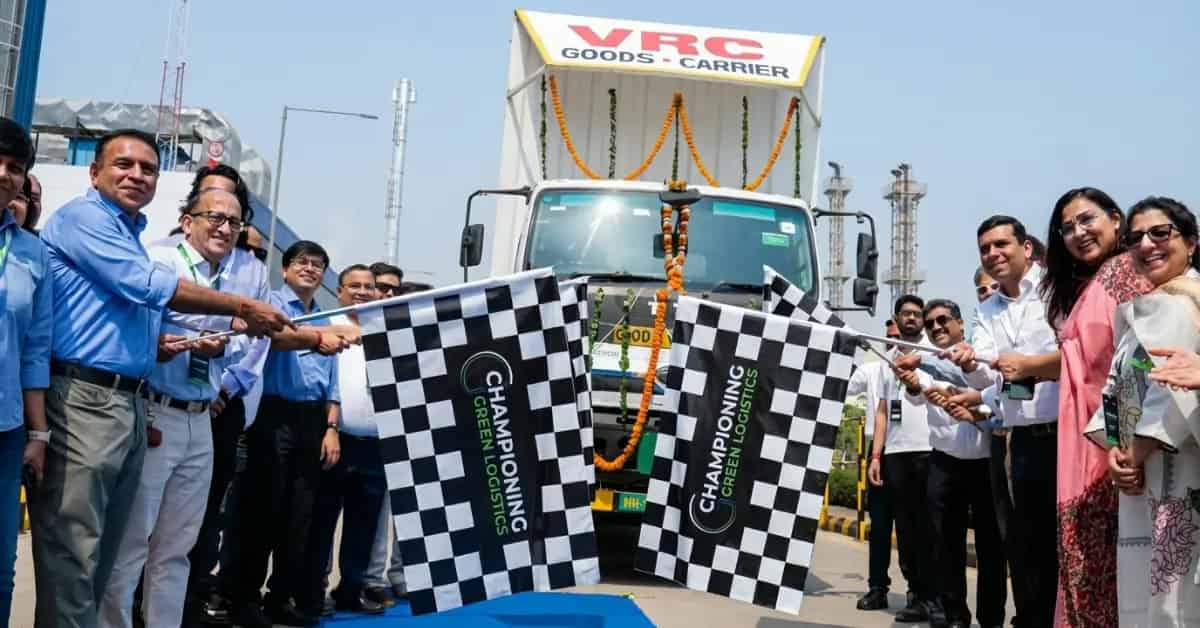


Eight electric trucks. One 115-kilometre route. And a clear signal that India's long-haul freight is finally starting to go electric. But not by buying new, but by going retrofitted (It’s a process where existing diesel trucks get electric engine).
PepsiCo India has commissioned eight retrofitted electric container trucks for its linehaul operations between Kosi in Uttar Pradesh and Pataudi in Haryana. The company is calling it the EV Green Corridor, and if it scales the way PepsiCo intends, it could quietly become the template other FMCG fleets follow.
Why Retrofitted Trucks and Not New EVs
The trucks aren't purpose-built EVs. They are modified versions of existing diesel vehicles. Four from Tata Motors Commercial Vehicles and four from Eicher Trucks and Buses, converted into electric by Kalyani Powertrain, a wholly owned subsidiary of Bharat Forge based in Pune.
This is a detail worth paying attention to if you run a fleet. Retrofitting gives you the familiar cabin and chassis your drivers already know, without the steep sticker price of a new electric truck. Kalyani Powertrain has been building this niche specifically for India's commercial vehicle market, and PepsiCo's eight-truck deployment is among the most visible proofs of concept yet.
The logistics partner on the ground is Vayudoot Road Carriers, a Pune-based transporter with over 25 years of history with PepsiCo India. That long-standing relationship matters here, deploying electric trucks on a live linehaul route demands trust, reliability, and operational coordination that a new vendor simply cannot offer overnight.
What the Numbers on the Kosi–Pataudi Route Actually Mean
The Kosi–Pataudi stretch covers 115 kilometres. PepsiCo India's Supply Chain Head, Rinkesh Satija, has also confirmed the trucks will operate on the Kosi–Delhi route, which runs slightly longer at 126 kilometres. Combined, the fleet is expected to clock approximately 4.8 lakh electric kilometres annually. A figure Satija says will grow in the coming years.
For a logistics operator evaluating electric trucks, that kind of annual mileage on a fixed corridor is significant. It means the route has been chosen deliberately predictable distance, manageable charging stops, and enough load frequency to justify the infrastructure investment. This is not a PR exercise on a short city loop. It is a linehaul corridor with real commercial intent.
A Three-Layer Green Push By PepsiCo
The EV Green Corridor is the headline, but PepsiCo India's green logistics push runs deeper than just these eight trucks. The company has already converted over 400 distributor-linked vehicles to electric three- and four-wheelers across markets, addressing last-mile delivery emissions. In the National Capital Region, more than 80 CNG-powered vehicles have been deployed through logistics partners to reduce the carbon footprint of urban distribution.
Taken together, PepsiCo India is running a three-layer strategy: 1, Electric for linehaul freight, 2, CNG for city logistics, and 3, Electric three and four-wheelers for the last mile. That kind of coordinated approach is rare in Indian FMCG supply chains, and it is what separates this from a one-off sustainability announcement.
What Fleet Owners Should Watch Before Replicating This Model
The corridor was inaugurated by Laxmi Narayan Chaudhary, Cabinet Minister for Sugar Industry and Cane Development, Government of Uttar Pradesh. A detail that signals state-level backing for electric freight initiatives along this route.
Pankaj Sonalkar, Managing Director of Kalyani Powertrain, described the project as a demonstration of how EV technology can be integrated into commercial logistics when supported by strong ecosystem collaboration. The key phrase there is ecosystem collaboration. The trucks alone are not enough, dedicated charging infrastructure, route optimisation, and vehicle customisation are all part of what makes this corridor function.
If you are a fleet owner or transport partner eyeing your own electric transition, the Kosi–Pataudi corridor gives you something valuable: a real-world test case on a mid-distance linehaul route with established operators, not a laboratory pilot.
The Retrofit Path Is Opening Up for Indian Truck Fleets
PepsiCo's move arrives as India's commercial vehicle retrofit space is gradually maturing. Kalyani Powertrain is not alone. Other players are entering the retrofitting business, and the government's framework for vehicle retrofitting has been evolving to support cleaner conversions.
The cost advantage of retrofitting over buying new is significant. You are not starting from zero. You are building on chassis and cabins that your workshop already understands, with battery and drivetrain systems overlaid by a specialist. Whether that translates into total cost of ownership savings that make business sense depends on route length, payload, and charging infrastructure availability. And the Kosi–Pataudi corridor is now generating exactly the kind of operational data that will answer those questions.
Watch this corridor. The next 12 months of data it produces: on battery performance, charging downtime, and running costs versus diesel, will tell Indian fleet operators far more than any specification sheet.