News Details
Three-Wheeler Sales Cross Over 1 Lakh Units in March 2026
Summary
Three Wheelers segment grew 10.52% year-on-year, but the brand-wise breakdown reveals a market that is quietly restructuring itself.
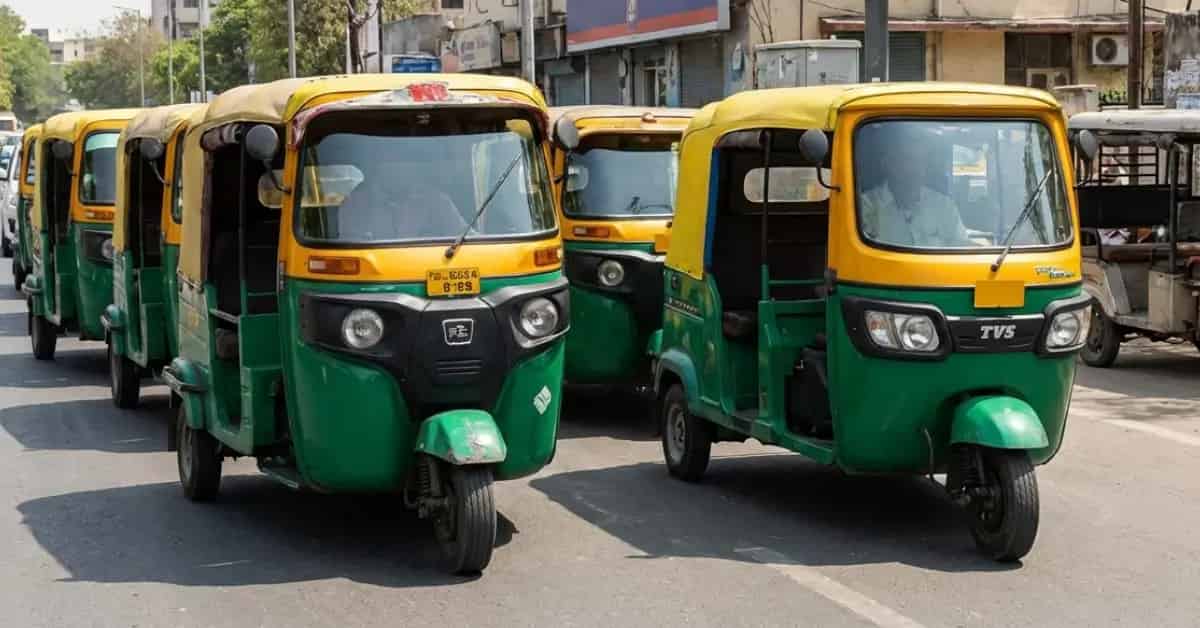


More than one lakh three-wheelers found buyers in a single month. That is not a small thing for a segment that was expected to grow at 6 to 8 per cent for FY26. March came in ahead of those estimates.
According to data released by the Federation of Automobile Dealers Associations (FADA), three-wheeler retail sales in India stood at 1,09,777 units in March 2026, a 10.52% year-on-year increase from 99,325 units sold in March 2025. The headline number looks clean. But the brand-level picture underneath is where the real story sits.
Brands That Grew in March 2026
Bajat Auto
Bajaj retained its leadership position, selling 41,162 units in March 2026 compared to 33,844 units in March 2025, a 21.62% YoY increase. That is a strong performance for a company already operating at the top of the volume table. Bajaj's ability to grow at that rate while leading the segment in absolute numbers reflects durable demand for its passenger carrier range.
Mahindra and Mahindra Group
Mahindra sold 9,963 units compared to 7,362 units, posting 35.34% YoY growth. The bulk of this came from Mahindra Last Mile Mobility, which recorded 9,929 units against 7,328 units in March 2025, a 35.50% increase.
TVS Motor Company
TVS was the fastest-growing major player, reporting 5,543 units against 2,954 units in March 2025, an 87.66% YoY rise, driven by its expanding EV offerings. TVS started from a smaller base, which explains the high percentage, but the trajectory is clearly upward.
Piaggio Vehicles
Piaggio reported 8,643 units, up from 7,075 units, reflecting 22.16% YoY growth. Atul Auto posted 3,022 units against 2,446 units, a 23.55% rise.
The Part of the Market That Is Shrinking
Here is where it gets more interesting for anyone watching the EV space.
YC Electric reported 1,927 units, down from 3,450 units, a 44.14% decline. Mayuri Electric posted 1,439 units against 2,231 units, a 35.52% fall. Citylife Electric recorded 1,604 units, slightly lower than 1,734 units last year, a 7.50% decline.
These are not marginal players by name, but they are losing ground as the larger, better-resourced brands expand their electric portfolios. The broader "Others Including EV" category recorded 35,375 units in March 2026, down from 37,121 units last year, a 4.70% decline.
This pattern has been building for a while. The entry of well-established legacy OEMs into the electric three-wheeler space has started shifting demand dynamics, with organised players gaining at the expense of smaller regional manufacturers. March 2026's FADA numbers are consistent with that trend.
What Is Keeping Overall Demand Steady
The 10.52% growth did not come from one place. Demand in the three-wheeler segment has been supported by last-mile mobility needs, passenger carrier volumes, and gradual EV adoption across urban and semi-urban markets. These are structural factors, not one-time events.
Three-wheelers and light commercial vehicles are particularly well-suited for logistics and last-mile delivery applications, and fleet operators running these routes prioritise total cost of ownership, which currently favours electric options in high-utilisation scenarios.
For ICE buyers, CNG variants continue to hold steady. For fleet operators looking at electrics, the choice is increasingly narrowing toward a handful of established brands that can offer better after-sales support, spares availability, and consistent vehicle quality.
What This Means If You Are Considering a Three-Wheeler Purchase
If you are looking at a cargo or passenger three-wheeler this year, a few things are worth keeping in mind based on the March data.
The brands gaining market share are the ones with stronger service networks and more established EV platforms. A lower upfront price from a smaller EV manufacturer may look attractive, but declining sales volumes at those companies can affect long-term parts availability and resale value. It is worth factoring that in.
On the ICE side, Bajaj's volume dominance means its dealer network and spares ecosystem remain the most accessible in most markets. For operators in smaller towns, that matters more than most specifications on paper.
The PM E-Drive scheme has been offering subsidies of Rs 25,000 per unit for electric three-wheelers and Rs 50,000 for L5 cargo variants, which has meaningfully supported electric three-wheeler demand even as FAME II subsidies have wound down. If you have been considering the switch to electric, checking the current subsidy status at your RTO before purchasing is a practical step.
The Road Ahead
The 3-wheeler segment has grown steadily but without sudden swings. Industry forecasts had projected 6 to 8 per cent growth for FY26, and March's 10.52% YoY finish suggests the year ended on the stronger side of that estimate.
The market is consolidating around a smaller group of players with real product depth. That is generally a positive sign for buyers, as it means better product consistency and post-sale support over time. For investors and fleet operators alike, watching how TVS and Mahindra continue to scale their EV offerings through FY27 will be worth paying attention to.