Blog Details
Mahindra Zeo vs Tata Ace Pro EV Comparison 2026: Which Mini Truck is Best?
Summary
Both Cost Under Rs 8 Lakh. That Is Where the Similarities End. Here is how they actually stack up.
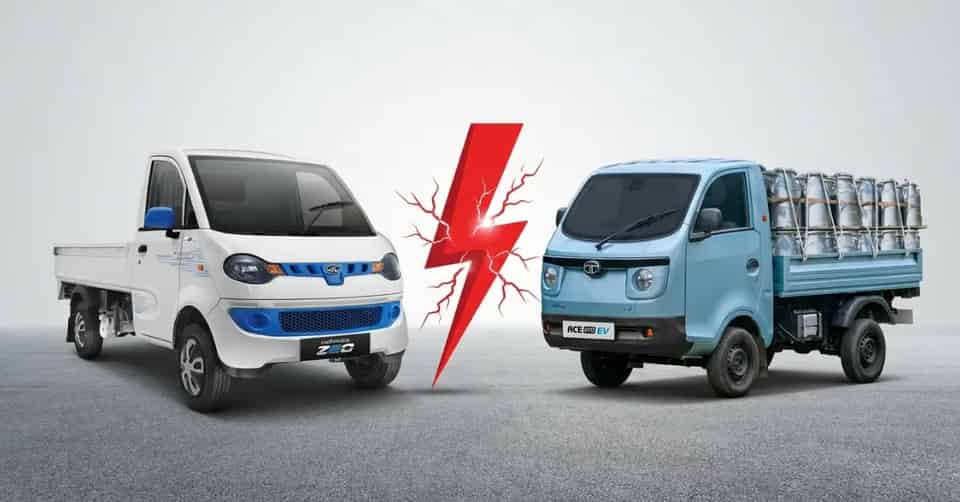


Two electric mini trucks. Both priced under Rs 8 lakh. Both targeting the same last-mile delivery market. Yet the choices you make between them could affect your monthly earnings more than the sticker price suggests.
The Mahindra Zeo and the Tata Ace Pro EV are the two sharpest electric options in India's small commercial vehicle space right now. One is built on a bigger battery with faster charging and more tech. The other gives you a longer warranty, a better cabin, and the backing of Tata's unmatched service network.
Price Difference Between Zeo and Ace Pro EV
The Tata Ace Pro EV starts at Rs 6.50 lakh ex-showroom. The Mahindra Zeo kicks off at Rs 7.52 lakh. That is roughly Rs 1 lakh separating the two at entry level.
On paper, Tata looks like the better deal. But that Rs 1 lakh buys you a significantly bigger battery on the Zeo side — 21.3 kWh versus 14.4 kWh on the Ace Pro EV. That battery size gap is not cosmetic. It directly affects fast charge speed, range in hilly terrain, and how the truck performs after three years of heavy use.
If you are financing the vehicle over five years, the Rs 1 lakh difference works out to about Rs 2,000 extra per month on EMI. That is a small number against the savings a faster charge and longer range can generate in high-trip operations.
Battery and Range: The Zeo Carries a Clear Advantage
The Mahindra Zeo's 21.3 kWh battery delivers a real-world range of 160 km. The Tata Ace Pro EV is rated at 155 km. On flat city roads, the difference is barely noticeable.
Where it shows up is at the charger. Using DC fast charging, the Zeo gets 100 km back in 60 minutes and hits 0 to 80 percent in 71 minutes. Tata quotes 3 to 6 hours for a full charge on the Ace Pro EV. For fleet operators running two shifts or operators who cannot afford a long mid-day stop, this is a meaningful operational gap.
The Ace Pro EV does not offer a fast-charge option in the same class. If your depot has overnight charging and a predictable 100 to 120 km daily route, the difference matters less. If you are running back-to-back city trips, the Zeo wins this round clearly.
Payload Numbers Are Close, But the Zeo Pulls More With a Bigger Box
The Mahindra Zeo carries 765 kg. The Ace Pro EV carries 750 kg. Fifteen kilograms is not going to swing a business decision.
What does matter is the cargo box size. The Zeo offers a 2,250 mm cargo box with a 200 cft double-value body option. The Ace Pro EV comes with a 6.5 ft deck — slightly smaller. For bulky but light goods like packaged FMCG, courier parcels, or e-commerce boxes, the Zeo's larger box lets you load more pieces per trip even if you are not hitting the weight limit.
For dense goods like tiles, building material, or hardware supplies, the weight numbers are close enough that neither truck gives you a clear edge.
The Gradient Gap That Matters If Your Route Has Any Climbs
This is one number that does not show up in showroom brochures often enough. The Mahindra Zeo has a gradeability rating of 32 percent — the highest in the under-2-tonne electric cargo segment. The Tata Ace Pro EV is rated at 22 percent.
If your delivery area includes flyovers, multi-level warehouses with ramps, or any hilly terrain, this gap is real. The Ace Pro EV will manage flyovers in most Indian cities without trouble. But operators in Pune, Shimla, Dehradun, or North-East routes will feel the difference on loaded runs.
The Zeo also has a top speed of 60 km/h versus the Ace Pro EV's 50 km/h. On city roads that run at 40 to 50 km/h most of the day, 10 km/h extra does not change much. On semi-urban stretches between delivery points, it adds up to quicker turnaround.
The Cabin: Tata Wins Here Without Argument
The Tata Ace Pro EV comes with a 7-inch infotainment screen, a digital instrument cluster, and a crash-tested AIS096-compliant cabin. It is more car-like than truck-like inside. For a driver doing 10 hours a day in city traffic, that matters.
The Mahindra Zeo's cabin is functional but basic — single-tone dashboard, no infotainment system, no collapsible seats. The walk-through design is genuinely useful in stop-and-go city deliveries, but the interior quality is a step down from the Ace Pro EV.
One thing Mahindra does better on the tech side is the Driver Monitoring System that tracks fatigue and seatbelt usage. For fleet operators managing 10 or 20 vehicles, having that data on the NEMO platform is a real advantage. The Ace Pro EV uses Tata's Fleet Edge system, which is solid on vehicle health and geofencing but does not offer driver fatigue monitoring at this segment level.
ADAS Safety Features on Both, But Different in Scope
Both trucks come with ADAS. The Ace Pro EV goes further with pedestrian collision warning and cross-traffic alert — features that were not common at this price segment before. The Zeo offers forward collision warning and lane departure warning, which covers the basics.
For urban delivery operators, pedestrian detection is a valuable safety addition. The Ace Pro EV has an edge here for operators in dense city environments.
Warranty and Service Network: Tata Holds a Major Structural Advantage
The Tata Ace Pro EV's battery warranty is 8 years or 1.75 lakh km. The Mahindra Zeo's battery warranty is 7 years or 1.5 lakh km. Both are strong commitments, but Tata's is longer.
Where the gap is more significant is service coverage. Tata Motors has over 2,500 service and spares outlets nationwide. Mahindra's Zeo network stands at 300 plus dealers and 850 plus touchpoints. For an operator in a Tier-2 or Tier-3 city, a breakdown near a Tata outlet means same-day repair. With Mahindra's current Zeo network, that confidence level is lower outside metro areas.
If you are buying for a metro fleet, this gap is manageable. If you are operating in smaller cities, Tata's service depth is a genuine buying factor.
Which Electric Mini Truck Should You Actually Buy?
The Mahindra Zeo makes the stronger case if you run dense urban routes, need fast turnaround, operate on hilly terrain, or manage a fleet where driver monitoring data improves your bottom line. The bigger battery, 32% gradeability, and DC fast charging give it an operational edge for demanding daily use.
The Tata Ace Pro EV makes more sense if you are a first-time EV buyer looking for the lowest entry price, operating in a city with reliable overnight charging at your depot, want a better cabin for driver retention, or are based in a Tier-2 or Tier-3 town where Tata's service network is the safety net you cannot afford to be without.
Both trucks will comfortably beat a diesel equivalent on running cost. At Rs 1 to 1.2 per km energy cost versus Rs 4 to 5 for diesel, the electric advantage holds strongly for either pick.
The better question to ask is not which one is superior — it is which one fits the route you actually run.