
Blog Details
Tata Intra EV Pickup Buyer Guide with Running Cost & Its Downside
Summary
Launched just days ago in Mumbai, this electric pickup carries 1,750 kg and charges 10–80% in 55 minutes. But is it the right call for your business? Here's the complete breakdown.
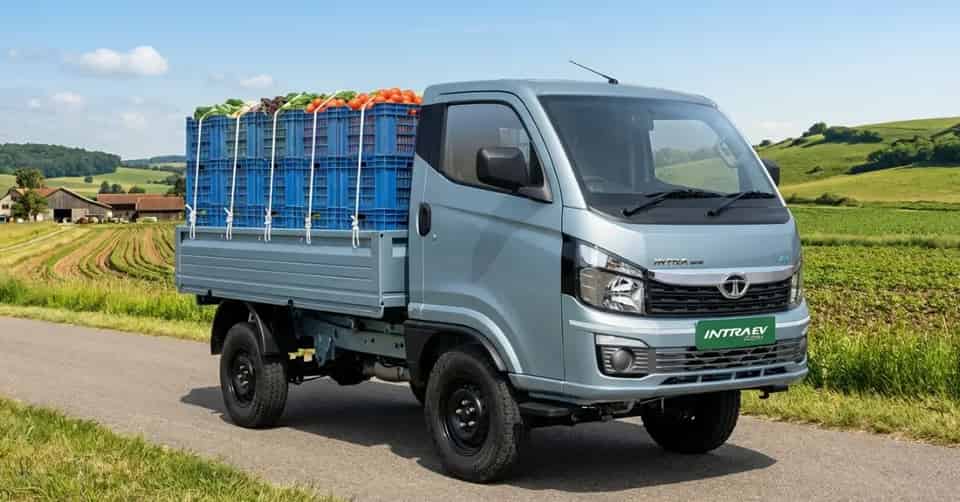


₹1 per kilometre. That's what it costs to run the Tata Intra EV Pickup on electricity. Compare that to ₹3–4 per km on a diesel pickup and you start to see why this vehicle has turned heads since its April 7, 2026 launch in Mumbai.
But before you book one (and yes, waiting periods are already building up in major metros) you need to understand the full picture. Range, charging, payload, running costs, and the one catch that every buyer needs to know about the Tata Intra EV Pickup.
Let's get into it.
Tata Intra EV Pickup Special Launch
The Intra EV Pickup is Tata Motors' third electric small commercial vehicle, joining the Ace EV 1000 and Ace Pro EV. It's built on the tried-and-tested Intra platform. A name already trusted by thousands of small business owners. But with a purpose-built electric drivetrain underneath.
Tata Intra EV Price and Key Features
Intra EV ex-showroom price starts at ₹11.95 lakh in India. The powertrain is a PMSM (Permanent Magnet Synchronous Motor) rated at 72 kW (96.5 bhp) producing 230 Nm of peak torque. That's more torque than the diesel Intra V70 and electric motors deliver it instantly, without waiting for revs to climb. Under a full load, it feels responsive in a way diesel pickups in this segment simply don't.
The 28.2 kWh IP67-rated battery pack gives an ARAI-certified range of 211 km on a single charge. Real-world range under full load conditions, which is what actually matters for your business, has been reported at 150–170 km. If your daily route is under 130 km, you're well covered.
The Payload Capacity That Changes the Conversation
Most buyers coming from diesel pickups ask about range first. But the number that should actually lead your decision is payload.
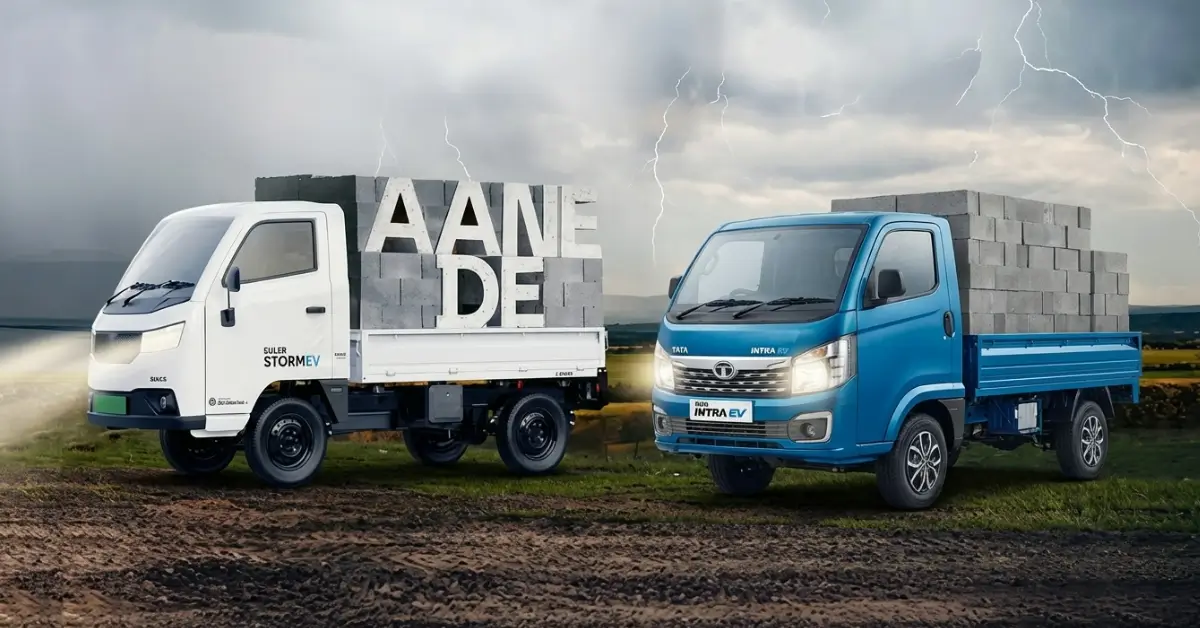
The Tata Intra EV offers 1,750 kg of payload capacity. Highest in its electric segment. To put that in context, the Euler Storm EV, its closest rival, carries 1,250 kg. That's 500 kg less per trip. For an FMCG distributor or an e-commerce last-mile operator running 8–10 trips a day, that gap compounds into real revenue.
GVW stands at 3,320 kg. The load body length goes up to 10 feet 2 inches. Usable for FMCG, e-commerce, LPG, dairy, cold-chain, and waste management.
Intra EV Running Cost Compared to Intra V50 Diesel
Here's where the Intra EV makes its strongest case as compared to Tata Intra V50 :
|
Item |
Diesel Intra V50 |
Intra EV Pickup |
|
Fuel/Energy cost per km |
~₹3.5–4 |
~₹1 |
|
Daily cost (120 km route) |
~₹420–480 |
~₹120 |
|
Monthly savings |
— |
~₹9,000–₹11,000 |
|
Annual savings |
— |
~₹1,08,000–₹1,32,000 |
Over three years, that's roughly ₹3–4 lakh back in your pocket. Before you factor in lower servicing costs from fewer moving parts and no oil changes.
Tata's own claim is 30% lower operating cost versus a comparable diesel vehicle. The ₹1/km electricity figure assumes commercial tariffs. Your actual cost will vary by state and whether you charge at home or at a public fast charger.
Charging Speed of Intra EV
The charging story here is better than most electric pickups in India.
With a CCS2 fast charger, the Intra EV goes from 10% to 80% in approximately 55 minutes. That's a lunch break. For a vehicle running two shifts, that's a workable window.
Tata's nationwide infrastructure currently covers over 25,000 charging points and 200+ dedicated EV service centres. Home charging solutions are also available through facilitated tie-ups, which matters if you park the vehicle at home overnight.
Three-level regenerative braking is built in, meaning the vehicle recovers energy during braking and downhill runs, extending real-world range meaningfully on routes with frequent stops.
What the Cabin Actually Looks Like
This is where the Intra EV surprises buyers who expect a basic workhorse interior.
The walk-through cabin is crash-tested and designed with car-like ergonomics. Electric Power Assisted Steering (EPAS) means significantly less effort at low speeds — crucial when your driver is navigating a crowded mandi or tight warehouse lane for six hours straight.
The electric drivetrain eliminates diesel vibration and engine noise. Drivers report noticeably lower fatigue on long operating days. In the kind of summer heat India is experiencing in 2026, that matters for productivity and driver retention.
Connectivity is handled by Tata Fleet Edge. A telematics platform offering real-time vehicle tracking, health monitoring, and predictive maintenance alerts. For fleet owners managing multiple vehicles, this is no longer a luxury. It's the difference between planned maintenance and surprise breakdowns.
The One Thing YOU Must Know Before Byuing Intra EV
The Intra EV has a top speed of 80 km/h.
For urban and semi-urban delivery routes, that's entirely workable. But if your operations involve regular highway runs say, town-to-town intercity hauls where highway speeds of 90–100 km/h are standard, this truck will frustrate you. It is not designed for that use case.
Know your routes before you commit.
Also factor in the price gap from the diesel Intra lineup, which starts under ₹8 lakh. The EV's higher upfront cost (₹11.95 lakh ex-showroom, plus on-road costs) means break-even on TCO typically comes between 18–30 months depending on daily mileage and local electricity rates. If you're running over 100 km a day, the math turns positive faster.
Tata Intra EV Vs Euler Storm EV Comparison
The Euler Storm EV is the most direct rival at ₹9–13 lakh. Here's the honest comparison:
| Specs |
Tata Intra EV |
|
|
Price (starting) |
₹11.95 lakh |
₹9.00 lakh |
|
Payload |
1,750 kg |
1,250 kg |
|
ARAI Range |
211 km |
~140 km |
|
Fast Charge (10–80%) |
55 mins |
4 hours |
|
Max Speed |
80 km/h |
70 km/h |
|
Battery Warranty |
6 yr / 2 lakh km |
Not confirmed |
|
Service Network |
200+ EV centres |
Growing |
The Euler is cheaper to buy. But the Intra EV wins on payload, range, charging speed, and warranty confidence. For a serious commercial operator, the ₹2–3 lakh price premium is recovered quickly through higher earnings per trip and lower downtime.
Who Should Buy the Tata Intra EV Pickup?
Buy it if:
-
Your daily route is under 150 km within city or semi-urban limits
-
You're in e-commerce, FMCG, dairy, cold-chain, or LPG distribution
-
You have reliable access to a CCS2 charger at your depot or near your route
-
You're running multiple shifts and want to scale a fleet with predictable costs
Wait or skip if:
-
Your routes regularly cross 150–180 km in a single shift without a charging break
-
Highway speeds above 80 km/h are non-negotiable
-
You're operating in a region where commercial EV charging infrastructure is still sparse
Battery Warranty and After-Sales
Tata is offering a 6-year / 2 lakh km warranty on the HV battery. One of the most generous in the Indian EV commercial vehicle space. That's a meaningful commitment, especially for first-time EV buyers nervous about battery degradation.
Financing options are available through leading banks and NBFCs, with flexible EMI structures Tata has arranged specifically for this vehicle. Your dealer can connect you to these directly.
If you're in a metro, expect a 2–3 month waiting period as demand builds.
End Note
The Tata Intra EV Pickup is not a vehicle you buy because EV is trendy. You buy it because the economics are shifting fast. And for the right route profile, this truck saves serious money while handling a working day's worth of cargo without drama.
At ₹11.95 lakh with 1,750 kg payload, 211 km range, and 55-minute fast charging, it is the strongest electric pickup argument in India right now.
Run your own route numbers. Check your nearest charging point. And then make the call.