
Blog Details
Tata Ace EV vs Tata Intra EV: Which EV Should You Buy in 2026?
Summary
Tata now has three electric small commercial vehicles. Here is how the Ace EV and the brand-new Intra EV compare. And which one actually makes money for your business.
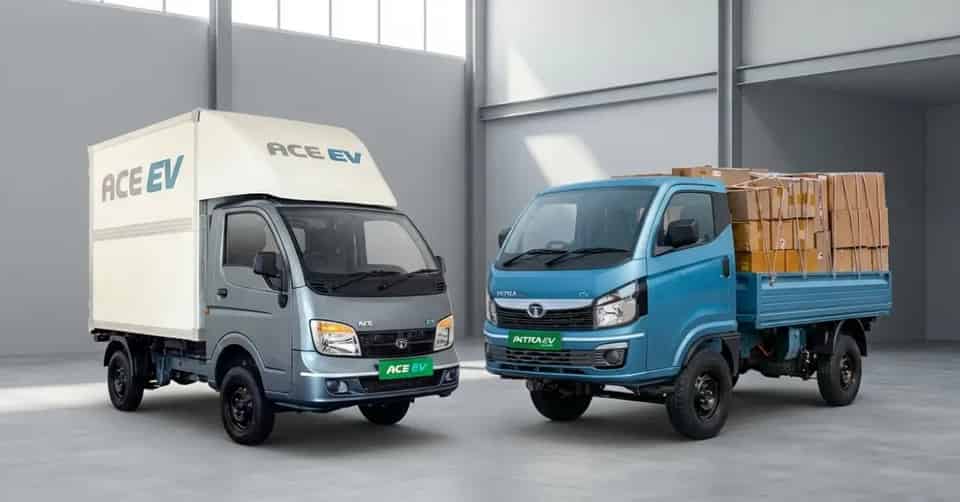


Tata Motors just launched the Intra EV pickup as its third electric small commercial vehicle, and the timing could not be more interesting. The Ace EV has been the go-to electric mini truck for last-mile operators for a while now. But with the Intra EV now sitting at a higher payload and a longer range, many buyers are stuck at a crossroads. The difference between these two is not just price. It is the kind of business you are running.
Ace EV and Intra EV Price Diffrence
The starting point matters. The Tata Ace EV is priced at ₹9.21 lakh (ex-showroom), while the Tata Intra EV has been launched at ₹11.95 lakh (ex-showroom). That is roughly a ₹2.7 lakh gap. For a first-time EV buyer or a small operator adding one vehicle to a growing fleet, that difference is real money. But whether it is worth it depends entirely on what you plan to carry.
Payload Gap Between Ace and Intra EV
This is where the two trucks split decisively. The Tata Ace EV carries a payload of 6,00 kg, which is solid for urban delivery work such as groceries, e-commerce parcels, small FMCG loads. The Intra EV steps that up to 1,750 kg, nearly triple. If you are hauling heavier goods, LPG cylinders, dairy crates, or doing cold-chain runs, the Intra EV earns more per trip simply because it can carry more.
The Intra EV also has a higher GVW of 3,320 kg compared to the Ace EV's 2,120 kg. That is a structurally different machine, built for a harder job.
Motor, Torque and Real-World Performance
The Ace EV is not a sluggish vehicle for its class. It is powered by a 27 kW electric motor producing 130 Nm of torque, and it handles a gradeability of 22 percent, enough for flyovers and city inclines with a full load.
The Intra EV, however, is in a different league of power. Its motor puts out 96.5 bhp and 230 Nm of torque. Electric motors deliver peak torque instantly, which means pulling away from traffic lights with a full load is smooth and effortless. The Intra EV also offers 23 percent gradeability, a slight edge over the Ace EV, which becomes meaningful when you are carrying nearly twice the weight on the same hilly road.
Range and Battery: Which Goes Further?
The Ace EV runs on a 21.3 kWh lithium iron phosphate battery with a certified range of 161 km per charge. For city deliveries across a typical route, that is more than enough for a full working day.
The Intra EV's 28.2 kWh IP67-rated battery delivers a certified driving range of 211 km on a single charge. The extra range is not just about distance. It supports multiple duty cycles in a day, which matters for operators who run back-to-back delivery rounds.
Charging Speed: The Intra EV Wins Here
Downtime is money in this business. The Ace EV charges from 10 to 80 percent in 105 minutes via fast charging. That is nearly two hours off the road.
The Intra EV, using a CCS2 charger, charges from 10 to 80 percent in approximately 55 minutes. That is essentially a lunch-break charge. For a fleet running tight schedules, that 50-minute difference can mean one additional delivery run per day.
The Feature You Might Overlook: Cabin and Connectivity
Both trucks come with Tata's Fleet Edge telematics, which gives fleet owners real-time tracking, diagnostics and predictive maintenance alerts. The Ace EV's cabin includes a 7-inch infotainment system, a digital instrument cluster, rearview camera and tyre pressure monitoring.
The Intra EV adds a walk-through cabin, EPAS, electronic braking system and three-level regenerative braking. Features that add stability under heavy loads and improve energy recovery on city routes. The electric powertrain also eliminates engine drone, and Tata specifically highlights a quiet cabin as one of its selling points. For a driver spending an entire working day on Indian roads, that reduction in fatigue is real.
Warranty: More Coverage with the Ace EV on Paper
Here is something worth noting before you sign. The Ace EV comes with a 7-year/1,75,000 km battery warranty and a 3-year/1,25,000 km vehicle warranty. The Intra EV offers a 6-year or 2 lakh km HV battery warranty. The Ace EV technically gives you one more year on the battery, though the Intra EV's 2 lakh km cap offers slightly higher kilometre coverage. Either way, both are strong commitments for commercial operators.
So Which One Should You Actually Buy?
Buy Tata Ace EV If
If your business is built around tight city routes, frequent stop-and-go deliveries, and you carry loads under a tonne, the Ace EV at ₹10.51 lakh is the smarter buy. It is compact with a 4.3-metre turning radius, easier to park, and its 161 km range will comfortably cover a day's city run. It is also the easier entry point for a first-time EV operator.
Buy Tata Intra EV If
If you are running heavier cargo, serving semi-urban routes, or looking to maximise revenue per trip by carrying more per load, the Intra EV at ₹11.95 lakh earns that extra investment back faster. Running costs on the Intra EV work out to roughly ₹1 per kilometre on electricit, and with 1,750 kg of payload per trip, the economics add up quickly against diesel.
The ₹2.7 lakh difference between the two is not the question. The real question is whether your cargo volume justifies the bigger machine.
The Right Tata EV for Your Route
Tata has essentially given you two electric trucks for two different businesses. The Ace EV is built for the last-mile hustle — nimble, affordable, efficient. The Intra EV is built to replace diesel pickups doing heavier, semi-urban work. Neither is a compromise. They just have different jobs to do.