News Details
India's Hydrogen Truck Future: Opportunities & Hurdles
Summary
India bets on hydrogen for clean trucking. But with huge costs and few stations, is it viable? A realistic look at the future of zero-emission freight.


Imagine a truck that emits only water vapour. That's the promise of hydrogen fuel cells. For a country like India, with its massive freight corridors, this technology could be a game-changer. But turning this vision into reality is a complex puzzle of technology, cost, and infrastructure.
Here’s a look at the real opportunities and the tough challenges on India's path to a hydrogen-powered transport future.
The Golden Opportunity for Heavy Transport
Hydrogen isn't for everyone. For cars and rickshaws, batteries are winning. The real sweet spot for hydrogen is heavy transport. Think of the massive trucks that ply the Delhi-Mumbai highway. They need long range, heavy payloads, and quick refueling. Hydrogen fuel cell trucks can deliver all three, something current battery technology struggles with. This makes them crucial for decarbonizing India's freight sector, a major diesel consumer and polluter.
The Massive Cost Hurdle
The biggest barrier today is cost. A hydrogen fuel cell truck can cost over ₹2.5 crore. That's three times the price of a standard diesel truck. The fuel cells and ultra-strong hydrogen tanks alone make up most of this cost. While the government's National Green Hydrogen Mission aims to bring down the cost of the fuel itself, the vehicles remain prohibitively expensive without significant subsidies.
No Trucks Without Stations, No Stations Without Trucks
Why would a company build a hydrogen refuelling station if there are no trucks to use it? And why would a fleet owner buy hydrogen trucks if there's nowhere to fill them up? This is the core dilemma. Building a single station costs ₹12-20 crore. The solution is to focus on key freight corridors first, creating "hydrogen highways" between major industrial hubs to give early adopters a reliable route.
The Water and Power Challenge
For hydrogen to be truly "green," it must be produced using renewable energy. India's ambitious production target requires a staggering amount of new solar and wind capacity. There's another hidden cost: water. Producing one kilogram of green hydrogen consumes about nine liters of pure water. In sun-rich but water-stressed states like Rajasthan, this adds another layer of complexity and cost.
Also Read : Vehicle Fitness Test Fees Hiked Up to 10x with New Policy
A Phased and Practical Roadmap
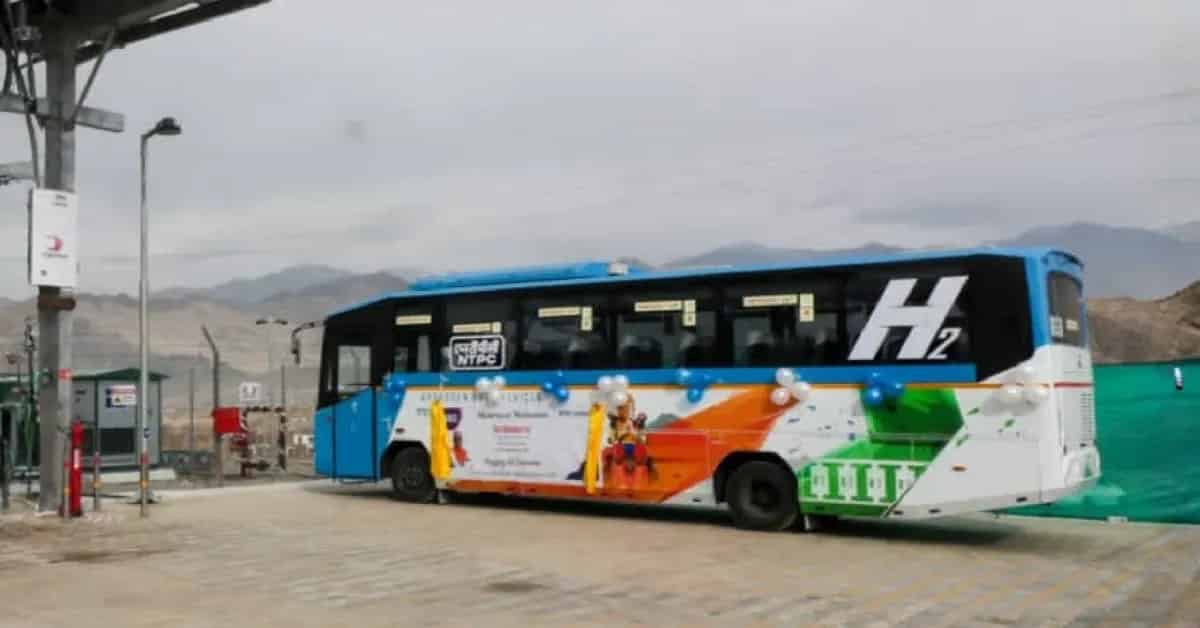
India's strategy is wisely focused. The initial phase involves pilot projects—hydrogen buses in major cities and trial runs of trucks on specific routes. This allows for real-world testing and builds confidence. The goal is not to replace every vehicle, but to strategically deploy hydrogen where it makes the most sense: in long-haul trucking, city buses, and port equipment.
The Bottom Line: A Strategic Bet on a Cleaner Future
Hydrogen for transportation is not a sure thing, but it's a critical bet. The opportunity is enormous: cleaner air, reduced oil imports, and a leadership role in a new energy technology. The challenges of cost and infrastructure are daunting, but not insurmountable. India's success will depend on a steady, focused effort—proving the technology on the road, bringing down costs through scale, and building the infrastructure one corridor at a time. The journey has just begun.
Also Read : India Claims 57% of Global Electric 3-Wheeler Sales