News Details
The Role of AI, Data and Telematics in Transforming Fleet Operations
Summary
Stuck with siloed fleet data? AI can fix that. From predictive maintenance to driver coaching, here's how connected tech is changing fleet management.
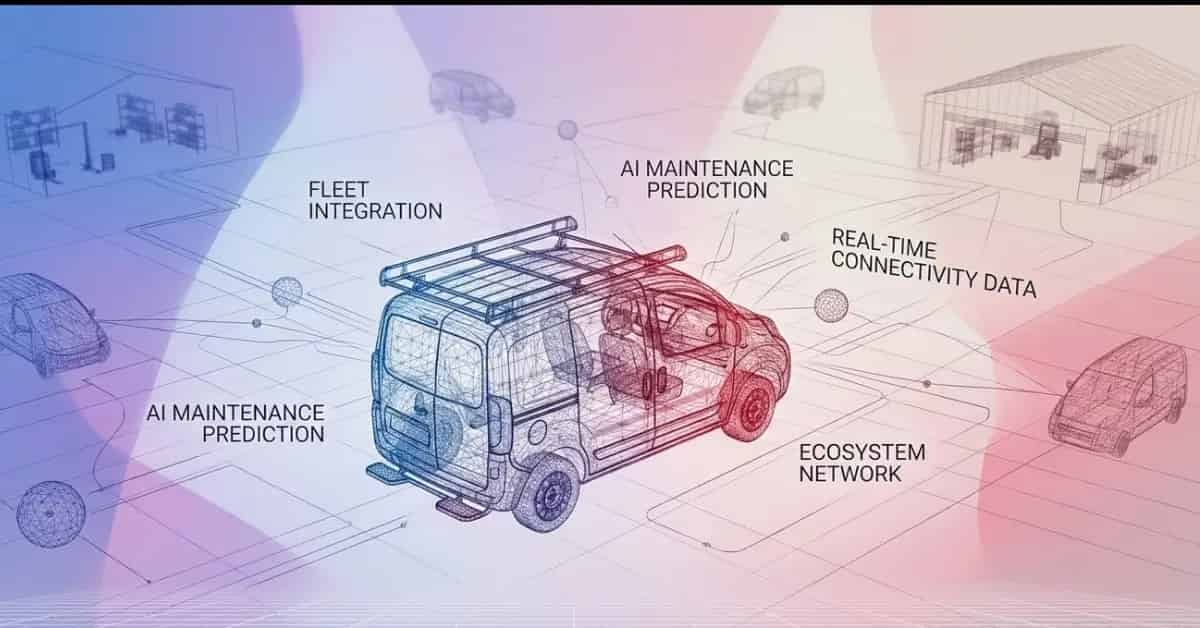


Commercial fleets today have access to more accurate data, stronger system integration, and advanced AI applications. At the Commercial Fleets Summit 2026, industry experts discussed how these technologies are improving efficiency and enhancing fleet decisions. The focus ranged from predictive maintenance to AI-based driver coaching.
Fleet Productivity Depends on Whole Ecosystem Integration
Jeronimo Saiz, head of fleet operations at Kia Europe, said the future is not about having the best van alone. It is about integrating the whole system including telematics, upfitting, financing, and the vehicle itself. He noted that savings come from energy consumption, route planning, servicing locations, and forecasting. For this advantage to materialize, fleet connectivity across the entire ecosystem is vital. Telematics partners, maintenance partners, and the vehicle all need to work together.
AI Can Reduce Unnecessary Stops and Workshop Visits
Thomas Herzog, head of key account management international at MAN Truck & Bus AG, highlighted that normal wear and tear presents the biggest advantage for AI. He stated that AI can help reduce unnecessary stops. While workshops make revenue from repairs, reducing stops benefits everyone. He added that AI allows fleets to escape routine work and have more time and capacity to interact with customers.
AI Agents Will Centralize Siloed Fleet Data
Fabian Seithel, associate vice president at Geotab, described the future of fleet management. He said an AI agent should sit at the centre, bringing together data from various systems. Currently, data is siloed far too much, making it difficult for AI to act. The future should have an AI agent acting independently but supervised by a fleet manager who sets the tone. He noted that telematics has moved from track and trace to data extraction, and now to an AI-powered phase where systems can observe, plan, act, and evaluate.
Video-Based AI Coaching Can Improve Driver Behaviour
Seithel presented video-based AI coaching as a use case. The system observes driver behaviour and gives real-time instructions. For example, it can suggest removing a distraction or taking a break when needed. This helps improve safety and reduce accidents caused by driver fatigue or inattention.
Fleets Sit on a Goldmine of Data But Struggle to Extract Value
Danielle Walsh, founder and CEO of Clearly, argued that a major issue fleets face is getting concrete value from multiple data points. She stated that every fleet is sitting on a goldmine of data, but the industry struggles to extract value. She described the evolution from physical clipboards to electronic forms to connected dashboards. Now in the intelligence era, fleets are stuck. Connecting maintenance, fuel, and finance data can reveal whether a vehicle needs servicing or replacement. She advised fleets to see what drives costs, know when to replace assets based on data rather than lease schedules, and make decisions on data, not policy.
Digital Twins Help Fleets Plan Tactical Electrification
Alfred Richard, co-founder and CEO of Nelson, addressed barriers to fleet electrification. He noted that while head offices have ESG targets pushing for electrification, operations managers fear productivity loss. Connected fleet software can bridge this gap. He argued that fleets need to simulate real-world scenarios using a digital twin. Driver profiles, charging needs, and route patterns all matter. Running scenarios on a digital twin helps determine EV suitability at a global scale while providing driver-by-driver information. He emphasized that electrification is not about converting everyone, but about electrifying suitable drivers.
Also Read : Uno Minda Launches New Trumpet Horn Range for Indian Vehicles
Connected Fleets Are Moving into an Autonomous Phase
The summit concluded that connected fleets are moving into a more active and autonomous phase. Fleet managers still want control, but with less clutter. Accessing actionable insights from one unified source will be key. Those who achieve this will have a distinct advantage over others.
Also Read : Radhakrishnan Kodakkal to Lead Daimler Truck's India Innovation