
News Details
Volvo Starts Testing of Hydrogen ICE Heavy Trucks: Launch Set Before 2030
Summary
Volvo begins real-world testing of hydrogen ICE trucks, opening a third path beyond EVs and fuel cells.
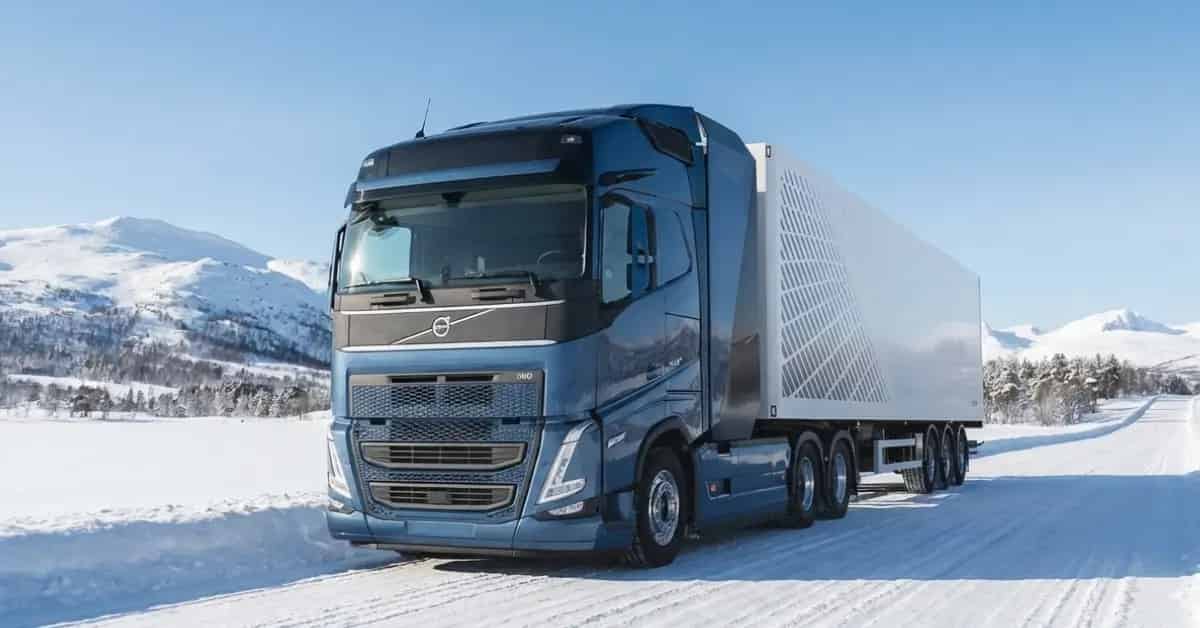


Volvo Trucks has officially begun on-road testing of heavy-duty trucks powered by hydrogen combustion engines, and the announcement from April 1, 2026 is anything but a joke.
Volvo describes this as another step towards net-zero CO2 emissions transport, with a commercial launch planned before 2030. For an industry that has been wrestling between battery-electric and fuel cell technologies, this is a third path that many fleets have been quietly hoping for.
The trucks are equipped with fuel system technology from Cespira, a joint venture between Volvo and Canadian firm Westport Fuel Systems, and the vehicles are being fuelled by green hydrogen during the trials.
What makes this development stand out is that Volvo is not rebuilding its trucks from scratch. This hydrogen engine is derived directly from the diesel powertrain your drivers already know.
How HPDI Technology Makes a Hydrogen ICE Truck Work
The magic behind these trucks is a system called HPDI, which stands for High Pressure Direct Injection. In HPDI, a small amount of ignition fuel is injected at high pressure to enable compression ignition, and then hydrogen is added as the primary fuel. Think of it like this: the ignition fuel (renewable HVO or diesel) lights the fire, and hydrogen does the heavy work.
The hydrogen-powered version of HPDI uses fundamentally the same system already proven for LNG trucks, with a few small variations. That matters enormously because it means the manufacturing lines, the supply chains, and the mechanic training do not need to start from zero. Over 10,000 Volvo LNG trucks worldwide already run on Cespira's HPDI fuel system, which gives this technology a proven commercial foundation that fuel cells currently lack.
Volvo trucks powered by green hydrogen through this system have the potential to deliver net-zero CO2 well-to-wheel when using renewable HVO as ignition fuel, and are categorized as Zero Emission Vehicles under the agreed EU CO2 emission standards.
This Hydrogen Truck Actually Drives Like a Diesel
Here is the detail that fleet operators will care most about.
Jan Hjelmgren, Head of Product Management at Volvo Trucks, put it plainly: "Customers will be able to operate them just like diesel trucks. Our experience with HPDI technology in more than 10,000 gas-powered trucks is strong proof of its performance."
Hydrogen combustion engine trucks will be especially suitable over longer distances and in regions where there is limited charging infrastructure or time for recharging battery electric trucks. For long-haul routes across India and other developing markets where charging corridors are still far from complete, this matters a great deal.
Dan Sceli, CEO of Westport, added a number that is hard to ignore. He stated that hydrogen use in an ICE with Cespira's HPDI fuel system delivers nearly 100% CO2 reductions over diesel-fuelled trucks, while allowing OEMs to preserve their existing engine architecture, engineering talent, and decades of powertrain development.
Volvo's Three-Path Strategy & Where the Hydrogen ICE Fits
Volvo Trucks' strategy to reach net-zero emissions runs on three tracks: battery-electric, fuel-cell electric, and combustion engines using renewable fuels. The hydrogen ICE is the third track, positioned to serve customers where batteries are impractical and hydrogen fuel cells remain too expensive.
Testing of the hydrogen ICE truck follows the earlier development of Volvo's hydrogen fuel cell truck, giving customers an additional option in the future. This is not one technology replacing another. It is a portfolio play that acknowledges no single solution will decarbonize all of transport.
Volvo Trucks was the market leader in Europe for heavy trucks in 2025 with a 19.0% market share, up from 17.9% the previous year. That kind of commercial weight means when Volvo backs a technology into production, the rest of the industry pays attention.
What Indian Fleet Owners Should Watch Before 2030
The commercial launch is targeted for Europe, not India, and pricing has not been announced. The hydrogen refuelling infrastructure required for these trucks is still limited across most of the world, including India. That is the real bottleneck and Volvo has acknowledged it.
Hydrogen-powered Volvo trucks will have an operational range exceeding most customers' daily driving distance. But range is only one half of the equation. Fuel availability at depots and highway corridors is the other half, and that conversation has barely started in India.
What you should watch is how the EU market adoption unfolds over the next three to four years. India's CAFE norms and BS norms are expected to tighten further through the decade, and global OEMs including Volvo will eventually bring their decarbonisation portfolio to markets like ours. The hydrogen ICE truck, precisely because it does not require fleet operators to retrain drivers or rebuild maintenance infrastructure, could arrive in India sooner than the fuel cell alternative.
Keep your eye on Volvo's next update in late 2026, when early on-road testing results are expected to shape the commercial roadmap.
Also Read : PepsiCo Launches EV Green Corridor with 8 Retrofitted Electric Trucks