News Details
Yuma Hits 50 Million Battery Swaps in Three Years
Summary
50 million swaps. Half in just 15 months. Yuma's battery-as-a-service network is growing fast. 99.9% uptime, minutes-long swaps. Here's what's driving the boom.
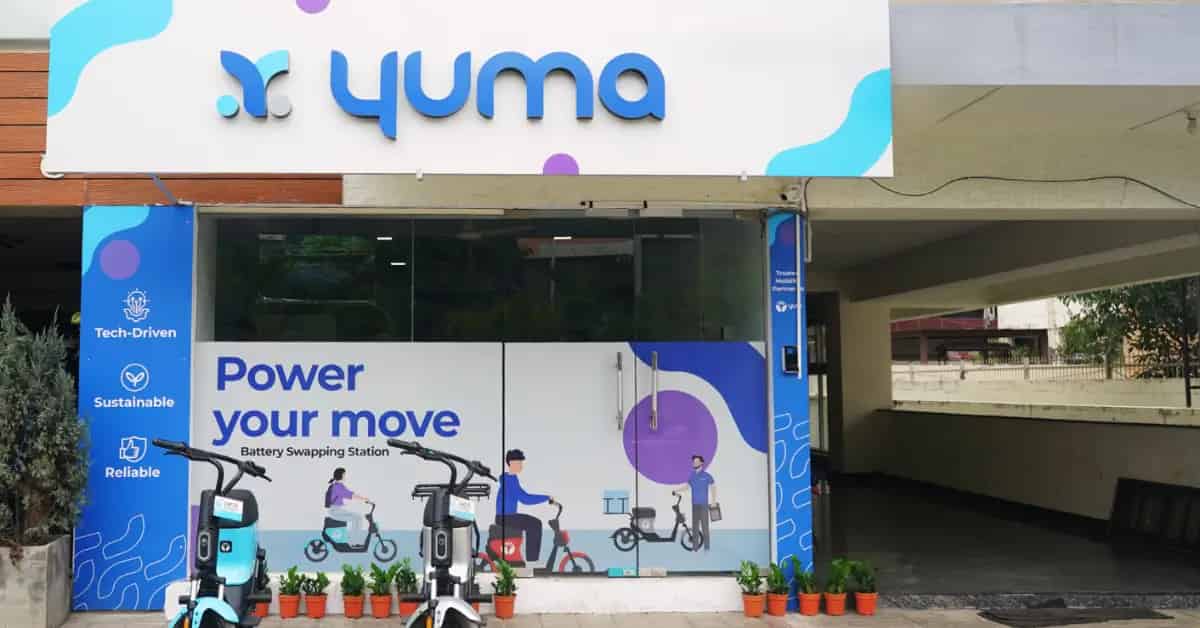


Yuma has completed 50 million battery swaps since it began operations in February 2023. The company announced this milestone on Monday. Half of those swaps happened in the last 15 months alone. This makes Yuma the fastest-growing battery-as-a-service provider in India.
Growth Pace Accelerated Significantly
Reaching the first 25 million swaps took Yuma about two years. Reaching the next 25 million took just over one year. This acceleration reflects growing reliance on Yuma's network from fleet operators and delivery partners who need consistent vehicle uptime.
What Battery Swapping Means
Battery swapping allows electric vehicle drivers to exchange a depleted battery for a charged one at a network station. This avoids waiting for a vehicle to recharge on-site. The approach has gained traction in India's two- and three-wheeler segment. Delivery fleets and last-mile logistics operators benefit most because vehicle downtime directly impacts daily earnings. A swap takes minutes, while conventional charging can take 30 minutes to several hours.
Yuma Executive Comments on the Milestone
Muthu Subramanian, General Manager and Managing Director at Yuma, said the milestone reflects both the company's growth and a wider shift in India's EV sector. He stated that reaching 50 million swaps in three years demonstrates Yuma's rapid growth and the trust of thousands of EV users and fleet partners. He added that it shows the pace at which India is embracing battery swapping as a practical, efficient, and scalable energy solution.
Operational Factors Driving Adoption
Yuma cited several factors behind its growth. The company claims 99.9% network uptime. Swap times are measured in minutes. Integrations with multiple EV manufacturers enable broad vehicle compatibility. These integrations reduce deployment timelines for fleet operators. Safety standards and operational processes have also helped build long-term relationships with OEMs, fleet operators, and public-sector partners.
Yuma’s Strategic Collaborations Support Expansion
Yuma has built strategic collaborations with both public and private entities. These partnerships have enabled denser coverage in urban areas. They support continued network expansion across the country.
Battery-as-a-Service Market Context
Battery-as-a-service reduces the upfront cost of electric vehicles by separating battery ownership from vehicle ownership. Battery costs can account for a third to half of a vehicle's total price. NITI Aayog and the Bureau of Energy Efficiency have outlined policy frameworks encouraging standardized swappable batteries, particularly for two- and three-wheelers. Several state governments have also included swap infrastructure in their EV policies.
Yuma’s Competition and Challenges Remain
The BaaS segment in India remains competitive. Companies like Sun Mobility and Battery Smart are expanding their networks. Battery standardization across manufacturers remains a challenge. Interoperability between swap stations and batteries from different vehicle brands is still an ongoing technical and commercial issue.
What's Next for Yuma
Yuma said its focus going forward will be on expanding network density. It will work on improving interoperability across vehicle types. The company aims to sustain operational performance as EV adoption in India continues to grow. Yuma framed the 50-million swap figure as an indicator of the scale the market is heading toward as more fleet operators transition away from petrol-powered vehicles.
Also Read : KKR to Invest $310 Million in PMI Electro to Scale Electric Bus Platform in India