Blog Details
LMV Full Form in Driving Licence – Eligible Vehicles
Summary
Understand the LMV full form, Indian driving licence rules, vehicle weight limits and eligibility to drive Tata 407, Tata Ace, Mahindra Jeeto and other mini trucks.
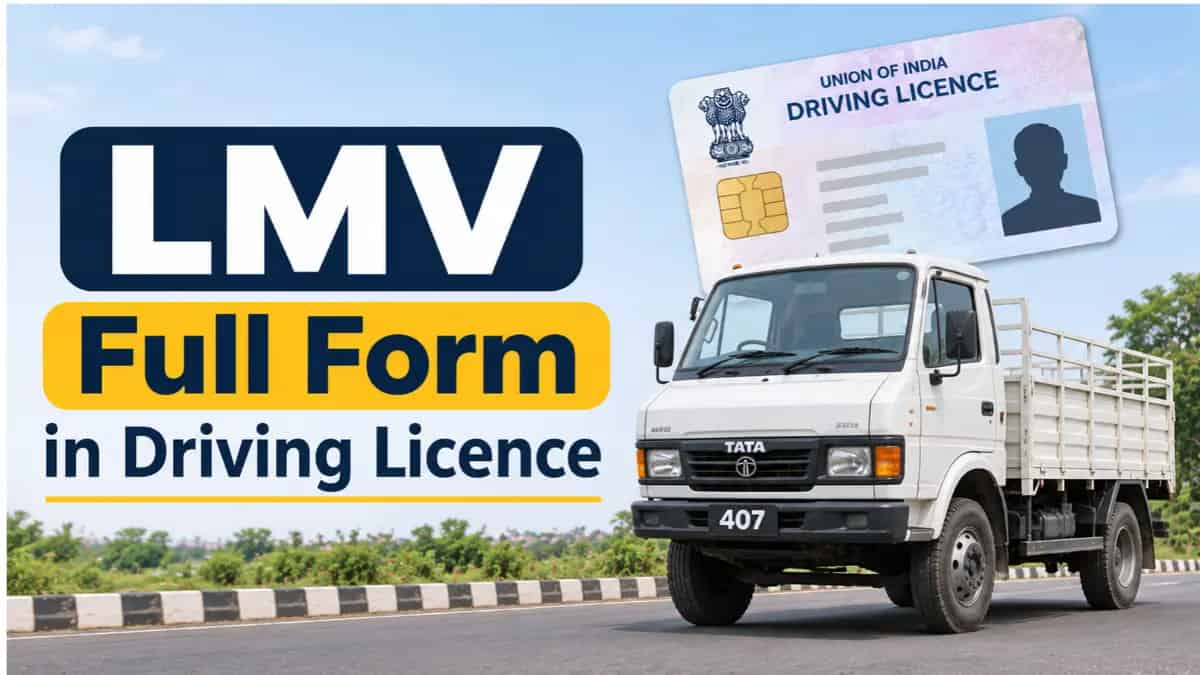


The LMV full form is Light Motor Vehicle. In India, LMV is an important vehicle classification under the Motor Vehicles Act, 1988. It is commonly associated with cars, SUVs, small goods carriers, pickups, and certain light commercial vehicles.
For commercial vehicle drivers and small business owners, understanding the LMV category is particularly important. Many popular vehicles, including Tata Ace, Mahindra Jeeto, Tata Intra and Tata 407, have a Gross Vehicle Weight (GVW) below 7,500 kg in their listed configurations.
A common question among drivers is whether an LMV driving licence allows them to operate these mini trucks and commercial goods vehicles. The Supreme Court's judgment dated 6 November 2024 clarified that an LMV licence holder can drive a transport vehicle falling within the LMV weight category without a separate transport-vehicle endorsement, subject to applicable exceptions.
In this guide, we explain the LMV full form, driving licence rules, vehicle weight limits and the eligibility of popular mini trucks and light commercial vehicles in India.
What Is the Full Form of LMV?
The full form of LMV is Light Motor Vehicle.
It is a vehicle classification defined under Section 2(21) of the Motor Vehicles Act, 1988. The definition includes transport vehicles or omnibuses with a Gross Vehicle Weight not exceeding 7,500 kg. It also includes motor cars, tractors and road rollers with an unladen weight not exceeding 7,500 kg.
In simple terms, LMV refers to a category of relatively lighter motor vehicles that includes certain passenger and commercial vehicles.
LMV full form: Light Motor Vehicle
LMV meaning: A motor vehicle that falls within the weight limits specified under Section 2(21) of the Motor Vehicles Act.
The LMV classification is relevant when determining vehicle categories and driving licence eligibility in India.
What Does LMV Mean on an Indian Driving Licence?
When LMV appears on an Indian driving licence, it indicates authorisation to drive vehicles covered by the applicable light motor vehicle category.
This category is not limited to private cars. It can also cover qualifying transport vehicles, including certain small goods carriers and commercial vehicles, provided they meet the statutory weight definition and other applicable requirements.
For example, the following vehicles may fall within the LMV category depending on their registered specifications:
-
Hatchbacks and sedans
-
SUVs and utility vehicles
-
Small pickup trucks
-
Mini trucks
-
Light goods carriers
-
Certain commercial vehicles with GVW up to 7,500 kg
However, the vehicle's name or marketing category alone does not establish its legal classification. Drivers should check the vehicle's Registration Certificate (RC), registered GVW and applicable licence requirements.
What Is the LMV Weight Limit in India?
The LMV weight limit for a transport vehicle or omnibus is 7,500 kg GVW under Section 2(21) of the Motor Vehicles Act, 1988.
This means a transport vehicle with a registered GVW of 7,500 kg or less can fall within the statutory LMV definition, subject to the other applicable conditions.
The definition uses a different weight measurement for certain other vehicles:
|
Vehicle type |
Weight measurement for LMV definition |
|
Transport vehicle |
GVW not exceeding 7,500 kg |
|
Omnibus |
GVW not exceeding 7,500 kg |
|
Motor car |
Unladen weight not exceeding 7,500 kg |
|
Tractor |
Unladen weight not exceeding 7,500 kg |
|
Road roller |
Unladen weight not exceeding 7,500 kg |
What Is GVW?
GVW stands for Gross Vehicle Weight. It is the maximum permissible total weight of a vehicle when loaded, as certified by the registering authority.
It includes the vehicle's weight, body, fuel, occupants, equipment and permitted cargo.
What Is Unladen Weight?
Unladen weight refers to the weight of a vehicle without its load. The statutory LMV definition uses this measurement for motor cars, tractors and road rollers rather than GVW.
How to Check Your Vehicle's GVW
You can check the registered GVW of a commercial vehicle through its Registration Certificate.
Look for details such as:
-
Vehicle class
-
Gross Vehicle Weight
-
Unladen weight
-
Registered vehicle category
-
Permitted seating or carrying capacity, where applicable
For a commercial goods vehicle, check the GVW recorded for the exact variant rather than relying on the model name or advertised payload.
Can an LMV Licence Holder Drive Commercial Vehicles in India?
Yes. An LMV licence holder can drive a transport vehicle that falls within the LMV category, including qualifying commercial goods vehicles with a GVW not exceeding 7,500 kg, without a separate transport-vehicle endorsement under the Supreme Court's November 2024 ruling.
The Supreme Court of India clarified this position in the case of Bajaj Alliance General Insurance Company Limited v. Rambha Devi, decided on 6 November 2024.
The Constitution Bench upheld the earlier legal position established in the Mukund Dewangan case. It clarified that a person holding an LMV driving licence can drive a transport vehicle within the LMV weight category without obtaining an additional transport-vehicle endorsement.
What Does the Supreme Court Judgment Mean for Commercial Drivers?
The judgment is particularly relevant for people operating small commercial vehicles and goods carriers.
For example, an LMV licence holder may drive a qualifying vehicle such as:
-
Tata Ace
-
Mahindra Jeeto
-
Tata Intra
-
Ashok Leyland Dost
-
Tata 407
-
Other eligible light goods carriers
The vehicle must fall within the applicable LMV weight definition, and the driver must comply with other relevant legal requirements.
Are There Any Exceptions?
Yes. The judgment does not remove every special licensing requirement.
Special eligibility requirements continue to apply to certain categories, including e-carts, e-rickshaws and vehicles carrying hazardous goods, as applicable under the law.
Drivers and operators should also comply with relevant vehicle permits, fitness requirements, registration conditions and other transport regulations.
Official reference: Supreme Court of India – Landmark Judgment Summary, 6 November 2024.
Can You Drive Tata 407 with an LMV Licence?
Yes, a Tata 407 variant with a registered GVW not exceeding 7,500 kg falls within the LMV weight definition for a transport vehicle. An LMV licence holder can drive such a qualifying transport vehicle without a separate transport-vehicle endorsement, subject to applicable exceptions and other legal requirements.
The Tata 407 is a popular light commercial truck used for goods transportation, distribution, construction material supply and regional logistics.
For example, TruckOnWheels lists the following Tata 407 configurations:
|
Tata 407 Model |
Listed GVW |
LMV weight limit |
|
Tata 407 Gold SFC |
4,650 kg |
Within 7,500 kg |
|
Tata 407 Gold SFC RJ |
4,995 kg |
Within 7,500 kg |
Both listed configurations are below the 7,500 kg GVW threshold.
You can explore their specifications here:
Important: Always check the GVW printed on the RC of the exact Tata 407 variant you intend to drive. Different variants and body configurations may have different registered specifications.
Can You Drive Tata Ace, Mahindra Jeeto and Other Mini Trucks with an LMV Licence?
Yes. Many popular mini trucks and small commercial goods carriers have a GVW well below 7,500 kg. These vehicles can fall within the LMV category under the Motor Vehicles Act, subject to their registered specifications and applicable legal conditions.
Here are some popular examples available in the Indian commercial vehicle market.
Popular Mini Trucks That Fall Within the LMV Weight Limit
|
Mini Truck |
Listed GVW |
Within 7,500 kg? |
|
1,510 kg* |
Yes |
|
|
1,450–1,605 kg |
Yes |
|
|
2,120 kg |
Yes |
|
|
2,805 kg |
Yes |
|
|
4,650 kg |
Yes |
The Tata Ace Gold listing contains differing GVW figures across its overview and technical specification fields. Check the exact variant's RC before relying on a specific figure.
Tata Ace
The Tata Ace, popularly known as Chota Hathi, is a mini truck used for local goods transportation, small business deliveries, agricultural products and last-mile logistics.
Its listed variants have a GVW significantly below 7,500 kg. Therefore, qualifying Tata Ace variants fall within the LMV weight definition.
Explore Tata Ace Gold price, mileage and specifications.
Mahindra Jeeto
The Mahindra Jeeto is a compact commercial vehicle designed for small businesses, local deliveries and goods transportation.
Its listed variants have GVW figures ranging from approximately 1,450 kg to 1,605 kg. These are below the statutory LMV weight limit.
Explore Mahindra Jeeto price, mileage and specifications.
Tata Intra V10
The Tata Intra V10 is a small goods carrier used for urban deliveries, agricultural transportation and small business logistics.
Its listed GVW is approximately 2,120 kg, which is comfortably below the 7,500 kg LMV threshold.
Explore Tata Intra V10 price and specifications.
Ashok Leyland Dost
The Ashok Leyland Dost is a light commercial goods vehicle used for FMCG distribution, agricultural transportation, construction material supply and regional deliveries.
Its listed GVW is approximately 2,805 kg, placing it within the LMV weight limit.
Explore Ashok Leyland Dost price and specifications.
These examples show why LMV licence information is relevant to mini-truck drivers, transport operators and small business owners. However, always verify the exact registered GVW and vehicle category before driving.
LMV Vehicles List in India
The LMV category includes different types of passenger and commercial vehicles, provided they satisfy the relevant statutory weight definition.
Some common examples include:
|
Vehicle category |
Examples |
|
Hatchback cars |
Tata Tiago, Maruti Suzuki Swift |
|
Sedan cars |
Honda Amaze, Maruti Suzuki Dzire |
|
SUVs |
Tata Nexon, Hyundai Creta |
|
Mini trucks |
Tata Ace, Mahindra Jeeto |
|
Small goods carriers |
Tata Intra, Ashok Leyland Dost |
|
Light commercial trucks |
Tata 407, qualifying light goods carriers |
|
Pickups |
Eligible Mahindra Bolero Pik-Up variants |
The examples are indicative, not a blanket legal classification of every model or variant. Check the registered weight and vehicle class of the particular vehicle.
LMV vs HMV vs LCV – What Is the Difference?
LMV, HMV and LCV are commonly used terms in the Indian automobile and commercial vehicle industry. However, they do not all represent the same type of legal classification.
|
Category |
Full Form |
Common Meaning |
|
LMV |
Light Motor Vehicle |
Statutory vehicle category defined by the Motor Vehicles Act |
|
HMV |
Heavy Motor Vehicle |
Common term for heavy motor vehicles |
|
LCV |
Light Commercial Vehicle |
Industry term for lighter commercial vehicles |
|
HCV |
Heavy Commercial Vehicle |
Industry term for heavy-duty commercial vehicles |
LMV vs HMV
LMV stands for Light Motor Vehicle, while HMV stands for Heavy Motor Vehicle.
The Motor Vehicles Act defines LMV using the 7,500 kg weight limit for transport vehicles and omnibuses. Heavy goods and heavy passenger vehicles are covered by their respective statutory definitions.
For a more detailed explanation, read our guide on HMV Full Form in India – Meaning, Vehicle Types and Licence Details.
LMV vs LCV
LCV stands for Light Commercial Vehicle. It is an industry term commonly used for commercial vehicles designed for lighter goods transportation.
Examples include mini trucks, pickups and small goods carriers.
However, LCV is not automatically the same as the statutory LMV driving licence category. A vehicle's GVW and registered class determine whether it falls within the legal LMV definition.
LMV vs HCV
HCV stands for Heavy Commercial Vehicle. It generally refers to trucks and other commercial vehicles designed for heavy transportation requirements.
Unlike LMV, HCV is commonly used as a commercial vehicle market segment rather than a standalone driving licence category.
LMV-NT vs LMV-TR – What Do These Terms Mean?
LMV-NT and LMV-TR are abbreviations commonly encountered in driving licence records and discussions.
-
LMV-NT: Commonly used to describe a non-transport light motor vehicle authorisation.
-
LMV-TR: Commonly used to describe a transport light motor vehicle authorisation.
These terms are associated with private and transport vehicle usage in licence records. However, the precise authorisation and requirements should be verified with the licensing authority and the applicable rules.
Following the Supreme Court's November 2024 judgment, an LMV licence holder does not require a separate transport-vehicle endorsement to drive a transport vehicle within the LMV class, subject to the applicable exceptions.
How to Check Whether Your Vehicle Comes Under LMV
Before driving a commercial vehicle, you should verify its registered specifications rather than relying only on its model name.
Follow these steps:
-
Check the Registration Certificate: Find the vehicle's registered class and weight details.
-
Check the GVW: For a transport vehicle, confirm that the registered GVW does not exceed 7,500 kg.
-
Verify the Vehicle Category: Check whether it is registered as a goods carriage, passenger vehicle or another applicable category.
-
Check Your Driving Licence: Confirm that your licence authorises you to drive the relevant vehicle class.
-
Verify Special Requirements: Check whether the vehicle's use or cargo requires additional authorisation, permits or compliance.
You can also check vehicle-related services through the official Parivahan portal.
Conclusion
LMV stands for Light Motor Vehicle and is an important vehicle classification for both passenger and commercial vehicle users in India.
The 7,500 kg GVW limit for transport vehicles is particularly relevant to drivers of mini trucks, pickups and light commercial vehicles. Following the Supreme Court's November 2024 judgment, LMV licence holders can drive qualifying transport vehicles within this weight category without a separate transport-vehicle endorsement, subject to applicable exceptions.
Whether you operate a Tata Ace, Mahindra Jeeto, Tata Intra or Tata 407, always check the registered GVW and vehicle category before driving.
Understanding LMV rules can help drivers make informed decisions and operate eligible commercial vehicles in accordance with Indian motor vehicle regulations.