Blog Details
HMV Full Form in India - Meaning, Vehicle Types and Licence Details
Summary
Learn the HMV full form in India, understand heavy motor vehicle categories, explore HMV licence requirements, and discover vehicle classifications, GVW limits and differences between HMV, LMV, and HCV.
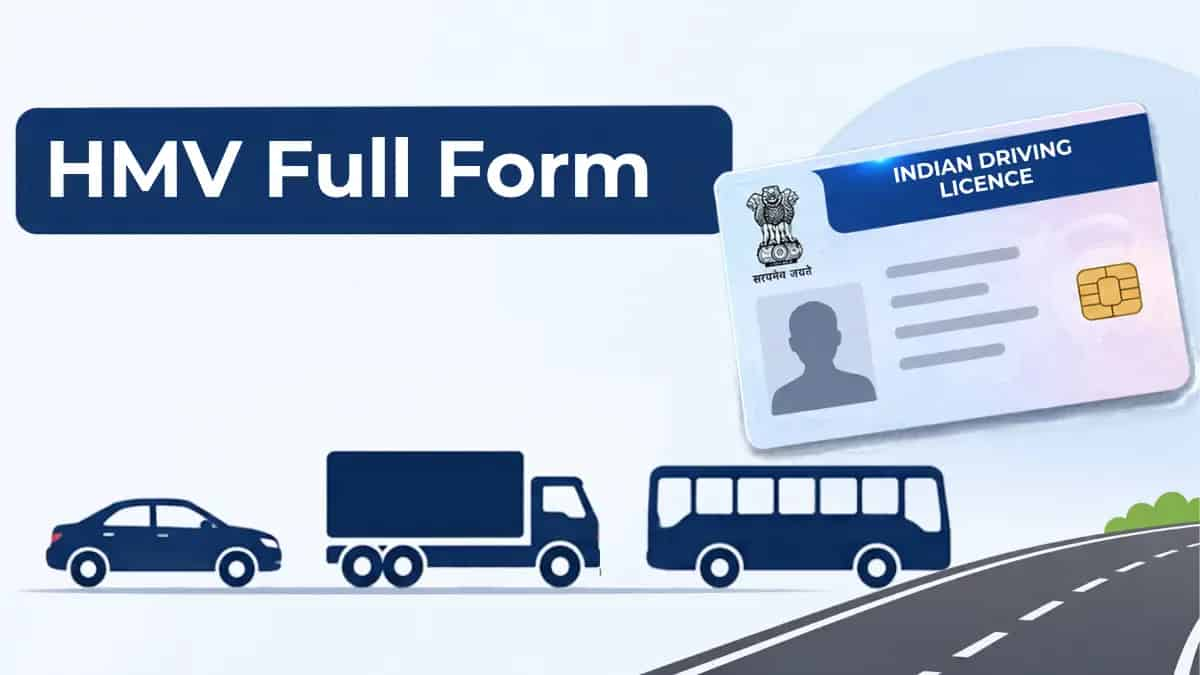


HMV stands for Heavy Motor Vehicle. In India, the term is commonly used for heavy vehicles involved in goods and passenger transportation, such as multi-axle trucks, tippers, container trucks, tractor-trailers and large buses.
HMV is also frequently used in driving licence terminology to describe authorisation associated with operating heavy motor vehicles. However, the official driving licence classification and the vehicle's registered category are important when determining which vehicles a driver can legally operate.
Heavy motor vehicles play an important role in India's transportation industry. They are used to carry construction materials, industrial machinery, agricultural products, containers and other goods across cities, highways, ports and industrial locations.
Understanding the HMV full form, vehicle categories, GVW, payload capacity and licence requirements helps truck drivers, commercial vehicle buyers and transport operators make informed decisions.
1. What Is an HMV Vehicle in India?
An HMV vehicle generally refers to a heavy motor vehicle designed for transporting large quantities of goods or passengers. These vehicles are built with stronger chassis, heavy-duty suspension, powerful engines and braking systems to handle demanding transportation requirements.
In India's commercial vehicle industry, HMV is commonly associated with:
-
Heavy-duty goods trucks
-
Multi-axle trucks
-
Tipper and dump trucks
-
Container trucks
-
Tractor-trailers
-
Heavy passenger buses
-
Specialised industrial transport vehicles
The vehicle's registered Gross Vehicle Weight (GVW), body type and intended use help determine its applicable regulatory classification.
Main Characteristics of Heavy Motor Vehicles
Heavy motor vehicles generally have the following characteristics:
Higher GVW: They are designed to operate with greater permissible vehicle weight compared with smaller commercial vehicles.
Heavy-duty construction: Their chassis, suspension, tyres and braking systems are engineered to support demanding operating conditions.
Powerful engines: Heavy vehicles require suitable engine power and torque to transport goods over long distances, inclines and challenging road conditions.
Greater load-carrying capacity: Heavy goods vehicles are used for transporting industrial products, construction materials, machinery and other bulk cargo.
Commercial applications: They are widely used in logistics, mining, construction, manufacturing and passenger transportation.
It is important to understand that the appearance or number of wheels alone does not determine whether a vehicle legally qualifies as a heavy vehicle. Its registered specifications and applicable vehicle classification matter.
Which Vehicles Come Under HMV in India?
HMV is commonly associated with different types of heavy-duty vehicles used in the Indian transportation and logistics industry. Each vehicle serves a different purpose depending on its configuration, weight and cargo requirements.
Heavy Goods Trucks
Heavy goods trucks are designed to transport industrial materials, agricultural products, machinery, cement and other commercial goods.
They are commonly used for intercity and long-distance freight transportation. Their engine capacity, chassis strength and load-carrying configuration vary depending on the manufacturer and application.
Multi-Axle Trucks
Multi-axle trucks have more than two axles and are designed to distribute vehicle weight across multiple wheels. They are widely used for transporting heavier cargo such as steel, cement, industrial equipment and bulk materials.
Common configurations include 10-wheel, 12-wheel and higher-axle trucks.
The permissible GVW and payload depend on the vehicle's approved specifications and axle configuration.
For more information, read our guide on 12 tyre truck load capacity.
Tipper Trucks
Tipper trucks, also known as dump trucks, are equipped with hydraulic lifting systems that allow the cargo body to tilt and unload materials.
They are commonly used in:
-
Road construction projects
-
Mining operations
-
Sand and aggregate transportation
-
Infrastructure development
-
Building material supply
Heavy-duty tippers are particularly useful where materials need to be unloaded quickly at construction sites.
Container Trucks
Container trucks are used to transport goods inside standardised cargo containers. They play an important role in port transportation, warehousing, manufacturing and industrial logistics.
Depending on the cargo requirement, different container lengths and truck configurations are available.
Read our guide on 40 feet container truck dimensions in India to understand their dimensions and transportation applications.
Heavy Passenger Buses
Heavy passenger buses are designed to carry larger groups of passengers over city, intercity and long-distance routes.
They are used by public transport operators, private bus companies, schools and travel service providers.
Their seating capacity, GVW and registration classification depend on the specific model and application.
HMV Licence Full Form and Meaning in India
The HMV license full form is Heavy Motor Vehicle Driving Licence. It is a commonly used expression for a driving licence associated with operating heavy motor vehicles.
In India, driving licence categories are governed by the Motor Vehicles Act, 1988 and the applicable Central Motor Vehicles Rules.
One important distinction is that HMV is a commonly used term, but it is not a separate universal statutory driving licence class listed in Section 10 of the Motor Vehicles Act.
Section 10 includes categories such as light motor vehicle and transport vehicle. The appropriate licence authorisation depends on the vehicle being driven and the applicable legal requirements.
Therefore, drivers should check the vehicle category and authorisation recorded on their driving licence rather than relying only on the abbreviation HMV.
What Does HMV Mean on a Driving Licence?
HMV may appear in older licence records, state-specific records or general descriptions of heavy vehicle driving authorisation.
It is commonly associated with operating heavy commercial vehicles, including goods trucks and passenger vehicles.
However, the exact licence class and permitted vehicle category should be verified with the licensing authority.
Difference Between HMV, HGMV and HPMV
These abbreviations are frequently encountered in discussions about heavy vehicle driving licences and vehicle classifications.
|
Abbreviation |
Full Form |
General Meaning |
|
HMV |
Heavy Motor Vehicle |
Common term for heavy motor vehicles |
|
HGMV |
Heavy Goods Motor Vehicle |
Heavy goods transportation terminology |
|
HPMV |
Heavy Passenger Motor Vehicle |
Heavy passenger transportation terminology |
|
LMV |
Light Motor Vehicle |
Light motor vehicle category |
|
HTV |
Heavy Transport Vehicle |
Commonly used heavy transport terminology |
The exact description displayed on a licence may depend on the issuing authority and applicable record format. These abbreviations should not automatically be treated as interchangeable statutory licence endorsements.
Difference Between HMV, LMV, LCV, MCV and HCV
HMV, LMV, LCV, MCV and HCV are commonly used terms in the Indian automobile and commercial vehicle industry.
They help explain different vehicle segments according to weight, commercial application and transportation requirements.
However, these terms do not all represent identical statutory driving licence categories.
|
Category |
Full Form |
Common Application |
|
LMV |
Light Motor Vehicle |
Cars and qualifying light commercial vehicles |
|
LCV |
Light Commercial Vehicle |
Small goods transportation |
|
MCV |
Medium Commercial Vehicle |
Medium-load transportation |
|
HMV |
Heavy Motor Vehicle |
Heavy goods and passenger transportation |
|
HCV |
Heavy Commercial Vehicle |
Heavy-duty commercial transportation |
HMV vs LMV
LMV stands for Light Motor Vehicle, while HMV stands for Heavy Motor Vehicle.
The Motor Vehicles Act, 1988 defines LMV to include transport vehicles or omnibuses with a GVW not exceeding 7,500 kg, as well as certain other vehicles within the prescribed weight limits.
Heavy goods and passenger vehicle categories have separate statutory definitions.
HMV vs LCV
LCV stands for Light Commercial Vehicle. These vehicles are commonly used for local deliveries, small business transportation, agricultural supply and regional logistics.
HMV vehicles are associated with heavier transportation requirements, including industrial freight, construction materials and large-scale goods movement.
HMV vs MCV
MCV stands for Medium Commercial Vehicle. These vehicles serve the medium-duty transportation segment between lighter and heavier commercial vehicle applications.
They are commonly used for regional goods distribution, industrial transportation and medium-distance logistics.
HMV vs HCV
HCV stands for Heavy Commercial Vehicle. It is an industry term commonly used for heavy-duty trucks and buses.
HMV is commonly used as a broader heavy motor vehicle term, including in licence-related discussions. HCV is generally used to describe heavy commercial vehicle products and market segments.
For a broader explanation, explore our guide to different types of trucks in India.
How to Identify Whether Your Truck Falls Under a Heavy Vehicle Category
A truck's appearance, number of wheels or engine capacity alone cannot establish its legal vehicle classification.
The most reliable starting point is to check its Registration Certificate (RC), approved specifications and Gross Vehicle Weight.
Here are the important details to examine:
1. Gross Vehicle Weight (GVW): GVW indicates the maximum permissible total weight of the vehicle and its load as certified by the registering authority.
2. Vehicle class: Check whether the vehicle is registered as a goods carriage, passenger vehicle or another applicable category.
3. Unladen weight: This is the weight of the vehicle without its load and is useful for understanding payload capacity.
4. Axle configuration: The number of axles and permissible axle loads influence the vehicle's approved weight and carrying capacity.
5. Registration details: The RC provides important information about the vehicle's registered category, GVW and other specifications.
Examples of Vehicle Weight Classification
Under Section 2 of the Motor Vehicles Act, 1988, the statutory definitions of heavy goods and heavy passenger motor vehicles use a GVW threshold exceeding 12,000 kg, subject to specified exceptions.
The following examples illustrate how weight affects classification:
|
Example |
Vehicle GVW |
General statutory position |
|
Light goods vehicle |
7,500 kg |
Within the LMV GVW limit |
|
Medium goods vehicle |
10,000 kg |
Does not meet the HGV GVW threshold |
|
Heavy goods vehicle |
16,000 kg |
Exceeds the HGV GVW threshold |
These examples are illustrative. The vehicle's registered class and the applicable statutory definition must also be considered.
What Is GVW and Payload Capacity in Heavy Trucks?
GVW and payload capacity are two important specifications used when comparing commercial trucks.
Although these terms are related, they have different meanings.
What Is Gross Vehicle Weight?
GVW stands for Gross Vehicle Weight.
It refers to the maximum permissible total weight of a vehicle, including the vehicle itself, passengers, fuel, equipment and cargo, as certified and registered by the relevant authority.
For truck buyers and transport operators, GVW is important because it determines the permitted operating weight of the vehicle.
What Is Payload Capacity?
Payload capacity refers to the weight of goods a vehicle can legally carry.
It is generally calculated by subtracting the vehicle's unladen weight from its permissible GVW.
Payload Capacity = GVW − Unladen Weight
Example of GVW and Payload Calculation
Consider a hypothetical heavy commercial truck with the following specifications:
|
Specification |
Weight |
|
Gross Vehicle Weight |
35,000 kg |
|
Unladen Weight |
12,400 kg |
|
Payload Capacity |
22,600 kg |
Calculation:
35,000 kg − 12,400 kg = 22,600 kg
Therefore, the illustrative payload capacity is 22,600 kg.
Actual permissible loading must also comply with registered axle loads and other applicable regulations.
This is why transport operators should check GVW, payload and axle configuration before selecting a truck for a specific transportation requirement.
You can also explore our guide on 12 tyre truck load capacity for more information about heavy truck configurations and carrying capacity.
HMV Licence Eligibility and Requirements in India
Anyone planning to drive a heavy transport vehicle in India must meet the applicable driving licence requirements.
The requirements depend on the vehicle class, existing licence, training and current rules.
Minimum Age Requirement
Under Section 4 of the Motor Vehicles Act, 1988, the general minimum age for driving a transport vehicle in a public place is 20 years, subject to applicable legal provisions.
Existing Driving Licence
Applicants must fulfil the requirements applicable to the relevant transport vehicle category. The licensing authority verifies the applicant's existing driving licence and eligibility.
Medical Fitness
Medical fitness may need to be established through Form 1A, depending on the applicant's age and the nature of the application.
Driving Training
Applicants must fulfil applicable training requirements, including prescribed training through an authorised driving training establishment where required.
Driving Test
Applicants must pass the applicable driving test and satisfy the licensing authority that they can safely operate the relevant vehicle category.
Always check the latest requirements with the relevant RTO because application procedures and documentation may vary depending on the service and applicable rules.
How to Apply for a Heavy Vehicle Driving Licence in India
Applicants can use the official Sarathi Parivahan portal to access available driving licence services.
The general application process is:
-
Visit the official Sarathi Parivahan portal.
-
Select your state.
-
Choose the relevant driving licence service.
-
Enter your existing driving licence and personal details.
-
Select the applicable vehicle class or transport vehicle category.
-
Upload the required documents.
-
Pay the applicable government fees.
-
Book an appointment if required.
-
Complete the required verification and driving test.
The services available online may differ between states. Applicants should confirm the appropriate vehicle category and requirements with their licensing authority before submitting an application.
Documents Required for a Heavy Vehicle Driving Licence
The documents required for a transport vehicle driving licence application may include:
|
Document |
Purpose |
|
Existing driving licence |
Previous driving authorisation |
|
Identity proof |
Applicant identification |
|
Address proof |
Residential verification |
|
Form 1A |
Medical fitness, where applicable |
|
Training certificate |
Proof of prescribed training, where required |
|
Application details |
Driving licence application |
|
Photographs |
Identification, where required |
The exact documents depend on the application type and the requirements of the concerned licensing authority.
For the latest forms and procedures, refer to the official Parivahan portal.
Why Are HMV Trucks Important in India's Transport Industry?
Heavy motor vehicles play an important role in India's logistics, infrastructure, manufacturing and industrial development.
They support the movement of large quantities of goods and materials between manufacturing centres, warehouses, ports, construction sites and distribution hubs.
Long-Distance Goods Transportation
Heavy trucks transport cement, steel, agricultural products, machinery and other commercial goods between different cities and states.
Construction and Infrastructure
Tipper trucks and heavy-duty vehicles transport sand, gravel, stone and construction materials for highways, bridges, mining operations and infrastructure projects.
Industrial Logistics
Heavy commercial vehicles support the movement of raw materials, industrial equipment and finished products between factories and distribution centres.
Container Transportation
Container trucks and tractor-trailers connect ports, warehouses and industrial locations, supporting domestic and international supply chains.
Passenger Transportation
Heavy passenger vehicles, including large buses, are used for public transportation, intercity travel and other passenger services.
As India's road freight and infrastructure requirements continue to grow, heavy commercial vehicles remain an important part of the transportation ecosystem.
Conclusion
HMV stands for Heavy Motor Vehicle and is an important term in India's commercial transportation and driving licence ecosystem.
Understanding HMV, HGMV, HPMV, GVW and payload helps drivers, truck buyers and transport operators understand heavy vehicle terminology, vehicle classifications and transportation requirements.
Whether you are exploring heavy-duty trucks, learning about driving licence terminology or comparing commercial vehicle specifications, knowing the HMV full form provides a useful starting point.