
Blog Details
DPF Full Form: What a Diesel Particulate Filter Does in BS6 Trucks
Summary
A simple guide to how DPF works, parked regeneration and the DPF light on BS6 trucks.
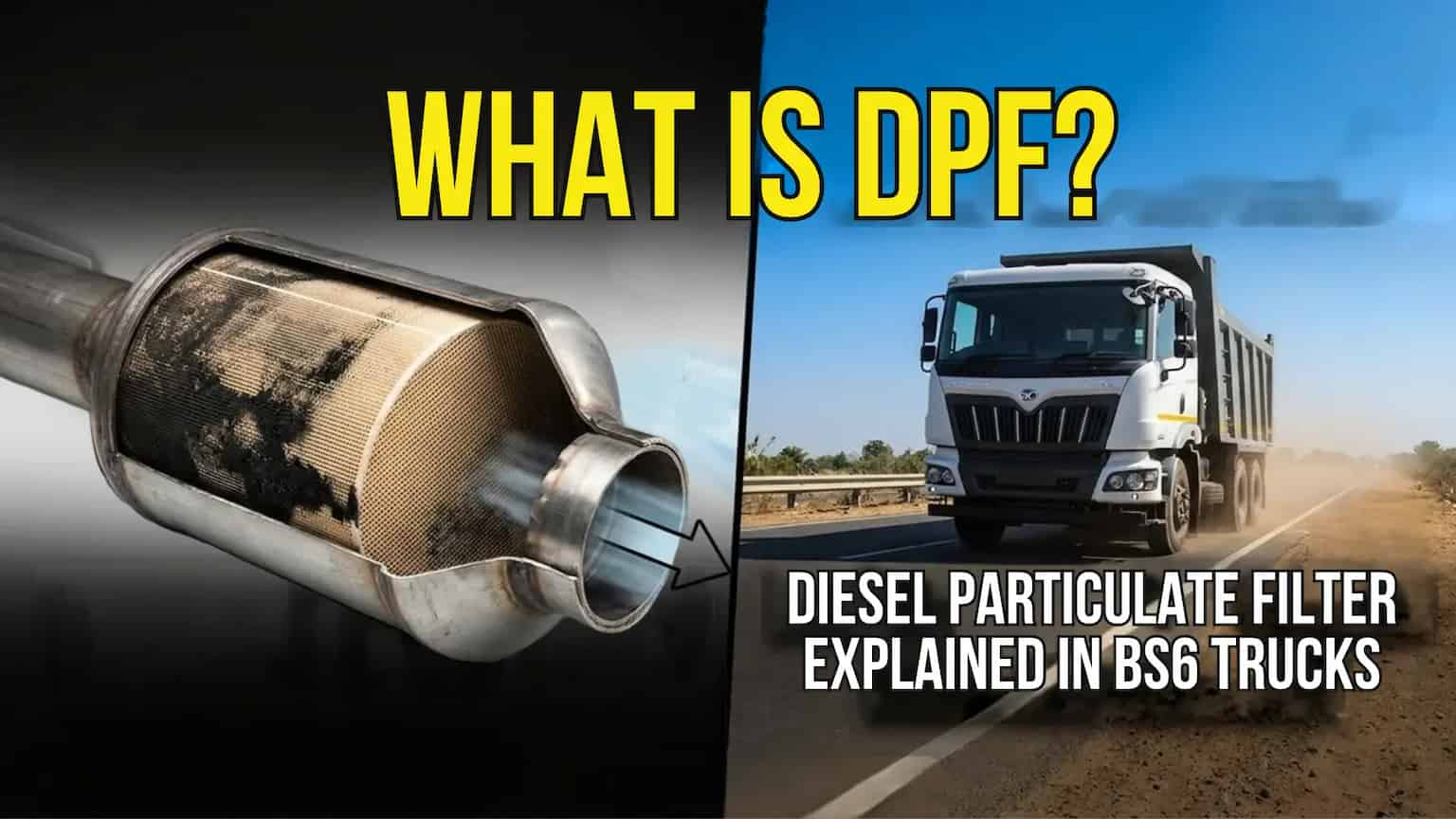


The DPF full form is Diesel Particulate Filter. This filter is fitted in a diesel engine's exhaust pipe that catches black soot before it leaves the tailpipe. Since BS6 rules came into force in April 2020, most diesel trucks in India carry a DPF, and that is why a new DPF light now sits on the dashboard.
DPF Full Form
-
D – Diesel: it is used on diesel engines.
-
P – Particulate: the tiny bits of soot in diesel smoke.
-
F – Filter: it holds those bits back.
Why BS6 Trucks Need a DPF
Remember the thick black smoke old trucks used to puff out when the driver pressed the accelerator? A DPF stops that smoke.
The black smoke from a diesel engine is soot. These particles are small enough to go deep into the lungs. BS6 (Bharat Stage 6) cut the amount of soot a truck may release and, for the first time, also limited the number of particles. Engine changes alone cannot meet that limit, so makers added a filter.
BS6 diesel helps too. It has 10 ppm sulphur, compared with 50 ppm in BS4 fuel, so it leaves less dirt in the filter and reduces damage to nearby parts.
BS6 trucks and pickups with a DPF
Every commercial vehicle launched after 2020 uses a DPF factory-fitted.
|
Vehicle |
Type |
What the maker lists |
|
DPD level indicator on the display (DPD is Isuzu's name for its DPF) |
||
|
Pickup |
DPD and SCR level indicators (listed for the 4WD AT Z Prestige) |
|
|
ICV truck |
DPF regeneration status on the instrument cluster |
|
|
BharatBenz 1015R+ |
Truck, 10.7 t GVW |
SCR + DPF (the brochure notes a longer DPF change interval) |
|
Mahindra Furio 11 to 17 |
ICV truck |
Mild EGR + DOC + DPF + SCR + ASC (ASC: ammonia slip catalyst) |
|
Construction truck, 28 t GVW |
SCR + DPF (the brochure notes a longer DPF change interval) |
|
|
Mahindra Blazo X 28 to 55 |
Haulage truck, tipper and tractor |
DOC + DPF + SCR + ASC |
|
Coal tipper |
EGR + DOC + insulated DPF + SCR |
How a DPF Works
Exhaust gas passes through three parts on its way out:
Engine → DOC → DPF → SCR → Tailpipe
-
DOC (Diesel Oxidation Catalyst): heats and cleans the gas, which also makes the soot easier to burn later.
-
DPF: a block of thin ceramic channels, like a honeycomb. Every channel is closed at one end, so the gas must push through the channel walls. The walls are porous: gas passes, soot stays behind.
-
SCR: removes a different gas, NOx (explained in the SCR section below).
Two kinds of dirt collect in the filter. Soot can be burnt off. Ash, which comes from engine oil, cannot burn. It builds up slowly over many months and has to be cleaned out at a workshop.
A pressure sensor compares the gas pressure before and after the filter. The bigger the gap, the fuller the filter. The engine computer uses this reading to decide when the filter needs cleaning.
DPF Regeneration: Passive, Active and Parked
Regeneration means burning the soot inside the filter so it is clean again. It happens in three ways.
|
Type |
When it happens |
What the driver does |
How it works |
|
Passive |
Long, steady runs on the highway |
Nothing |
Hot exhaust burns the soot slowly on its own |
|
Active |
Filter fills because the exhaust is not hot enough |
Keep driving; do not switch off |
Engine adds a little extra fuel to heat the exhaust to about 600°C |
|
Parked |
Active cleaning could not finish, often on city or stop-start routes |
Stop the truck and start it from the switch or display |
Engine raises its idle speed and heats the exhaust while standing |
How to do a parked regeneration in a truck
-
Park in an open, safe spot. Keep away from dry grass, fuel, people and anything that can burn; the exhaust gets really hot.
-
Put the gear in neutral, apply the parking brake and keep the engine running.
-
Press the DPF or regeneration switch when the display asks for it.
-
Do not press the accelerator, clutch or brake, and do not switch the engine off. The engine will rev higher — that’s normal.
-
Wait until the light goes off. It usually takes 20 to 45 minutes; your owner's manual gives the exact time.
What the DPF inhibit switch does
The DPF inhibit switch stops or delays a regeneration. Use it only where heat is unsafe, such as at a fuel pump, near dry crops or inside a closed shed. Every stopped cleaning leaves soot behind, so the filter fills faster and the next warning comes sooner. Start the cleaning again as soon as you reach a safe place.
DPF Warning Lights and What Each Stage Means
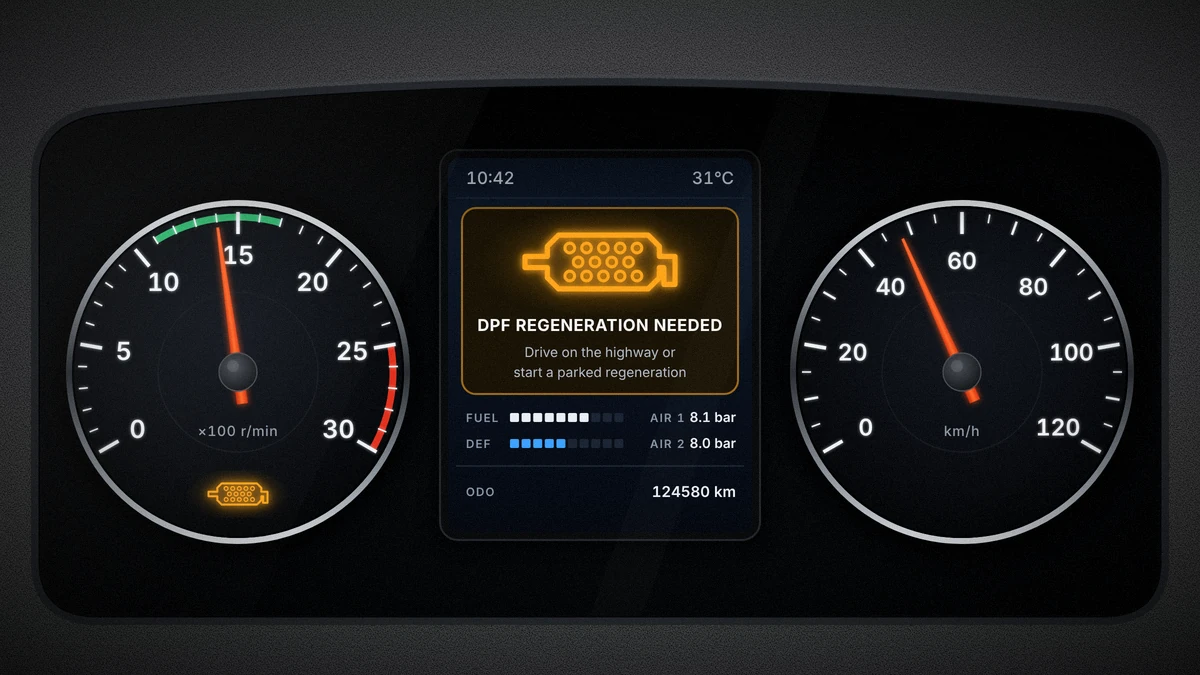
The DPF symbol is usually a box with dots inside it, showing a filter full of soot. The exact stages differ by brand, but most trucks follow this order.
|
Stage |
What you see |
What it means |
What to do |
If ignored |
|
1 |
DPF light on, steady |
Filter is getting full |
Drive steadily on the highway, or do a parked regeneration when asked |
Moves to stage 2 |
|
2 |
DPF light flashing, or a regeneration request |
Filter is full |
Do a parked regeneration as soon as it is safe |
Engine power is cut |
|
3 |
DPF light with the engine warning light, low power |
Filter is overloaded; truck is in limp mode |
Try a parked regeneration if the truck allows it, else go to a workshop |
Only a workshop can clean it |
|
4 |
Service or stop warning |
Too full for the driver to clean |
Workshop cleaning with a scan tool, or removal |
Filter can crack and needs replacing |
Why a DPF Gets Blocked
-
Short trips and city routes: the exhaust never gets hot enough to burn the soot.
-
Long idling: a standing engine makes soot but little heat.
-
Stopped regenerations: switching off or using the inhibit switch midway leaves soot inside.
-
Wrong engine oil: ordinary oil leaves more ash. Use the low-ash grade in your manual (often API CK-4).
-
Poor diesel: dirty fuel burns badly and makes more soot.
-
Engine faults: a leaking injector, a faulty EGR valve or a turbo leaking oil all add extra soot.
What is the Cost of DPF Cleaning and Replacement in India
There are three levels of repair, from cheapest to costliest:
-
Forced regeneration at a workshop: a mechanic uses a scan tool to burn the soot while the filter stays on the truck.
-
Off-vehicle cleaning: the filter is removed and the ash is baked and blown out.
-
New DPF: needed when the filter is cracked or melted.
Estimated costs in India, checked in November 2026:
|
Repair |
Estimated cost |
|
Forced regeneration at a workshop |
₹2,000 to ₹8,000 |
|
Off-vehicle cleaning, pickup or small truck |
₹3,000 to ₹9,000 per filter |
|
Off-vehicle cleaning, heavy truck |
₹5,000 to ₹10,000 per filter |
|
New DPF, pickup or small truck |
₹60,000 to ₹1.8 lakh |
|
New DPF, heavy truck |
₹2 lakh to ₹4 lakh |
DPF vs SCR vs AdBlue (DEF)
|
DPF |
SCR |
AdBlue (DEF) |
|
|
What it is |
A filter |
A catalyst unit |
A liquid of urea and water |
|
What it removes |
Soot |
NOx gas |
Nothing on its own; the SCR uses it to remove NOx |
|
Needs refilling? |
No, it is cleaned |
No |
Yes, from its own blue-cap tank (never the diesel tank) |
|
Sign of trouble |
DPF light, power loss |
Engine warning light |
AdBlue warning; an empty tank leads to a power cut |
Is Removing the DPF Legal?
No, you can NOT remove the DPF. A BS6 truck is approved to meet emission rules with its DPF in place. Removing it means the truck no longer meets those rules. It can fail its PUC test, and driving a vehicle that breaks air-pollution standards is punishable under Section 190(2) of the Motor Vehicles Act. It also ends the engine warranty, and the engine computer will show a fault and may cut power.
How to Keep A Truck's DPF Healthy
-
Give city trucks a steady highway run every week so the filter can clean itself.
-
Let every regeneration finish, even if it means a short wait.
-
Use only the engine oil grade written in the manual.
-
Fill diesel at busy, trusted pumps.
-
Keep AdBlue topped up with certified fluid.
-
For fleets: note down every parked regeneration per truck. A truck that asks far more often than the rest likely has an engine fault.