Blog Details
Tanker Truck – Types, Capacity, Uses and Specifications in India
Summary
Explore different tanker trucks in India, including oil, petrol, LPG, water and chemical tankers. Understand their capacity, applications, construction, safety features and transportation requirements.
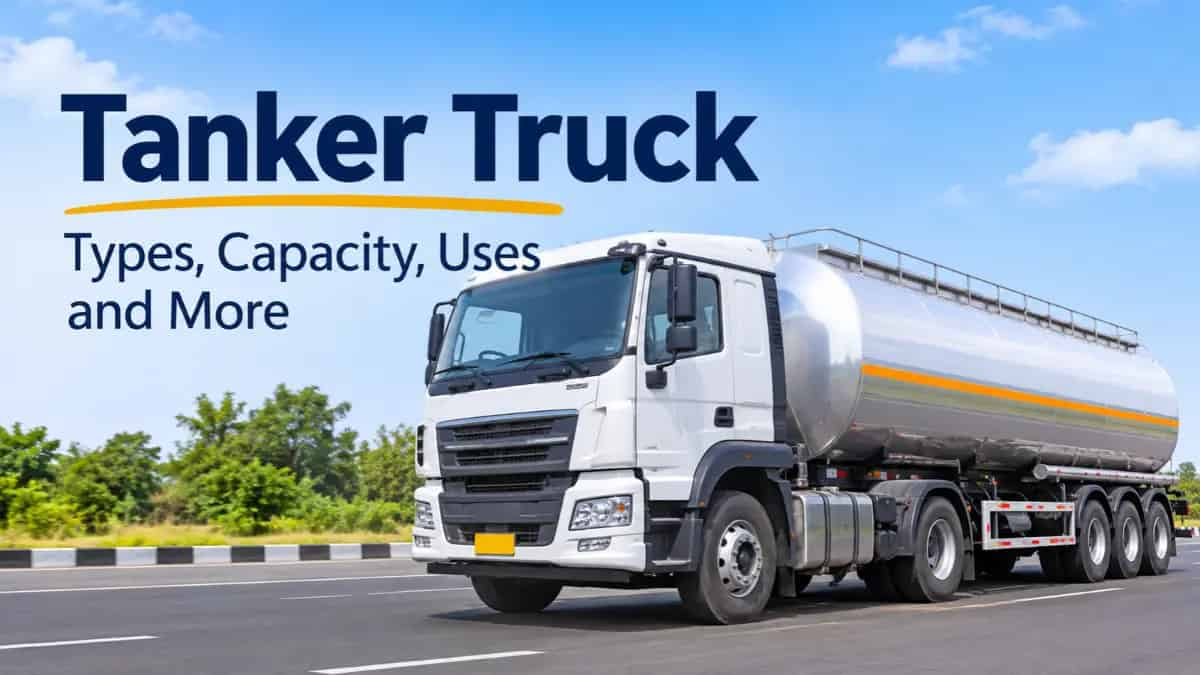


A tanker truck is a specialised commercial vehicle designed to transport liquids, gases, and certain bulk materials in a specially constructed tank. These trucks play an important role in India's transportation industry by carrying petroleum products, LPG, water, chemicals, milk and other materials between manufacturing facilities, storage terminals, distribution centres and end users.
Different tanker trucks are designed for different transportation requirements. An oil tanker truck carries petroleum products such as diesel and petrol, while an LPG tanker truck transports liquefied petroleum gas in a specially designed pressure vessel. Similarly, water tanker trucks are used for municipal supply, construction, and industrial applications.
Tanker truck capacity also varies depending on the type of material being transported, tank design, vehicle configuration and permissible gross vehicle weight (GVW). Therefore, choosing the right tanker requires more than simply comparing the tank's volume.
In this guide, we explain the different types of tanker trucks in India, their capacities, applications, construction, safety features and differences from tanker trailers.
What Is a Tanker Truck?
A tanker truck is a commercial vehicle fitted with a specialised tank body for transporting liquids, gases or other materials in bulk. Unlike conventional goods trucks that carry cargo in a container or open loading body, tanker trucks have an enclosed tank designed according to the characteristics of the material being transported.
The tank can be mounted directly on a rigid truck chassis or installed on a semi-trailer connected to a tractor unit. Its construction, material, insulation, internal compartments and safety fittings depend on the cargo.
For example:
-
An oil tanker truck carries petrol, diesel and other petroleum products.
-
An LPG tanker truck transports liquefied petroleum gas under pressure.
-
A water tanker truck carries potable or non-potable water.
-
A chemical tanker truck transports industrial chemicals.
-
A milk tanker truck uses a suitable food-grade tank for dairy transportation.
Tanker trucks are widely used in petroleum distribution, construction, agriculture, municipal services, food processing and manufacturing industries.
Unlike ordinary goods vehicles, tanker trucks require specialised loading and unloading arrangements, appropriate safety equipment and a tank body suitable for the material being carried.
How Does a Tanker Truck Work?
A tanker truck works by storing cargo inside a specially designed tank and transporting it to the required destination. The loading and unloading process depends on whether the cargo is a liquid, gas or dry bulk material.
Most liquid tanker trucks use gravity discharge, pumps or specialised valves to transfer their contents. LPG tankers use dedicated pressure-rated equipment and transfer arrangements.
The basic working process involves the following steps:
1. Loading the material: The tanker is positioned at a designated loading facility. The cargo is transferred into the tank through an approved loading connection.
2. Securing the cargo: Valves, manholes and other openings are closed and checked. The tank's compartments, where provided, help separate different products.
3. Transportation: The truck transports the material to the destination. Its tank structure, axle configuration and vehicle stability are important because liquid cargo can move during braking, acceleration and cornering.
4. Unloading the cargo: The material is discharged using an appropriate valve, pump, hose or pressure-transfer system, depending on the tanker type.
5. Inspection and cleaning: After unloading, the tanker is inspected and cleaned when required. Special procedures are necessary when changing cargo types or transporting hazardous materials.
A tanker truck must be operated within its permitted weight limits and according to the handling requirements of the material being transported.
Different Types of Tanker Trucks in India
Tanker trucks are classified according to the type of material they carry, their tank construction and their intended application. In India, different tankers support fuel distribution, LPG transportation, water supply, industrial operations and food processing.
Here are the major types of tanker trucks.
Oil Tanker Truck
An oil tanker truck is designed to transport petroleum products and other oils in bulk. It is commonly used by petroleum companies, fuel distributors, industrial suppliers and logistics operators.
Depending on its tank design and approval, an oil tanker may transport products such as:
-
Diesel
-
Petrol
-
Kerosene
-
Aviation turbine fuel
-
Furnace oil
-
Other approved petroleum products
Oil tanker trucks generally use specially designed metal tanks with suitable compartments, valves, vents and safety fittings.
Some tankers have multiple compartments that allow different petroleum products or grades to be transported separately, subject to their approved design and operating conditions.
Oil tanker trucks are important for moving fuel from refineries and petroleum terminals to fuel stations, industrial facilities, airports and storage depots.
Petrol Tanker Truck
A petrol tanker truck is a specialised type of petroleum tanker used to transport petrol from refineries, terminals and fuel depots to petrol pumps.
Petrol is a highly flammable liquid, so these vehicles require appropriate tank construction, safety fittings and handling procedures.
Important features of a petrol tanker truck include:
-
Approved tank construction and compartment design.
-
Suitable loading and discharge valves.
-
Emergency shut-off arrangements.
-
Pressure and vacuum venting arrangements as applicable.
-
Fire safety equipment.
-
Earthing and bonding provisions during loading and unloading.
-
Appropriate hazardous-material identification and emergency information.
Petrol tankers may also carry diesel and other approved petroleum products when the tank's configuration and operating approvals permit it.
The Petroleum Rules, 2002 prescribe specific requirements for vehicles transporting petroleum in bulk, including tank approval, capacity and safe carrying limits.
Diesel Tanker Truck
A diesel tanker truck transports diesel fuel to petrol pumps, industrial facilities, construction sites, agricultural operations and other fuel-consuming locations.
Diesel tankers are generally designed with suitable compartments and discharge arrangements for controlled fuel delivery.
They are used by:
-
Petroleum distribution companies.
-
Fuel transportation contractors.
-
Industrial fuel suppliers.
-
Construction and infrastructure companies.
-
Mining and logistics operators.
Diesel tanker trucks may have different tank configurations depending on their vehicle chassis, intended route and delivery requirements.
LPG Tanker Truck
An LPG tanker truck is designed to transport liquefied petroleum gas (LPG), a fuel commonly used for cooking, heating and industrial applications.
Unlike ordinary liquid tankers, LPG tankers use specially designed pressure vessels because LPG is transported in a liquefied state under pressure.
These tankers are commonly used to transport LPG from refineries, gas processing facilities and bottling plants to distribution locations.
Important features of an LPG tanker truck include:
-
Pressure-rated cylindrical vessel.
-
Specialised loading and unloading connections.
-
Pressure relief devices.
-
Suitable shut-off valves.
-
Pressure and temperature monitoring arrangements.
-
Emergency isolation systems.
-
Appropriate protective and safety equipment.
LPG tanker trucks require specialised inspection, operation and maintenance. Their pressure vessels and safety fittings must comply with applicable regulatory and technical requirements.
An LPG tanker should never be treated as an ordinary water or petroleum tanker because its cargo and operating pressures require different engineering and safety arrangements.
Water Tanker Truck
A water tanker truck is a commercial vehicle fitted with a tank for transporting water to residential, commercial, agricultural and industrial locations.
These trucks are widely used in Indian cities, villages, construction sites and areas where regular water supply is limited.
Common applications include:
-
Drinking water transportation using suitable potable-water tankers.
-
Construction-site water supply.
-
Road cleaning and dust suppression.
-
Gardening and landscaping.
-
Industrial water transportation.
-
Emergency water supply.
Water tanker trucks generally feature a tank body, filling and discharge openings, water outlets and, in some configurations, a pump or spray arrangement.
The tank material and internal surface must be suitable for the intended water application. Potable-water tankers require appropriate hygienic construction and cleaning practices.
Chemical Tanker Truck
A chemical tanker truck is designed to transport industrial chemicals and other specialised liquid substances.
The construction of a chemical tanker depends on the chemical's properties, including its corrosiveness, temperature requirements, compatibility with tank materials and potential hazards.
Some chemical tankers may feature:
-
Corrosion-resistant tank materials or protective linings.
-
Specialised valves and fittings.
-
Insulation or temperature-control arrangements.
-
Dedicated loading and unloading systems.
-
Appropriate hazardous-material markings.
-
Emergency response equipment.
Chemical tankers are used in industries such as pharmaceuticals, petrochemicals, fertilisers, paints, manufacturing and industrial processing.
A tanker designed for one chemical cannot automatically be used for another. Material compatibility, cleaning procedures and regulatory approvals must be checked before changing the cargo.
Milk Tanker Truck
A milk tanker truck is a specialised vehicle used to transport raw milk from dairy farms and collection centres to processing plants.
Milk is a perishable product, so these tankers are generally designed to maintain hygiene and protect the cargo during transportation.
Common features include:
-
Food-grade tank construction.
-
Insulated tank walls.
-
Hygienic loading and unloading connections.
-
Smooth internal surfaces for easier cleaning.
-
Suitable temperature-management arrangements.
Milk tankers are important for dairy supply chains because they help transport milk from collection locations to processing and packaging facilities.
Cement Tanker Truck and Cement Bulker
Cement transportation requires a different type of tanker because cement is a dry powder rather than a liquid.
A cement bulker truck is fitted with an enclosed tank designed to transport dry cement in bulk. It generally uses a pneumatic unloading system to transfer cement into storage silos.
Unlike a liquid tanker, a cement bulker uses compressed air and specialised equipment to discharge the material.
Cement bulkers are commonly used for:
-
Cement plant transportation.
-
Ready-mix concrete plants.
-
Construction projects.
-
Infrastructure development.
-
Industrial bulk-material transportation.
For a detailed explanation of cement bulker construction, capacity and applications, read our guide to Bulker Truck – Meaning, Capacity, Types and Price in India.
Tanker Truck Capacity in India
Tanker truck capacity refers to the amount of material a tanker can carry inside its tank. It is generally measured in litres or kilolitres (KL) for liquid cargo and in tonnes for the permitted weight of the cargo.
However, tanker capacity is not the same as payload capacity.
For example, a tanker may have a particular internal volume, but the amount of material it can legally transport depends on its weight, tank design, vehicle GVW, axle configuration and the density of the cargo.
There is no single standard capacity applicable to every tanker truck in India.
The following table explains how tanker capacity differs by application.
|
Tanker type |
Capacity measurement |
Main application |
|
Water tanker |
Litres or KL |
Water transportation |
|
Oil tanker |
Litres or KL |
Petroleum and oil transportation |
|
Petrol tanker |
Litres or KL |
Petrol distribution |
|
Diesel tanker |
Litres or KL |
Diesel transportation |
|
LPG tanker |
Litres, KL or vessel volume specifications |
LPG distribution |
|
Chemical tanker |
Litres, KL or tonnes |
Industrial chemical transportation |
|
Milk tanker |
Litres or KL |
Dairy transportation |
|
Cement bulker |
Cubic metres and tonnes |
Dry cement transportation |
The actual capacity must always be checked against the approved tank specification and vehicle registration details.
How Many Litres Can a Tanker Truck Carry?
The number of litres a tanker truck can carry depends on the vehicle's configuration, tank volume, cargo density and legal weight limits.
For example, petroleum tankers have specific capacity restrictions under the Petroleum Rules, 2002. Rule 64 provides that the net carrying capacity of a petroleum tank truck or tank semi-trailer must not exceed 25 kilolitres, with a separate provision for aircraft refuellers up to 50 kilolitres. Petroleum tank trailers have a separate 5-kilolitre limit.
These are specific petroleum transportation provisions and should not be applied to every type of tanker.
Water, milk and other non-hazardous tanker trucks have different construction and approval requirements.
Tank Volume vs Payload Capacity
Understanding the difference between tank volume and payload capacity is important when selecting a tanker truck.
Tank volume: The total internal space available for carrying the cargo, generally measured in litres or cubic metres.
Payload capacity: The maximum weight of cargo the vehicle can carry within its permitted gross vehicle weight.
For example, consider a hypothetical tanker truck with:
-
Vehicle GVW: 25,000 kg
-
Unladen vehicle and tank weight: 11,000 kg
-
Available payload: 14,000 kg
The payload is calculated as:
Payload = GVW − Unladen weight
Payload = 25,000 − 11,000 = 14,000 kg
This means the vehicle has a maximum theoretical cargo weight of 14 tonnes, subject to the applicable axle limits and approved vehicle configuration.
The actual volume of liquid it can transport will depend on the liquid's density and the tank's usable capacity.
This is why a tanker with a large tank does not automatically have a higher legal carrying capacity.
Factors Affecting Tanker Truck Capacity
Several factors determine how much material a tanker truck can safely and legally carry.
1. Gross Vehicle Weight (GVW): GVW includes the truck, tank body, equipment, driver, passengers and cargo. The vehicle must remain within its permitted gross weight.
2. Tank volume: The internal volume determines how much space is available for cargo.
3. Cargo density: Different liquids have different weights. The same volume of water, diesel and other liquids will not necessarily have the same weight.
4. Axle configuration: The number and arrangement of axles affect how the vehicle's weight is distributed across the road.
5. Tank material and construction: The tank's material, thickness, insulation and safety equipment contribute to its unladen weight.
6. Regulatory restrictions: Certain materials, particularly petroleum and hazardous cargo, have additional transportation requirements and capacity restrictions.
Oil Tanker Truck Capacity and Applications
Oil tanker truck capacity depends on the type of petroleum product, vehicle design and applicable transportation regulations.
Petroleum tankers are used to distribute fuel from refineries and storage terminals to petrol pumps, airports, industrial facilities and other destinations.
In India, petroleum transportation is governed by the Petroleum Rules, 2002, alongside applicable road transport and safety requirements.
Under Rule 64, the net carrying capacity of a petroleum tank truck or tank semi-trailer is limited to 25 KL, except for aircraft refuellers, which have a separate limit of 50 KL. The rules also prescribe net-capacity percentages based on the petroleum class.
Importantly, the permissible weight of petroleum must also remain within the difference between the vehicle's unladen weight and its permitted maximum gross weight.
Therefore, oil tanker operators must consider both the approved tank volume and the vehicle's legal payload.
Petrol Tanker Truck – Design and Uses
A petrol tanker truck is an important part of India's fuel distribution network.
Petrol is transported in bulk from refineries and petroleum terminals to retail fuel stations through specialised tank vehicles.
These tankers may have multiple compartments, allowing different quantities of petroleum products to be carried separately, depending on the approved tank design.
The major components include:
-
Tank body: Stores petroleum products during transportation.
-
Compartments: Separate the cargo into different sections where provided.
-
Manholes: Provide approved access for inspection and maintenance.
-
Loading connections: Allow petroleum products to enter the tank.
-
Discharge valves: Control the release of fuel at the destination.
-
Emergency fittings: Help control the cargo during an emergency.
-
Fire safety equipment: Supports emergency response.
Petrol tanker trucks require proper inspection, approved construction, trained drivers and safe loading and unloading procedures.
LPG Tanker Truck – How It Works
An LPG tanker truck transports liquefied petroleum gas between refineries, bottling plants and distribution facilities.
LPG is stored and transported in a liquefied state under pressure. This requires a specialised pressure vessel rather than the ordinary tank body used for water or other non-pressurised liquids.
The transportation process generally involves:
-
Loading LPG at an approved facility.
-
Checking the vessel, valves and safety equipment.
-
Transporting LPG using the approved vehicle configuration.
-
Connecting the tanker to the receiving facility through suitable transfer equipment.
-
Unloading LPG using the authorised transfer procedure.
Because LPG is flammable and stored under pressure, tanker construction, inspection, pressure-relief systems and emergency procedures are particularly important.
Operators must follow the applicable safety regulations and approved operating procedures.
Tanker Truck Chassis, Axles and Body Configuration
A tanker truck is not just a tank mounted on a truck. Its chassis, suspension, axles and tank mounting arrangement must be suitable for the intended application.
The main components include:
Truck chassis: Provides the structural base for mounting the tank. It must support the tank's weight and cargo within the approved vehicle limits.
Tank body: Holds the transported material. Its construction depends on the cargo's physical and chemical properties.
Axle configuration: Determines how the vehicle's weight is distributed across its axles. Heavier tanker applications may require additional axles.
Suspension system: Helps maintain vehicle stability and provides suitable support under different load conditions.
Baffles: Internal partitions or plates designed to reduce excessive movement of liquid cargo inside the tank. Their design depends on the tank's application and applicable technical requirements.
Pumps and valves: Used for loading, unloading or transferring the material, depending on the tanker type.
Safety fittings: Include appropriate vents, valves, pressure-relief devices and other cargo-specific equipment.
For non-hazardous tanker trucks carrying materials such as water and milk, AIS 163 Part 2 Annex 6 specifies additional construction and functional requirements. These include tank suitability, vehicle stability, axle-load distribution and other design considerations.
Tanker Truck Safety Features and Transportation Rules
Safety is one of the most important aspects of tanker truck operations because these vehicles may carry flammable, corrosive, pressurised or otherwise hazardous materials.
The safety requirements vary according to the material being transported.
Some important safety considerations include:
Vehicle and Tank Approval
The tank body must be suitable for its intended cargo and comply with the applicable construction and approval requirements.
Petroleum tank vehicles are subject to specific approval requirements under the Petroleum Rules, 2002.
Emergency Shut-Off Valves
Appropriate emergency shut-off arrangements help control the movement of cargo during loading, unloading or emergencies.
Pressure Relief Systems
Pressure relief devices are particularly important for LPG tankers and other pressure-rated vessels.
Fire Safety Equipment
Petroleum tankers require suitable fire safety arrangements and equipment according to applicable regulations.
Hazardous Material Identification
Vehicles carrying hazardous goods must display the applicable hazard labels and emergency information.
Regular Inspection and Maintenance
Tank bodies, valves, hoses, pressure equipment, suspension, brakes and other components should be inspected and maintained according to their approved requirements.
Driver Training
Drivers transporting hazardous materials need appropriate training in cargo handling, emergency procedures and the safe operation of their vehicles.
Safe Driving Practices
Tanker drivers should maintain safe speeds, avoid sudden braking and sharp turns, and maintain sufficient distance from other vehicles.
Liquid movement inside the tank can affect vehicle stability, particularly when the tank is partially filled.
For more detailed requirements, refer to the Petroleum Rules, 2002 and the applicable MoRTH AIS 163 tanker truck standard.
Tanker Truck vs Tanker Trailer – Key Differences
A tanker truck and a tanker trailer are both used to transport liquid or gaseous cargo, but their vehicle configurations are different.
A tanker truck generally has its tank mounted directly on a rigid truck chassis. The cabin, engine, chassis and tank body form one vehicle.
A tanker trailer, on the other hand, is a separate tank-carrying unit connected to a tractor truck.
|
Comparison |
Tanker Truck |
Tanker Trailer |
|
Construction |
Tank mounted on rigid truck chassis |
Tank mounted on a separate trailer |
|
Vehicle configuration |
Single rigid vehicle |
Tractor and trailer combination |
|
Manoeuvrability |
Generally easier in tighter operating areas |
Depends on trailer length and configuration |
|
Transportation use |
Local, regional and some long-distance operations |
Often suitable for larger-volume transportation |
|
Loading capacity |
Depends on rigid vehicle GVW and tank design |
Depends on trailer design, combination GVW and applicable limits |
|
Flexibility |
Entire vehicle operates as one unit |
Trailer can be detached from the tractor |
The choice between a tanker truck and tanker trailer depends on transportation distance, cargo volume, road conditions, loading facilities and operational requirements.
For a broader explanation of vehicle configurations, read our guide on Difference Between Trucks and Trailers.
Which Type of Tanker Truck Is Suitable for Different Businesses?
The right tanker depends on the material being transported and the operational requirements of the business.
|
Business or industry |
Suitable tanker type |
Main application |
|
Petrol pump distribution |
Petrol tanker truck |
Petrol and diesel delivery |
|
Petroleum companies |
Oil tanker truck |
Bulk petroleum transportation |
|
LPG distributors |
LPG tanker truck |
LPG transportation to bottling and distribution facilities |
|
Construction companies |
Water tanker truck |
Water supply and dust suppression |
|
Municipal authorities |
Water tanker truck |
Water distribution and road cleaning |
|
Chemical manufacturers |
Chemical tanker truck |
Industrial chemical transportation |
|
Dairy companies |
Milk tanker truck |
Raw milk collection and delivery |
|
Cement manufacturers |
Cement bulker truck |
Bulk cement transportation |
Businesses should compare the tank's approved capacity, GVW, payload, chassis configuration, operating costs, safety equipment and maintenance requirements before selecting a vehicle.
Conclusion
Tanker trucks are an essential part of India's commercial transportation industry. From petrol and diesel distribution to LPG transportation, water supply, dairy operations and chemical logistics, different tanker configurations support a wide range of industrial and commercial activities.
Understanding tanker truck types, capacity, GVW, payload and safety requirements helps transporters and businesses select the right vehicle for their operations.
Whether it is an oil tanker truck, petrol tanker, LPG tanker or water tanker, the vehicle must have a tank design and carrying capacity suitable for its intended cargo. Comparing these factors is important for safe, efficient and legally compliant transportation.