
Blog Details
How to Maintain a Diesel Truck: Complete Maintenance Checklist & Cost
Summary
Diesel truck maintenance costs in India — per km and per year, service intervals by OEM, BS6 aftertreatment care explained
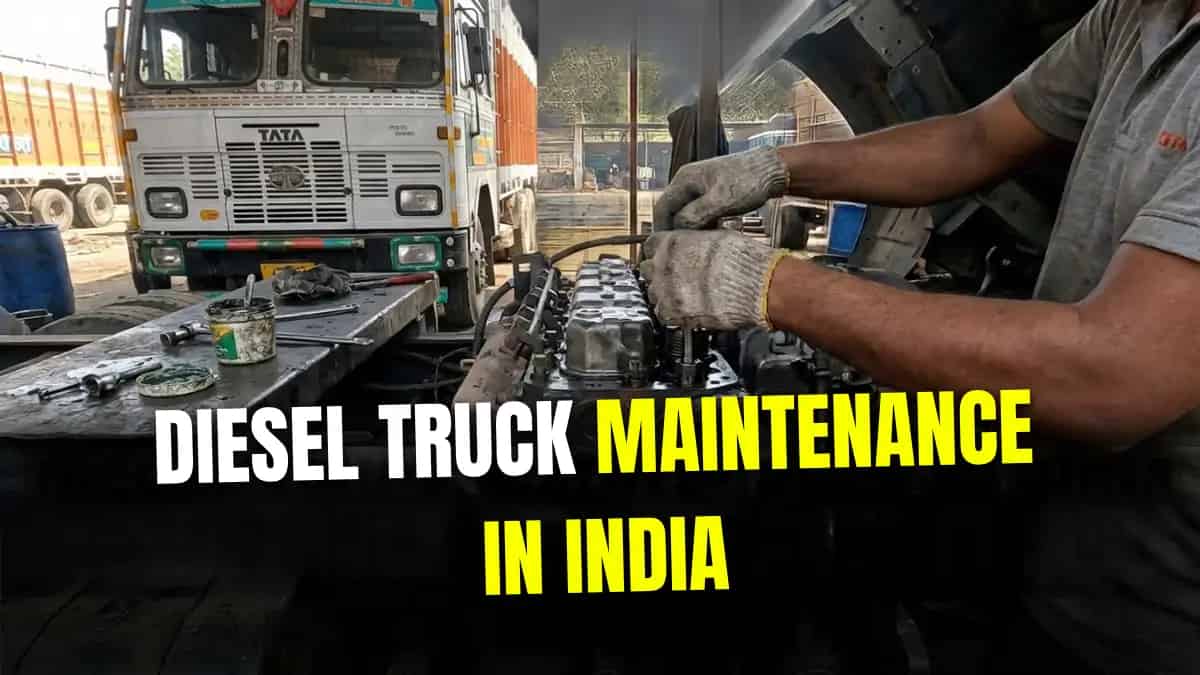


Your truck does not earn money in the workshop. It earns money on the road.
That one line is the whole argument for diesel truck maintenance. A day in the garage still costs you the EMI, the insurance, the driver's salary and the trip you turned down. The repair bill is only part of the loss.
What Diesel Truck Maintenance Costs in India
For a mid-size truck running mainly on highways, maintenance comes to around ₹0.65 to ₹0.85 per kilometre. Over a year of 80,000 to 1,00,000 km, that works out to roughly ₹55,000 to ₹85,000.
I ran an Ashok Leyland Ecomet 1615 HE on the Gurgaon–Jaipur route last year. Across 76,000 km, maintenance cost me just under ₹75,000 — about ₹0.99 per km. This includes three services, brake liners, one clutch plate, 2 tyres and AdBlue.
Here is how it splits by every vehicle type:
|
Truck type |
Example models |
Rough maintenance cost |
|---|---|---|
|
Mini truck / SCV |
₹0.30–0.45 per km |
|
|
Pickup / LCV |
₹0.40–0.60 per km |
|
|
ICV (7–12 tonne) |
₹0.60–0.80 per km |
|
|
MCV / HCV (16 tonne+) |
₹0.80–1.20 per km |
This maintenance cost is an estimate based on conversations with fleet owners and maintenance shops. Your actual cost will depend on these four things:
1. Load
An overloaded truck wears out clutches, leaf springs, and brake liners much faster. This is the single biggest cost in Indian trucking, and it is the one most owners control least.
2. Route
Ghat sections and bad roads punish suspension and brakes. Flat highway running is cheap by comparison.
3. Duty cycle
City stop-start work is harder on a BS6 truck than long-haul. More on why below.
4. Age
Years three to five are when the big-ticket items start coming due together.
The Service Intervals You Should Be Working To
Modern BS6 trucks go much longer between services than older trucks did. Ashok Leyland now advertises an 80,000 km engine oil change interval on models like the BOSS 1115HB and ecomet Star 1115 HE, and Gulf Oil's Superfleet ULE Duramax is approved for that same 80,000 km drain interval in Ashok Leyland BS6 vehicles.
That is a big jump from the 10,000–20,000 km cycles owners were used to. But it comes with a condition attached.
|
Item |
Typical BS6 interval |
Under hard use |
|---|---|---|
|
Engine oil + oil filter |
Up to 80,000 km or 18 months |
Halve it |
|
Fuel filter |
With every oil service |
More often on bad fuel |
|
Air filter |
Check monthly, replace as needed |
Every month in dusty work |
|
Coolant |
Around 2 years |
Check level weekly |
|
Transmission / differential oil |
Long interval, check manual |
Shorten for tipper work |
|
Brake drum cleaning |
Every 80,000 km, and at every liner change |
More often on ghat routes |
Two rules matter more than the exact numbers.
First, whichever comes first wins — kilometres or months. A truck that runs 20,000 km a year still needs its oil changed on the time interval.
Second, those long intervals assume normal running with the right oil. Tipper and construction work is measured in engine hours, not kilometres, and gets a much shorter cycle. Overloading, hills and constant city crawling all mean you should be servicing earlier than the sticker says.
Check your own owner's manual or ask your dealer for the schedule that matches your exact model and application.
How to Maintain a Diesel Truck: The Checks That Actually Matter
You do not need a workshop for most of this. You need ten minutes and a habit.
Every day, before the first trip:
-
Engine oil level, on flat ground, engine cold
-
Coolant level in the overflow tank
-
Tyre pressure on all wheels, including the spare
-
All lights and indicators
-
Brake pedal feel and air pressure build-up
-
A walk around the truck looking for fresh oil, diesel or coolant on the ground
Every week:
-
Drain the fuel-water separator
-
Clean the battery terminals
-
Check belt tension
-
Top up AdBlue
Every month:
-
Air filter — clean or replace
-
Grease all the points
-
Clutch free play
-
Tyre wear pattern, and rotate if wearing unevenly
Every quarter:
-
Brake liner thickness
-
Suspension bushes and leaf springs
-
Steering play
-
Wheel alignment
The Three Checks Almost Everyone Skips
Draining the water separator. Indian diesel often carries water. That water reaches your injectors and rusts them from inside. Draining takes thirty seconds and saves a bill that runs into tens of thousands.
The air filter in dusty work. On a construction site or a dirt road, a filter can choke in weeks, not months. A choked filter starves the engine, kills mileage and eventually damages the turbo.
Battery terminals. White or green crust on the terminals means resistance, which means hard starting and a strained alternator. A wire brush fixes it.
BS6 Trucks: The Part Nobody Explains
If your truck is BS6, it has equipment your old truck did not. Two parts decide most of your new maintenance experience.
The DPF
The diesel particulate filter sits in the exhaust and traps soot. It cleans itself by burning that soot off at high exhaust temperature — this is called regeneration.
Here is the catch: regeneration needs heat, and heat needs sustained running. A truck that spends its life crawling through city traffic or idling at a loading point never gets hot enough. The soot builds up, the DPF clogs, the warning light comes on, and eventually you are paying for a forced cleaning or a replacement.
If your work is mostly city or short-trip, give the truck a decent highway run at steady speed regularly. It is the cheapest DPF maintenance there is.
When the DPF light appears, do not ignore it and do not keep loading the truck. Ignoring it is how a cleaning job turns into a replacement job.
AdBlue
AdBlue — also called DEF — is a urea solution sprayed into the exhaust to cut NOx. It is not fuel and it is not an additive. It goes in its own separate blue-capped tank.
For a truck with a 40-litre AdBlue tank, expect roughly 3,000 to 5,000 km per fill, with bulk AdBlue costing around ₹30–₹40 per litre at commercial pumps. Buying it in small retail cans costs much more per litre, so fill at a proper pump when you can.
Two things to know. If the tank runs dry, the system will progressively cut engine power until you refill — the truck will not simply carry on. And quality matters: cheap or contaminated AdBlue damages the SCR system, and that repair is expensive. Buy from a source you trust and keep the tank and nozzle clean.
The Six Jobs That Hurt Your Wallet Most
Truck Junction put the question to its audience and got the same answer every owner already knows: it is the clutch, the gearbox, the turbocharger and the injectors that empty your pocket.
|
Component |
Early warning sign |
Usual cause |
Preventable? |
|---|---|---|---|
|
Clutch assembly |
Slipping, hard pedal, burning smell |
Overloading, riding the clutch |
Mostly |
|
Turbocharger |
Whining, black smoke, power loss |
Choked air filter, poor oil |
Mostly |
|
Injectors |
Rough idle, smoke, mileage drop |
Dirty or watery diesel |
Mostly |
|
Gearbox |
Noise, hard shifting, jumping out of gear |
Overload, low oil |
Partly |
|
Tyres |
Uneven wear, cracks |
Wrong pressure, no rotation, overload |
Mostly |
|
Leaf springs |
Sagging, cracking, noise |
Overloading |
Mostly |
Look at that last column. Almost every expensive failure on a truck traces back to something cheap and preventable — a filter, an oil change, correct tyre pressure, or simply not overloading.
Parts prices vary hugely by model and source. An Ashok Leyland clutch plate, for instance, is listed anywhere from around ₹1,150 to ₹4,500 on trade marketplaces depending on grade and seller. Get a written estimate before any big job, and ask specifically whether the part is genuine, aftermarket or reconditioned.
On tyres, retreading is worth knowing about. Apollo notes that a retread can deliver close to 70–80% of a new tyre's performance at a fraction of the price — sensible on trailing axles, less so on steering.
Pickups and Mini Trucks Need a Different Schedule
If you run a Tata Intra, an Ashok Leyland Dost, a Bolero Pikup or a Tata Ace, your intervals are shorter than a heavy truck's, not longer.
These vehicles work in city traffic with constant stop-start, carry loads close to their limit, and use smaller components with less margin. Oil changes come around faster. Clutches wear quicker. Tyres are smaller and cheaper, but they also go sooner.
The good news: parts are inexpensive and available everywhere, and most jobs are quick. Diesel pickup maintenance done on schedule is genuinely cheap. Neglected, it becomes a breakdown in the middle of a delivery run.
Fuel Quality Problem for Diesel Trucks
Adulterated diesel is a real risk in parts of India, and a modern common-rail engine is far less tolerant of it than an old mechanical pump engine was.
Watch for a sudden mileage drop, rough running, difficulty starting, or unusual smoke after fuelling somewhere new. Buy from busy, reputed pumps where stock turns over quickly. Keep the tank reasonably full to reduce condensation. And drain that water separator.
One bad tank of fuel can cost you an injector set. There is no cheaper insurance than choosing where you fill.
Workshop, Local Mechanic, or AMC?
All three have their place.
The authorised workshop has diagnostic tools, genuine parts and trained technicians. For anything involving the DPF, SCR, ECU or warranty work, go here. BS6 systems need equipment a roadside garage does not have.
The local mechanic is faster, cheaper and often just as skilled on mechanical work — brakes, suspension, clutch, bodywork. For a truck out of warranty doing routine jobs, this is sensible.
An AMC package from the manufacturer converts unpredictable bills into a fixed monthly cost. Worth it if you are running high kilometres, if your cash flow cannot absorb a sudden ₹80,000 repair, or if you want the truck to stay dealer-serviced for resale.
If your truck is under warranty, check the terms before choosing. Most manufacturers require scheduled services to be done properly with genuine parts and the records kept. Losing a warranty claim on an engine costs far more than the servicing you saved on.
Keep the Records
One habit separates owners who sell their truck well from those who do not: a maintenance file.
Keep every bill, note the odometer reading at each service, and record what was done. It tells you when the next job is due, it protects your warranty claim, and at resale time it is proof that the truck was looked after. A documented service history genuinely raises what a buyer will pay.
What to Do This Week
If you take nothing else from this, take these five:
-
Find your owner's manual and note your model's actual service intervals
-
Start the ten-minute daily check — today
-
Drain the water separator this week, and every week after
-
If the truck is BS6 and works in the city, plan a proper highway run
-
Start a file for service bills
Diesel truck maintenance is not complicated. It is mostly small, boring, cheap habits repeated on time. The owners whose trucks run 10 lakh kilometres without drama are not doing anything clever. They are just doing the small things, every day, without skipping.
Your truck does not need you to be a mechanic. It needs you to be regular.