
News Details
Vehicle Fitness Certificate Fee Cut 50% to Rs 2,500 in India
Summary
The Ministry of Road Transport and Highways notified the change on April 23 under the Central Motor Vehicles Fifth Amendment Rules, 2026. It is effective immediately and applies across all states in India.


Running a commercial vehicle in India means paying for fuel, maintenance, road tax, insurance, permits, and fitness certificates. None of those costs ever seem to come down.
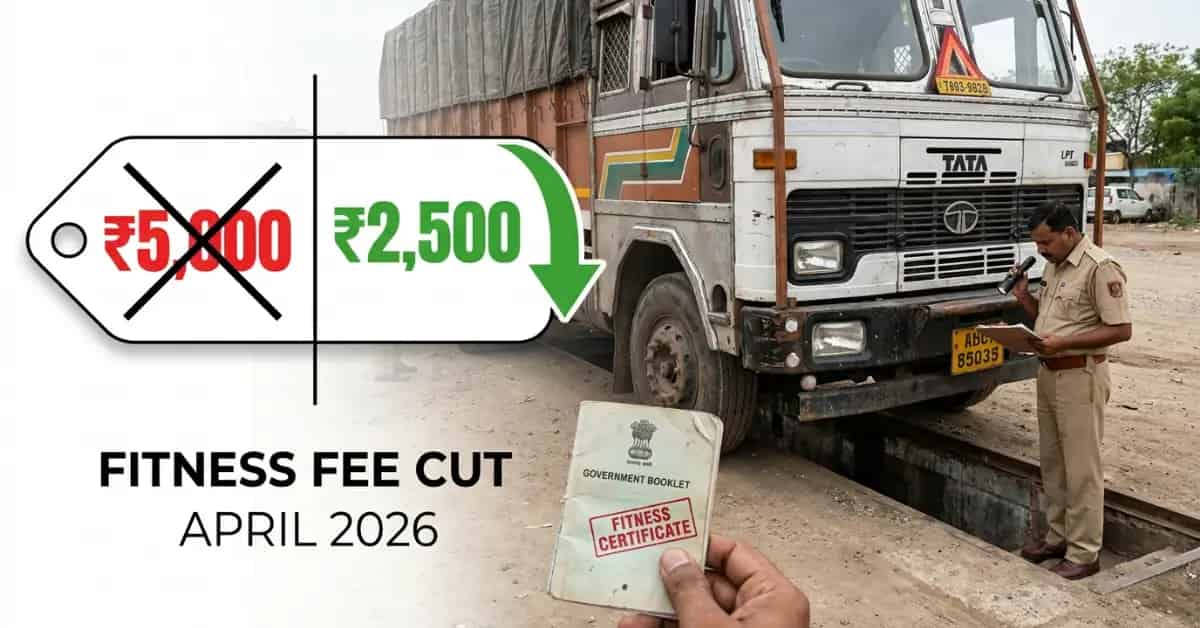
One just did. Effective April 23, 2026, the fee for a vehicle fitness certificate has been cut from Rs 5,000 to Rs 2,500. A clean 50 percent reduction, notified by the Ministry of Road Transport and Highways through the Central Motor Vehicles Fifth Amendment Rules, 2026.
What the Fitness Certificate Fee Cut Covers and Who Qualifies
The change applies to all transport vehicles that require a fitness certificate under Indian law. That means trucks, buses, goods carriers, and any commercial vehicle that operates on public roads.
The revision is made under Rule 81 of the Central Motor Vehicles Rules, 1989. Specifically, it amends serial number 11A in the schedule of fees, which governs fitness certificates for transport vehicles. The new entry is Rs 2,500 where Rs 5,000 was previously listed.
Because this is a Central government notification, it applies uniformly across all states and union territories. There is no state-by-state variation on this particular fee.
What Rs 2,500 Savings Per Certificate Means in Real Fleet Terms
For a single owner-operator renewing one vehicle, the saving is Rs 2,500 per application. That may sound modest next to monthly fuel or tyre bills. But fitness certificates are a recurring cost, and the savings compound with fleet size.
A fleet of 10 trucks saves Rs 25,000 per renewal cycle. A fleet of 50 vehicles saves Rs 1.25 lakh. For transport companies managing dozens of vehicles across different renewal dates throughout the year, this adds up to a meaningful reduction in fixed annual overheads.
For individual owner-operators with tight margins, Rs 2,500 is close to two to three days of net earnings after running costs on many routes. It is not a windfall. But it is real money that was previously being paid to a regulatory process, now staying in the operator's hand.
How the Fitness Certificate Process Works and When Renewal Is Due
A vehicle fitness certificate confirms that the commercial vehicle is roadworthy and safe to operate on public roads. It is a legal requirement under the Motor Vehicles Act. Without a valid certificate, a transport vehicle cannot legally operate.
The process involves physical inspection of the vehicle at an authorised testing facility or RTO, followed by payment of the prescribed fee. Certificates are renewed periodically. For most transport vehicles, the initial certificate is valid for two years. After that, annual renewals are required.
The inspection itself has not changed. The cut applies only to the fee component. Operators still need to ensure the vehicle passes inspection before the certificate is issued.
Public Consultation Led to This Fee Reduction: The Timeline
The government had published a draft of this proposed rule change on January 30, 2026 for public consultation. The final notification came on April 23, 2026. That is roughly 83 days from draft to enforcement.
For regulatory reform in India, that turnaround is relatively quick. It suggests the proposal received broad support during consultation and did not face significant opposition from stakeholder bodies. Transport associations had long flagged the Rs 5,000 fee as disproportionate to the administrative cost of the fitness inspection process.
Refund Guidance for Operators Who Paid Rs 5,000 Recently
Officials have confirmed that operators who paid the higher fee before this amendment came into force can approach their Regional Transport Office for guidance on any possible refund.
No blanket refund has been announced. The advice is to contact the RTO directly with the payment receipt and application details. Whether individual RTOs process refunds will depend on local procedures. If you paid Rs 5,000 in the days immediately before April 23, it is worth making that inquiry.
Why This Fitness Certificate Fee Cut Matters Beyond the Rs 2,500 Number
Road transport carries over 85 percent of passenger traffic and 70 percent of freight traffic in India. It contributes between 3.5 and 4.8 percent of the country's GDP. The sector is built on millions of owner-operators and small fleet businesses, many of whom are running on thin margins and high debt.
Regulatory fees are a fixed cost that does not respond to how well or poorly a season goes. They fall on operators regardless of load availability, freight rates, or fuel prices. Any reduction in these fixed costs has a direct positive effect on the economics of running a transport business.
This specific cut also comes in a year when Delhi's ECC has gone up sharply and fuel prices have shown little downward movement. The fitness certificate reduction does not offset those increases. But it signals that the government is at least aware that the cumulative regulatory cost burden on commercial vehicle operators needs periodic review.
What YOU Should Do Now
If your fitness certificate renewal is due in the next few months, the reduced fee applies. You do not need to do anything to claim it. Walk in with your vehicle, clear the inspection, and pay Rs 2,500 instead of Rs 5,000.
If your renewal already passed and you paid Rs 5,000 after the January 30 draft was published but before April 23, contact your RTO with proof of payment and ask about the refund process.
If you run a fleet, update your annual compliance cost projections. The per-vehicle saving is fixed at Rs 2,500 per cycle. Factor that into your 2026-27 operating budget now rather than treating it as a surprise discount when the invoice comes.
Also Read : MCD Hikes Delhi Entry Charges for Commercial Vehicles