News Details
M&HCV Trucks Surpass Pre-COVID Sales Numbers in FY25-26
Summary
The year began with a whimper. H1 FY26 grew just 2 percent. Then H2 arrived and changed everything.
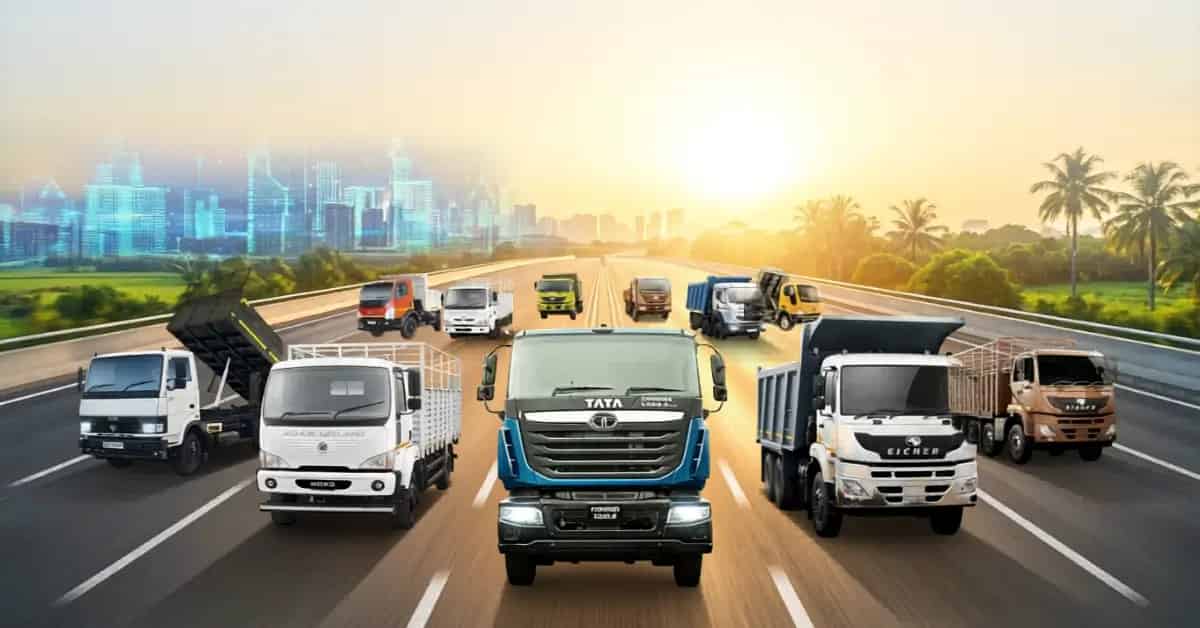


April 2025 to March 2026. The first six months barely moved. CV sales in H1 FY26 grew a muted 2 percent year-on-year. Industry veterans were cautious. Infrastructure spending was picking up but not yet translating into truck orders at scale.
Then H2 arrived. Construction rebounded sharply after an extended monsoon. GST efficiencies pushed fleet profitability higher. The RBI had cut rates by 100 basis points since February 2025, and the effect on financing costs began to show up in showroom numbers.
By March 2026, the medium and heavy commercial vehicle segment had crossed the pre-Covid peak of 419,000 units set in FY19. That benchmark had stood for six years. FY26 cleared it.
SIAM FY26 Numbers: M&HCV Trucks Post Highest Sales in Seven Years
SIAM's full-year data confirms FY26 as the strongest year for India's automobile industry since FY19. Total domestic vehicle sales rose 10.4 percent year-on-year to 2.83 crore units. Every major segment, including passenger vehicles, two-wheelers, three-wheelers, and commercial vehicles, recorded its best annual performance in seven years.
Shailesh Chandra, President of SIAM, said the industry closed the year on a high note with every vehicle category posting its highest ever sales in a financial year after seven years. The commercial vehicle side of that achievement was powered largely by the M&HCV recovery in H2.
Nomura had projected 8 percent volume growth for M&HCV in FY26, estimating total volumes of around 404,000 units. The actual performance pushed past the FY19 pre-Covid ceiling of 419,000 units, outperforming the forecast.
Q3 FY26 Was the Quarter That Confirmed the Upcycle
The quarter from October to December 2025 was when the recovery stopped looking like a soft bounce and started looking like a genuine upcycle.
Total M&HCV goods carrier sales in Q3 FY26 reached 94,912 units. Tata Motors led with 48,184 units. Ashok Leyland sold 27,935 units. Eicher Motors added 16,109 units.
Ashok Leyland's Q3 FY26 performance was particularly sharp. M&HCV volumes grew 23 percent to 32,929 units from 26,692 in Q3 FY25. Revenue hit Rs 11,534 crore, an all-time Q3 record and a 22 percent jump over the same period last year. Net profit reached Rs 796 crore, also a Q3 record for the company.
Girish Wagh, MD and CEO of Tata Motors, attributed Q3 momentum to a rebound in construction and mining activity post-monsoon, combined with sustained demand from core freight sectors and auto logistics.
Five Drivers Behind the M&HCV Recovery in FY26
1. Replacement Demand from An Aging Fleet
The average age of India's truck population has been climbing for several years. Vehicles that were kept running through the pandemic slowdown and the cautious FY24-FY25 period were finally reaching the end of economically viable life. That created a structural pull for new trucks independent of economic growth.
2. Infrastructure Execution
Central government capital expenditure grew 10 to 11 percent in FY26. Road construction, port development, and industrial corridor work all intensified after the election-related slowdown in FY25. Cement demand rose with construction. Cement is a primary freight load for M&HCV tippers.
3. Freight Rate Improvement
Rising freight rates in H2 FY26 made fleet economics more attractive. Better returns per trip reduced the hesitation among fleet operators to commit to new vehicle purchases.
4. GST Efficiencies
Reduced friction in interstate goods movement continues to support road freight over competing modes. Non-bulk cargo, which accounts for roughly 30 percent of all freight by volume, remains road-reliant. The Dedicated Freight Corridor, now largely operational, has drawn bulk rail traffic but left road carriers with a stable and growing non-bulk base.
5. Financing Costs
The RBI's 100 basis point cumulative rate reduction since February 2025 gradually worked its way into vehicle loan pricing. For small fleet operators making purchase decisions, the reduction in monthly EMI on a commercial vehicle loan is a tangible trigger.
Tata Motors and Ashok Leyland: How the Two Leaders Performed in FY26
Tata Motors retained its dominant position. The company sold 107,918 units in Q3 FY26 domestic commercial vehicles alone, an 18 percent year-on-year rise over 91,260 units in Q3 FY25. Its market share in M&HCV goods carriers was over 50 percent in most quarters.
Ashok Leyland grew faster in percentage terms. Its FY26 M&HCV volumes grew 13 percent overall. Q3 was the standout quarter at 23 percent growth. The company retained over 30 percent domestic M&HCV market share and held approximately 40 percent in the bus segment.
Eicher Motors, through VECV, maintained its third-place position and benefited from strong cement and infrastructure freight demand in the western and southern zones where its network is strongest.
What FY27 Looks Like After M&HCV Trucks Cross Pre-Covid Peak
Nomura's projection going into FY27 is 10 percent growth, estimating volumes of around 444,000 units. The base is now higher, but the drivers are not exhausted.
New safety and braking norms are slated to take effect in FY27 and FY28. These regulatory changes are expected to raise truck prices at implementation, which historically triggers pre-buying in the quarters immediately before enforcement. That is a near-term demand accelerant on top of the organic replacement cycle already in play.
ICRA and CareEdge both see buses as the fastest-growing sub-segment in FY27, driven by state transport corporation fleet renewals and PM-eBus Sewa deliveries. The bus category grew over 20 percent in FY25 and remains in a structural upswing.
For fleet operators, the message is straightforward. Truck prices are likely to rise ahead of regulatory implementation in FY27-28. If a vehicle renewal was already on the horizon, the timing case for FY27 over FY28 is real.