Blog Details
Shaktiman Truck – History, Specifications, Price and Its Role in the Indian Army
Summary
Discover the history of the Shaktiman truck, its Indian Army service, engine specifications, payload capacity, historical price, civilian applications and memorable use for transporting Army schoolchildren.
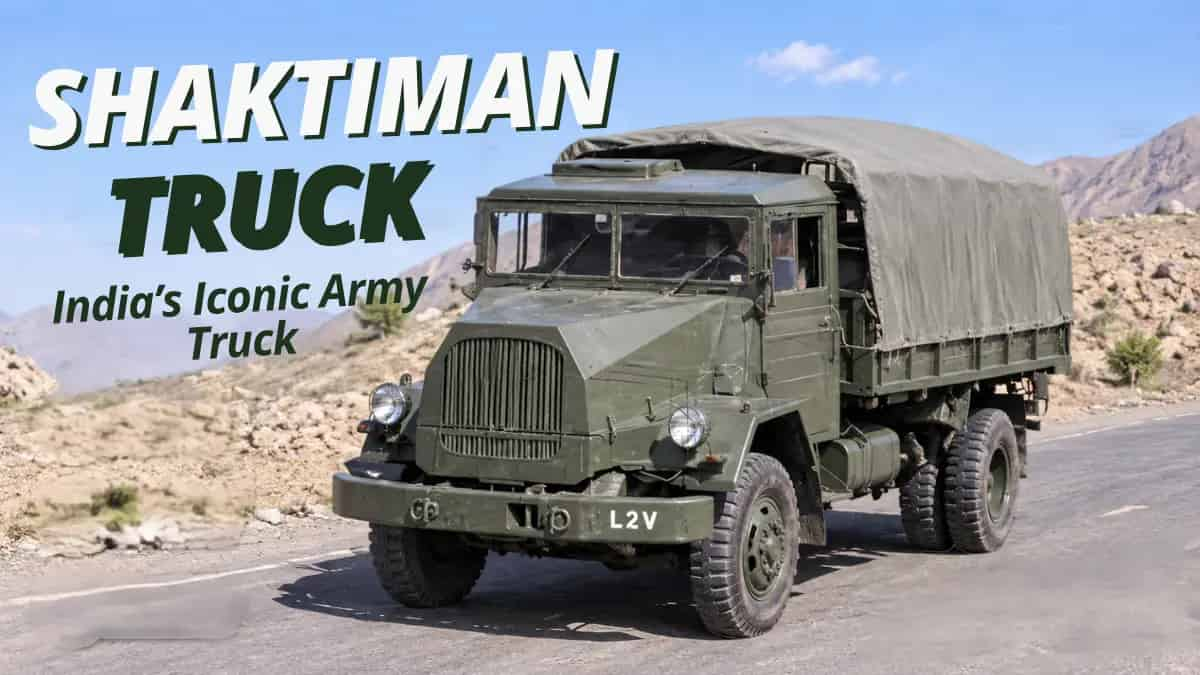


The Shaktiman truck is one of the most recognisable military vehicles in India's automotive history. Known for its rugged construction, powerful diesel engine and four-wheel-drive capability, it served the Indian Armed Forces for several decades. Manufactured at Vehicle Factory Jabalpur, the Shaktiman became an important part of India's military transportation and logistics system.
Unlike modern commercial trucks designed primarily for highway freight transportation, the Shaktiman was developed to operate in challenging conditions, including mountainous roads, muddy terrain, deserts and remote military locations.
However, its journey did not end with military service. After being phased out of the Indian Army, many Shaktiman trucks entered civilian use. Some continued working in rural transportation, construction, material movement and specialised applications. The vehicle also has an interesting connection with school transportation, as modified Army trucks were used to carry children from military residential areas to schools.
For many people who grew up in Army cantonments, travelling in a Shaktiman truck to school remains a memorable experience.
But what made the Shaktiman truck so special? What was its engine capacity, payload, price and role in the Indian Army? Let's explore its history, specifications, military applications and legacy.
What Is a Shaktiman Truck?
The Shaktiman is a medium-capacity military truck developed for the Indian Armed Forces. It was manufactured at Vehicle Factory Jabalpur (VFJ), with technical collaboration involving the German manufacturer MAN.
The truck was based on MAN engineering and was designed to transport military equipment, supplies and other essential materials across difficult terrain.
Its four-wheel-drive configuration, heavy-duty axles, high ground clearance and strong diesel engine made it suitable for military transportation where ordinary commercial trucks could face difficulties.
Some important characteristics of the Shaktiman truck include:
-
4x4 drivetrain for off-road mobility.
-
Six-cylinder diesel engine.
-
Approximately 110 HP engine power.
-
Around 3-tonne payload capacity.
-
Heavy-duty axles and chassis.
-
High ground clearance for rough terrain.
-
Multiple specialised body configurations for military applications.
The Shaktiman was not designed for just one purpose. Its chassis could support different bodies and equipment, allowing it to perform several military and transportation tasks.
History of the Shaktiman Truck in India
The history of the Shaktiman truck dates back to the 1950s, when India started developing domestic manufacturing capabilities for military vehicles.
Before domestic production, the Indian Armed Forces depended heavily on imported vehicles and older transportation equipment. Developing indigenous manufacturing capabilities became important for strengthening military logistics and reducing dependence on foreign supplies.
Vehicle Factory Jabalpur began manufacturing the Shaktiman with technical collaboration involving German manufacturer MAN.
The first Shaktiman truck rolled out in June 1959. It was introduced as a three-tonne military vehicle and became an important addition to India's defence transportation fleet.
Over the following decades, thousands of Shaktiman trucks were manufactured and supplied to the armed forces.
Why Was the Shaktiman Truck Developed?
Military transportation requires vehicles that can operate in conditions where regular roads and infrastructure may not be available.
The Indian Army needed trucks capable of:
-
Transporting ammunition and defence supplies.
-
Carrying equipment to remote military locations.
-
Operating on mountainous and unpaved roads.
-
Towing artillery equipment.
-
Transporting water and petroleum.
-
Supporting military recovery and logistics operations.
The Shaktiman was developed to address these requirements.
Its robust construction and four-wheel-drive system helped it operate across different geographical conditions in India.
When Did Shaktiman Truck Production Stop?
The Shaktiman remained an important military vehicle for several decades. However, changing military requirements and the arrival of newer vehicles eventually reduced its role.
Production of the three-tonne Shaktiman was discontinued in 1996 as the Indian Army moved towards newer-generation military trucks.
The remaining vehicles continued operating until they were gradually phased out.
Later, Ashok Leyland Stallion and Tata military trucks became important platforms in the Indian Army's transportation fleet.
Shaktiman Truck Specifications
The Shaktiman was designed as a heavy-duty military vehicle rather than a regular commercial goods carrier.
Its mechanical configuration focused on durability, off-road performance and the ability to carry loads in challenging conditions.
Here are the commonly documented specifications of the Shaktiman 4x4 configuration.
|
Specification |
Shaktiman Truck |
|
Manufacturer |
Vehicle Factory Jabalpur |
|
Vehicle category |
Military medium-duty truck |
|
Drivetrain |
4x4 |
|
Engine type |
Six-cylinder diesel |
|
Engine displacement |
5,880 cc |
|
Maximum power |
Approximately 110 HP |
|
Transmission |
5-speed manual |
|
Payload capacity |
3 tonnes |
|
Fuel tank capacity |
300 litres |
|
Fuel tank configuration |
2 × 150 litres |
|
Tyre size |
8.25 × 20, 12-ply |
|
Ground clearance |
Approximately 308 mm |
|
Gradeability |
Approximately 30 degrees |
|
Maximum speed |
Approximately 72 kmph |
Note: These specifications refer to a documented Shaktiman 4x4 configuration. Different versions and specialised body configurations may have different specifications.
Shaktiman Truck Engine and Performance
The Shaktiman was equipped with a six-cylinder, 5,880 cc diesel engine producing approximately 110 HP.
Its engine was designed to deliver dependable performance under demanding operating conditions.
Unlike regular highway trucks, the Shaktiman required sufficient pulling power to operate on steep gradients, muddy roads and uneven surfaces.
Its mechanical configuration included:
-
Six-cylinder diesel engine.
-
Heavy-duty axles.
-
Five-speed manual gearbox.
-
Two-speed transfer case.
-
Rear differential lock.
-
Off-road-oriented drivetrain.
These features helped the truck deliver the traction and pulling capability required for military transportation.
Shaktiman Truck Payload Capacity
The documented Shaktiman 4x4 configuration had a payload capacity of approximately 3 tonnes.
This made it suitable for carrying military equipment, supplies, ammunition and other essential materials.
Its actual carrying capacity could differ depending on the body configuration and specialised equipment installed on the vehicle.
Shaktiman Truck Fuel Tank Capacity
One interesting feature of the Shaktiman was its large fuel storage arrangement.
The documented 4x4 model had two fuel tanks of 150 litres each, providing a combined capacity of 300 litres.
A large fuel tank capacity was important for military operations because vehicles often needed to travel long distances without regular access to fuel stations.
Why Was the Shaktiman Truck Used by the Indian Army?
The Shaktiman became an important military logistics vehicle because of its ability to transport essential supplies across difficult geographical conditions.
Military operations require a dependable transportation network. Trucks carry everything from food and fuel to ammunition, equipment and other supplies.
The Shaktiman was particularly useful because it could perform multiple tasks using different body configurations.
1. Military Logistics and Transportation
One of the primary responsibilities of the Shaktiman was transporting defence supplies.
It carried essential materials to military camps, supply depots and remote locations.
Its off-road capability made it useful in areas where road conditions were poor.
2. Artillery Tractor
The Shaktiman was also used as an artillery tractor.
In this configuration, it could tow field artillery equipment and support military operations.
Its four-wheel-drive system and low-range transmission helped provide the traction needed for towing heavy equipment.
3. Water Tanker
The Shaktiman chassis was also used to develop water tanker configurations.
These vehicles transported water to military establishments and remote locations where regular water supply infrastructure was unavailable.
A water bowser configuration was among the specialised vehicles developed using the Shaktiman platform.
4. Petroleum Tanker
Fuel transportation was another important military application.
Specialised petroleum lorries built on the Shaktiman chassis helped transport fuel for military vehicles and equipment.
This was particularly useful for maintaining supply chains in remote areas.
Also Read - Tanker Truck – Types, Capacity, Uses and Specifications in India
5. Recovery Vehicle
The Shaktiman platform was also adapted for recovery operations.
A recovery vehicle could assist damaged or immobilised vehicles, making it an important support asset for military transportation units.
Shaktiman Truck Army – Its Role in Indian Military History
When people search for Shaktiman truck army, they are generally interested in understanding why this vehicle became so popular among the Indian Armed Forces.
The Shaktiman was more than a regular military goods truck. It was part of the logistics infrastructure that supported the movement of military supplies across different parts of the country.
Its versatility allowed the armed forces to use a common vehicle platform for multiple specialised requirements.
Shaktiman During Challenging Military Conditions
India has diverse geographical conditions, including:
-
High-altitude mountainous regions.
-
Desert areas.
-
Forests and remote border locations.
-
Muddy and unpaved roads.
-
Difficult rural transportation routes.
The Shaktiman's four-wheel-drive capability and rugged mechanical construction helped it operate in these challenging environments.
Its role in transporting supplies and equipment made it a familiar vehicle in the Indian military fleet.
Shaktiman Truck School Bus – How It Transported Army Children to School
One of the most interesting and memorable uses of the Shaktiman truck was its role in school transportation within Army cantonments and military stations.
Many people who grew up in Army families during the 1980s, 1990s and early 2000s may remember travelling to school in modified military trucks instead of conventional school buses.
The Shaktiman was among the Army vehicles associated with this type of transportation. These trucks were adapted with passenger seating, rear entry arrangements and covered compartments to carry groups of children.
This arrangement was particularly relevant for children of Army personnel attending Army Public Schools (APS) and, in some locations, Kendriya Vidyalayas (KV).
Why Were Shaktiman Trucks Used as School Buses?
Army families are frequently transferred between military stations, cantonments and operational establishments. Schools serving defence families are often located within or near these establishments.
Providing dedicated civilian school buses for every military station and route was not always practical. Military transportation vehicles were therefore used in some locations to support the movement of children.
The Shaktiman's strong chassis and ability to operate on difficult roads made it a practical transportation platform for military establishments.
Some vehicles were modified with:
-
Long bench seating along the truck body.
-
Rear entry arrangements with steps.
-
Metal mesh or protective side enclosures.
-
Tarpaulin or covered passenger compartments.
-
Seating arrangements for groups of schoolchildren.
For many Army children, travelling together in these trucks was a regular part of their school routine.
How Stallion Trucks Also Became Part of Army School Transportation?
As the Indian Army gradually moved from older Shaktiman trucks towards newer-generation military vehicles, the Ashok Leyland Stallion became one of its important logistics platforms.
The Stallion was developed for military transportation, troop movement and specialised defence applications.
Like the Shaktiman, the Stallion platform was available in different configurations, including load carriers, troop carriers, water bowsers and other specialised vehicles.
The newer Stallion generation became an important part of military transportation as the older Shaktiman trucks were phased out.
However, the Stallion's role as a military logistics and troop transport vehicle should be distinguished from its use as a school bus. Its use for carrying schoolchildren should not be assumed for every model or military station.
The Shaktiman and Stallion therefore represent two important generations of Indian Army transportation vehicles, with the older Shaktiman remaining especially memorable for people who travelled in modified Army trucks to school.
Shaktiman Truck After the Army – Civilian Uses
The Shaktiman's military service gradually came to an end, but many vehicles continued working in civilian applications.
After being auctioned or released from military service, these trucks found buyers who valued their strong chassis and off-road capabilities.
One particularly interesting example comes from the hilly districts of Ukhrul and Kamjong in Manipur, where older Shaktiman trucks continued to support local transportation.
Some of their civilian applications include:
1. Construction Material Transportation
Shaktiman trucks have been used to transport materials such as:
-
Sand.
-
Stones.
-
Gravel.
-
Construction aggregates.
-
Other building materials.
Their rugged construction makes them suitable for difficult roads and challenging work locations.
2. Tipper Truck Applications
Some Shaktiman vehicles have been modified with tipping bodies to transport and unload loose materials.
A tipper configuration is particularly useful for construction, quarrying and material transportation.
Read our guide on different types of trucks in India to understand how different truck body configurations serve different transportation requirements.
3. Water Transportation
Water tanker configurations are another example of how the Shaktiman chassis could be adapted for civilian requirements.
These vehicles can be used to transport water for different applications, subject to the condition and suitability of the individual vehicle.
4. Rural and Off-Road Transportation
In some hilly regions, old Shaktiman trucks continue to transport agricultural produce, firewood, stones and other essential materials.
Their ability to negotiate difficult roads has helped them remain useful even after their original military service.
Also Read - What Is a Dump Truck? Types, Uses, Capacity and How It Works
Shaktiman Truck Price in India – How Much Does It Cost?
The Shaktiman truck is a discontinued military vehicle, so there is no current new-model ex-showroom price.
People searching for Shaktiman truck price are generally interested in its historical cost or the price of an old vehicle available in the used market.
It is important not to confuse its original government procurement cost with the price of a second-hand Shaktiman today.
Original Shaktiman Truck Price
Historical parliamentary records mention a Shaktiman truck price of ₹37,500 in March 1962.
This was its historical price at that time and should not be treated as its present-day market value.
The cost of manufacturing military vehicles also changed over the years as production requirements, components and manufacturing arrangements evolved.
Used Shaktiman Truck Price
Since the vehicle is discontinued, its second-hand value depends on several factors.
|
Price factor |
Why it matters |
|
Manufacturing year |
Older vehicles may require more restoration |
|
Engine condition |
Affects reliability and operating costs |
|
Chassis condition |
Important for structural strength |
|
4x4 system |
Its working condition affects off-road capability |
|
Body configuration |
Cargo, tanker, tipper or modified passenger body |
|
Registration documents |
Essential for lawful road use |
|
Spare parts availability |
Affects maintenance and restoration costs |
There is no reliable nationwide standard used-market price for Shaktiman trucks.
Buyers should inspect the vehicle, verify its ownership and registration history, and check whether its conversion and road use are permitted before purchasing.
Can You Still Buy a Shaktiman Truck?
Some old Shaktiman vehicles may still be found in the used commercial vehicle market or through private sellers.
However, availability is limited and varies by location.
A buyer should carefully check:
-
Original vehicle documents.
-
Registration and ownership history.
-
Engine and transmission condition.
-
Chassis rust or damage.
-
Availability of replacement parts.
-
Roadworthiness and applicable fitness requirements.
-
Legal status of any body modification.
Buying an old military truck can involve significant restoration and maintenance expenses, so the purchase price alone should not determine its value.
Shaktiman Truck vs Ashok Leyland Stallion
The Shaktiman and Ashok Leyland Stallion are two important names in the history of Indian military transportation.
The Shaktiman served the Indian Armed Forces for several decades before newer-generation trucks gradually replaced it.
The Stallion became one of the major military truck platforms introduced in the subsequent generation.
|
Parameter |
Shaktiman Truck |
Ashok Leyland Stallion |
|
Manufacturer |
Vehicle Factory Jabalpur |
Ashok Leyland / Vehicle Factory Jabalpur production collaboration |
|
Main application |
Military logistics |
Military logistics |
|
Introduction |
1959 |
1990s |
|
Drivetrain |
4x4 configurations |
Multiple military configurations |
|
Engine technology |
Older-generation diesel |
Newer-generation diesel |
|
Main role |
Supplies, towing, tanker and recovery applications |
Military transportation, troop movement and logistics |
The Shaktiman represents an earlier generation of military vehicles, while the Stallion reflects the transition towards newer military transportation technology.
Shaktiman Truck vs Modern Military Trucks
Military transportation technology has evolved significantly since the Shaktiman entered production.
Modern military trucks are designed with improvements in engine performance, payload management, vehicle reliability, driver comfort and specialised operational requirements.
Some of the newer-generation military trucks include:
-
Ashok Leyland Stallion.
-
Tata LPTA military trucks.
-
Other specialised military logistics vehicles.
Compared with the older Shaktiman platform, modern vehicles benefit from updated engineering and technology to support changing defence requirements.
Why Is the Shaktiman Truck Still Remembered?
Even though production stopped decades ago, the Shaktiman remains an important part of India's automotive and military history.
There are several reasons behind its lasting popularity.
1. Military heritage: It served the Indian Armed Forces for several decades and became a familiar sight in military transportation.
2. Rugged construction: Its strong chassis, heavy-duty axles and four-wheel-drive capability made it suitable for challenging conditions.
3. Multiple applications: The same platform could support cargo transportation, water tankers, petroleum lorries, artillery towing and recovery operations.
4. Civilian second life: Many vehicles continued working after military retirement, particularly in difficult rural and hilly regions.
5. School transportation memories: For generations of children growing up in Army cantonments, travelling in modified Shaktiman trucks to Army Public Schools and nearby schools became a memorable experience.
6. Historical importance: It represents an important period in India's domestic military vehicle manufacturing journey.
Conclusion
The Shaktiman truck holds a special place in India's military and commercial vehicle history. Developed to meet the transportation requirements of the Indian Armed Forces, it became a dependable platform for carrying supplies, towing artillery and supporting specialised military operations.
Although production ended in 1996, its legacy continued through civilian applications, with some old vehicles being adapted for construction, rural transportation and other specialised uses.
Its connection with school transportation adds another memorable dimension to its history. For many children growing up in Army cantonments, the Shaktiman was not just a military truck but also a vehicle that carried them to school.
With the introduction of newer military platforms such as the Ashok Leyland Stallion and Tata LPTA, India's defence transportation system continued to evolve. Nevertheless, the Shaktiman remains an iconic vehicle representing an important chapter in India's military and automotive manufacturing journey.